The Presidential Working Group on the National Policing Bill has submitted its draft National Policing Bill, 2026, alongside 29 related amendment bills, to the Ministry of Justice for legislative drafting review and validation.
The submission marks the completion of the group’s drafting assignment and comes as state assemblies consider the constitutional amendments required to establish state police services.
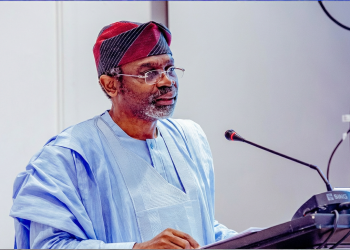
The Chief of Staff to the President and chairman of the working group, Femi Femi Gbajabiamila, the panel said it submitted the draft bills to the Attorney-General of the Federation and Minister of Justice on Monday, October 19.
The ministry is expected to examine the proposals to ensure they comply with legislative drafting standards and conventions and do not conflict with existing laws.
The statement said the validated bills were expected to be returned to the working group on or before October 30 for final consideration before presentation to President Bola Tinubu.
The proposed National Policing Bill seeks to establish a dual policing structure comprising a Federal Police Service and State Police Services.
Gbajabiamila said the working group remained committed to a rigorous and transparent process that would produce a comprehensive legislative proposal for the President’s consideration and eventual transmission to the National Assembly.
He added that the work was proceeding alongside the consideration of the Constitution of the Federal Republic of Nigeria (Sixth Alteration) Bill, 2026, by the 36 state Houses of Assembly.
The constitutional amendment seeks to alter Section 214 of the 1999 Constitution to replace the single Nigeria Police Force with a Federal Police Service and State Police Services.
The bill was transmitted to the state assemblies on September 16 by the Clerk to the National Assembly, Kamoru Ogunlana, for consideration and approval.
At least 24 of the 36 state assemblies must approve the constitutional amendment before it can proceed to the President for assent.
On October 15, Gbajabiamila told State House correspondents that the policing bill was 90 per cent ready and would be transmitted to the National Assembly on October 29.
The Senate passed the constitutional amendment bill on June 24, while the House of Representatives passed it on July 23, before it was sent to the state assemblies.
Tinubu inaugurated the seven-member Presidential Working Group on July 7, with its steering committee commencing work on August 3. He tasked the group with producing a technically robust and implementation-ready draft National Policing Bill.
Ogun, Delta, Kwara, Plateau approve amendment
The Ogun, Delta, Kwara and Plateau State Houses of Assembly approved the proposed constitutional amendment on Tuesday, supporting the establishment of state police services.
In Ogun, the House adopted a resolution backing the Sixth Alteration Bill after considering a report by its Ad-hoc Committee on Constitutional Review, chaired by former Speaker Olakunle Oluomo.
The committee examined 26 clauses and proposed amendments to different constitutional provisions. Lawmakers voted in favour of the clauses before adopting the report through a voice vote.
Speaker Daisi Elemide described the decision as historic, saying state police would strengthen security and improve the protection of lives and property.
He directed the Clerk of the House to transmit a clean copy of the resolution to the National Assembly.
In Delta, all 23 lawmakers present at plenary voted in favour of the amendment.
Leading the debate, Majority Leader Emeka Nwaobi said the proposed dual policing structure would allow states to establish and fund their own police services to address insecurity, particularly at the local level.
Other lawmakers said the arrangement would improve intelligence gathering, strengthen responses to security threats and create employment opportunities.
Speaker Emomotimi Guwor commended members for their support and directed the Clerk, Otto Aghoghophia, to communicate the House’s resolution to the National Assembly.
The House also observed a minute’s silence in honour of former Delta Governor Emmanuel Uduaghan, who died on Monday.
The Kwara State House of Assembly equally approved the proposed amendment during its sitting in Ilorin after Speaker Yakubu Danladi-Salihu read a letter from the Clerk to the National Assembly.
House Leader Mogaji Abdulkadri led the debate, while other lawmakers supported the proposal, saying it would bring policing closer to communities and strengthen security.
The Speaker directed the Clerk, Ahmed Olayiwola, to communicate the Assembly’s approval to the National Assembly.
In Plateau, lawmakers endorsed the amendment after adopting a report by an ad hoc committee set up to scrutinise the proposal.
The committee chairman, Theodore Maiyaki, said the amendment was necessary because of prevailing security challenges, inadequate police manpower and the need to strengthen local policing.
Also Read: State Police bill clears major hurdle as 30 states agree
The committee also highlighted the need for safeguards covering human rights, operational standards, accountability and coordination between the federal and state police services.
The House adopted the committee’s recommendations during plenary presided over by Speaker Naanlong Daniel.
Adamawa rejects two clauses
The Adamawa State House of Assembly approved 24 of the 26 clauses in the proposed constitutional amendment but rejected two during an emergency sitting on Tuesday.
The lawmakers spent more than two hours examining the provisions individually before deciding on each clause.
Speaker Bathiya Wesley directed the Clerk to prepare a clean copy of the approved clauses and forward it to the National Assembly.
Speaking after the sitting, Chairman of the House Committee on Information, Musa Kallam, said the two rejected clauses were not sufficiently defined and some lawmakers did not understand their provisions.
He said the majority of members therefore voted against them.
Kallam maintained that state policing would help tackle criminal activities and improve security, dismissing concerns that governors could use state police against political opponents.
He said the constitutional amendment provided limits on governors’ control of the proposed services.
Kebbi Assembly begins consideration
Meanwhile, the Kebbi State House of Assembly has received the proposed constitutional amendment and referred it to its House Committee on Internal Security for further consideration.
Majority Leader Faruku Aliyu Nassarawa Jega disclosed this during Tuesday’s plenary while reading a letter from the Clerk to the National Assembly, Kamoru Ogunlana.
The letter, dated September 16, urged the state assembly to consider the bill expeditiously and communicate its decision to the National Assembly.
It explained that the proposal sought to establish a constitutional framework for state police services while retaining the Nigeria Police Force as the federal police service.
The proposed arrangement has attracted support from proponents who argue that decentralised policing would improve local intelligence gathering and enable faster responses to security threats.
However, it has also raised concerns about possible political interference, abuse of power and the need for safeguards to ensure accountability, independence and professionalism.
Ministry, Senate cautious on timeline
When asked how long the Ministry of Justice’s review would take, Kamarudeen Ogundele, Special Assistant on Media to the Attorney-General of the Federation, said the process would follow established procedures.
He said there was no statutory period requiring the ministry to complete the review within a particular number of days or months.
Ogundele said it would be premature to confirm a timeline without considering the applicable procedures.
The Senate also declined to comment on the Executive’s proposed timeline, saying it would wait until it formally received the bills.
Chairman of the Senate Committee on Media and Public Affairs, Yemi Adaramodu, said lawmakers could not take a position before receiving official correspondence from the Executive.
He, however, described the proposed legislation as a matter of public interest and said the lawmakers were committed to concluding the process expeditiously.
Adaramodu dismissed concerns about delays by state assemblies following the expiration of the 30-day period given for their responses.
He explained that the deadline was for the state legislatures to communicate their positions, adding that the Senate would consider their responses alongside the Executive’s proposals.
The Senate spokesman expressed confidence that all states would submit their positions before the Executive formally transmitted its proposals.
He maintained that the process would not affect the Senate’s commitment to passing the legislation before the end of the year.
Murtala Adamu Diri, Press Secretary to the Speaker of the Kebbi State House of Assembly, announced the development in a statement on Tuesday.
Punch News