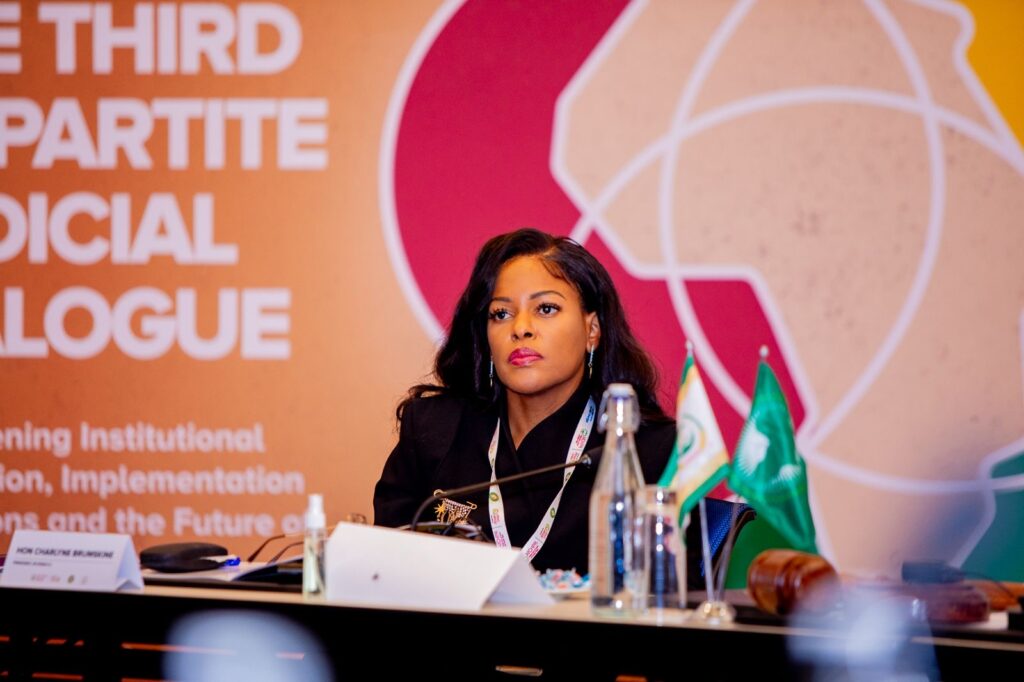
Three major African regional courts have agreed to strengthen institutional cooperation and address persistent challenges in enforcing judicial decisions to improve access to justice across the continent.
The commitment was made at the Third Tripartite Judicial Dialogue held in Arusha, Tanzania, from Nov. 9 to Nov. 10, under the theme, “Strengthening Institutional Cooperation, Implementation of Decisions and the Future of AJUDATA in Africa.”
The Community Court of Justice disclosed this in a statement issued on Tuesday in Abuja.According to the statement, the dialogue aims to consolidate judicial partnerships, strengthen mechanisms for enforcing court decisions and advance the development of the African Jurisprudence Database, AJUDATA.
It builds on the Second Tripartite Judicial Dialogue held in Arusha in September 2024, which identified major institutional challenges confronting African regional courts.
These include inadequate human, technical and financial resources, weak implementation of judicial decisions and gaps in institutional coordination.
The meeting also highlighted the importance of sustained judicial cooperation in promoting human rights, access to justice, the rule of law and regional integration.
Also Read: SERAP wants ECOWAS court to probe N78.8bn cash transfer
It provided an opportunity for judges, registry officials and institutional partners to assess progress on previous commitments and identify practical solutions.
The commitments include strengthening jurisprudential exchange, improving the implementation and monitoring of judicial decisions, and expanding joint awareness, research and capacity-building initiatives.
A major focus of the dialogue was AJUDATA, a continental and trans-regional initiative designed to improve access to African international jurisprudence, legal resources and institutional information.
The database is expected to facilitate legal research, support the monitoring of judicial decisions and promote greater harmonisation of jurisprudence across African judicial institutions.
Participants also explored opportunities for collaboration in emerging areas of jurisprudence, particularly environmental rights and climate justice.
The dialogue was organised with the support of the Raoul Wallenberg Institute and its partners.
The statement said the meeting was expected to produce recommendations on institutional cooperation, strengthen implementation and follow-up mechanisms, provide strategic direction for AJUDATA’s governance and sustainability, and identify future technical partnerships.
“The ECOWAS Court’s participation reaffirms its commitment to judicial partnerships, jurisprudential exchange and building an accessible, coordinated and effective regional and continental justice system,” the statement said.
NAN