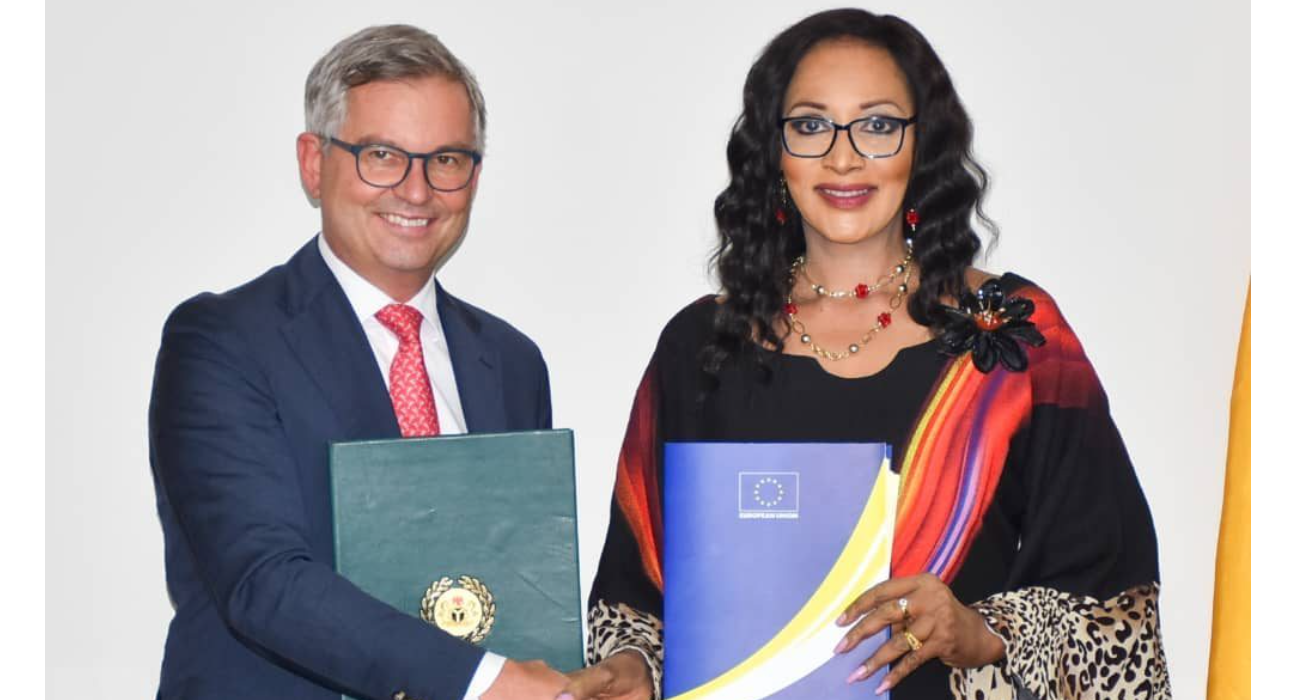
Nigeria and the European Union, EU, have signed a readmission agreement to establish procedures for the identification and return of Nigerians who do not have the legal right to remain in EU member states.
The agreement, signed by Nigeria’s Minister of Foreign Affairs, Ambassador Bianca Odumegwu-Ojukwu, and the EU Commissioner for Internal Affairs and Migration, Magnus Brunner, also provides for reciprocal cooperation in returning individuals who no longer meet the legal requirements to remain in either jurisdiction.
The deal is expected to make migration management more organised by establishing clear procedures for identifying individuals, verifying their nationalities and facilitating their return. However, its implementation will depend on the completion of the required approval and ratification processes.
The signing brings to a close negotiations that began in 2016, following the European Council’s authorisation for the European Commission to negotiate a readmission agreement with Nigeria on September 12 of that year.
Speaking after the signing, Odumegwu-Ojukwu described the agreement as a milestone in Nigeria-EU relations, noting that both sides had spent years negotiating its terms.
She said Nigeria would continue to prioritise the dignity, welfare and reintegration of citizens returned from European countries, stressing the importance of ensuring that migration management respects the rights of affected individuals.
The minister also highlighted areas of broader cooperation beyond migrant returns, including combating transnational organised crime, human trafficking and migrant smuggling.
Other areas include skills development, education and talent partnerships, which are expected to create opportunities for Nigerians seeking legitimate routes to study and work abroad.
Brunner described the agreement as a starting point for deeper cooperation between Nigeria and the EU, adding that both sides would need to focus on effective implementation once the document enters into force. “It is now about effective implementation once the agreement enters into force,” he said.
Under the arrangement, Nigerian and EU authorities will cooperate to establish the identities and nationalities of individuals who are subject to return procedures.
Nigeria’s Minister of Interior, Olubunmi Tunji-Ojo, had earlier explained that the process would cover three categories of people: Nigerians with valid travel documents, those who travelled with documents that were subsequently lost or destroyed, and individuals who travelled without identification documents.
Tunji-Ojo said the Federal Government was strengthening its migration management infrastructure through automation and the integration of identity databases to make nationality verification faster and more accurate.
Also Read: US revokes 300,000 visas in immigration crackdown
He disclosed that more than 17 billion migration records had been transferred to an integrated system to support the process. He also said similar arrangements were being implemented with the United Kingdom, while discussions were ongoing with the United States.
The minister assured the EU delegation that Nigeria would honour the agreement, adding that the country did not encourage irregular migration or the abuse of international cooperation arrangements.
The agreement comes amid significant migration links between Nigeria and European countries, with thousands of Nigerians living, studying and working across the bloc. According to Tunji-Ojo, approximately 260,000 Nigerians are legally resident in the European Union.
Brunner identified the creation of legal migration pathways, police cooperation and efforts to combat human trafficking and migrant smuggling as important areas for further engagement.
Nigeria has also pushed for a broader migration partnership that goes beyond returning people without legal residence status to include reintegration support, border management, education and employment opportunities.
During discussions on the sidelines of the 81st United Nations General Assembly in September 2026, Odumegwu-Ojukwu emphasised the need for a balanced migration framework that would support returning Nigerians while expanding legitimate opportunities for citizens seeking to relocate abroad.
Both officials also discussed strengthening cooperation against irregular migration and transnational organised crime.
Despite the signing, the readmission agreement will not take effect immediately. According to the European Commission, the document must first be submitted to the European Parliament for consent, after which the Council of the European Union can formally conclude the approval process.
It will enter into force on the first day of the second month after both parties have notified each other that they have completed the required procedures.
The Commission said the agreement would operate within applicable national and international laws, with respect for the rights of individuals affected by return decisions.
It also stressed that readmission is only one component of the EU’s broader migration policy, which includes protecting people in need, supporting host communities, creating economic opportunities and expanding legal migration routes.
The EU currently has formal readmission agreements or practical arrangements with 24 countries. The negotiations with Nigeria received renewed attention in 2024, when the European Council called for stronger action to facilitate and accelerate the return of people without legal rights to remain in EU member states.
For Nigeria, the challenge will be ensuring that the agreement translates into orderly migration management without undermining the rights and welfare of returning citizens.
Both governments have expressed their commitment to strengthening cooperation, but the effectiveness of the arrangement will ultimately depend on its implementation, the protection of returnees and the opportunities available to Nigerians seeking legitimate migration routes.
NAN