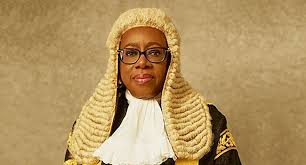
The Chief Justice of Nigeria, Justice Kudirat Kekere-Ekun, on Tuesday swore in 12 new justices of the Court of Appeal, charging them to protect their independence against political, financial, social and personal pressures and to resist the pull of public opinion, professional familiarity and the desire for unanimous decisions.
Administering the oaths at the Supreme Court complex in Abuja, the CJN said the justices were moving from courts where most had exercised authority as sole presiding judges into a collegiate institution whose strength lay in the quality of its reasoning rather than “an artificial appearance of unanimity.”
“Your judicial independence must be guarded against political, financial, social and personal pressures, including those that may arise through professional familiarity or established relationships,” she said.
“You must decide according to the law and your conscience, without being unduly influenced by seniority, reputation, personal affinity or the desire for unanimity.”
The ceremony came as the country’s intermediate appellate court — which marks 50 years since its establishment in 1976 — carries one of the heaviest dockets in the federation, hearing appeals from the Federal High Court, the state high courts, the National Industrial Court and election petition tribunals. Its decisions shape jurisprudence well beyond the parties before it, setting guidance for lower courts, legal practitioners, public institutions and citizens.
From sole judge to panel
Kekere-Ekun said the transition to the appellate bench demanded a different mode of adjudication. “In the courts from which most of you have been elevated, you have ordinarily exercised jurisdiction as the sole presiding Judge,” she said.
“At the Court of Appeal, you will sit with other Justices in panels, deliberate collectively and arrive at decisions through a process of judicial engagement. This calls for teamwork, a willingness to engage with the views of colleagues, test your initial conclusions and consider issues from perspectives that may differ from your own.”
She urged the new justices to approach panel conferences “with preparation, intellectual openness and mutual respect,” adding that “the ability to listen and reflect is a mark of judicial maturity.”
Also Read: NBA hails speedy conclusion of Ekpa’s case, tasks judiciary
But she drew a firm line between collegiality and conformity. “Sitting in a panel does not diminish the personal responsibility each justice bears for his or her judicial opinion,” she said. “Where, after careful consideration, your view differs from that of the majority, you must have the courage to maintain and express it with clarity, restraint and respect.”
A well-reasoned dissent, she added, “is a legitimate feature of appellate adjudication and may, in time, contribute to the development or reconsideration of the law.” Differences of opinion, however, “must never become personal differences.”
Public commentary and the record
The CJN said judicial office was now exercised “in an environment in which decisions are subjected to immediate public commentary,” and warned the justices not to let applause or criticism steer them. “Public approval must not be the basis for you to depart from the law, just as criticism must not deter you from reaching a decision that your conscience and the law require,” she said.
She also cautioned against treating appeal as a second trial. “An appeal is not an invitation to rehear a case simply because another judicial officer might have reached a different conclusion,” she said, stressing particular care when reviewing findings of fact and the evaluation of evidence, “especially where the appellate court has not had the opportunity to observe the witnesses.”
Their task, she said, was “to correct errors where they are established, while respecting findings that are properly supported by the evidence and the applicable law.”
She urged them to pursue continuing judicial education in emerging fields — digital commerce, data protection, intellectual property, financial regulation, labour relations and artificial intelligence — while insisting that technology must not substitute for verified authority and independent reasoning.
A bench under pressure
The 12 justices join a court whose roster has expanded steadily to keep pace with the country’s litigation load. Before Tuesday’s ceremony, the court’s published list of current justices carried 78 names, including the President of the Court of Appeal, Justice Monica Dongban-Mensem. With the new appointments, the bench stands at roughly 90 justices — against a statutory ceiling that successive amendments have repeatedly lifted, and which the executive now wants raised again.
On January 27, President Bola Tinubu transmitted a bill to the National Assembly seeking to amend the Court of Appeal Act and raise the number of justices to 110, citing the “growing volume and complexity of appeals” and the years litigants wait for hearings. A companion bill would lift the Federal High Court’s bench from 70 to 90 judges. Both passed second reading in the Senate in June and were referred to the Committee on Judiciary, Human Rights and Legal Matters.
The wider federal bench remains small relative to the population. The Supreme Court is constitutionally capped at 21 justices — a full complement it reached for the first time only in February 2024 — while the Federal High Court operates with a 70-judge limit and the National Industrial Court with about 33 judges. Taken together, the four federal superior courts field roughly 200 justices and judges for a population estimated at more than 220 million: about one federal judge for every million Nigerians.
The appointments were recommended by the National Judicial Council at its 111th meeting on May 13, 2026, to fill vacancies created by elevation and retirement.
Those sworn in were Justices Yakubu Abdulhammeed Mohammed, Monisola Oluwatoyin Abodunde, Raphael Ajuwa, Elias Ojie Abua, Mbalamen Jennifer Ijohor, Sabiu Bala Shuaibu, James Kolawole Omotosho, Emeka Nwite, Dauda Njane Buba, Sanusi Kado, Enikuomehin Ademola and Julcit Veronica Dadom.
They were drawn from the high courts of Gombe, Bayelsa, Cross River, Benue, Kebbi, Taraba and Ondo states, the Federal High Court, the National Industrial Court and the customary courts of appeal of Ekiti and Plateau states.
Crediblenewsng.com