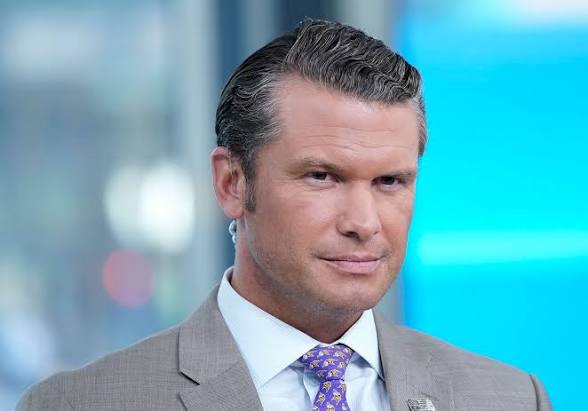
The U.S. Defense Secretary, Pete Hegseth, has reportedly directed American military officials to seek permission before engaging in social activities with their Canadian counterparts, amid growing tensions between the two longtime allies.
The memo, which was circulated last week, was described by a Canadian official as “a slap in the face,” according to The Washington Post, which first reported the development and said it had not reviewed the memo, which was reportedly drafted months ago but only recently signed.
The directive comes as relations between the United States and Canada continue to deteriorate over President Donald Trump’s trade war and repeated threats to make Canada the 51st state.
Speaking at a gathering of defence officials in Halifax, Canada, over the weekend, Republican Senator Mike Rounds of South Dakota said the memo appeared to discourage informal engagements between military personnel from both countries.
“The memo is suggesting in a roundabout way that there be less informal activity or social activities without permission,” Rounds said, according to The New York Times.
He added that American and Canadian military officers had previously attended social events together.
“There’s a desire, I think, to put some emphasis on maybe getting some agreements on military purchases or cooperation on those types of things before we move forward with a normalization of social activities,” he said.
The United States and Canada are members of the Five Eyes intelligence-sharing alliance, alongside the United Kingdom, Australia and New Zealand.
However, Pentagon chief spokesman Sean Parnell said the guidance would not affect defence intelligence cooperation, the binational North American Aerospace Defense Command or cooperation through the North Atlantic Treaty Organisation.
Canadian defence officials reportedly learnt about the memo through The Washington Post’s report, according to the Canadian newspaper, The Globe and Mail.
Also Read: Canada puts US under pressure with retaliatory tariffs
Canadian Defence Minister David McGuinty said on Saturday that he had not seen the document and had observed no change in military cooperation between the two countries.
“I’ve seen no evidence of any kind of change. I’ve heard about the existence of a document. I’ve not seen the document,” McGuinty told reporters.
The reported directive has also drawn criticism from American lawmakers.
Democratic Senator Tim Kaine described its tone as “bad” and “unnecessary,” while Senator Chris Coons warned that it could further damage relations with a close ally.
“The United States should be doing nothing to further aggravate some of the distance and division between the United States and Canada,” Coons said.
Hegseth, like Trump, has previously made controversial remarks about Canada.
In September, he faced criticism after mocking a female Canadian youth cadet instructor on social media.
Hegseth shared an image of the instructor from the Vernon Cadet Training Centre in British Columbia presenting a cadet with a medal, accompanied by a Canadian flag emoji and the caption: “this is real.”
The post triggered backlash, with a Canadian veteran accusing the defence secretary of body-shaming a youth group whose members were participating in activities centred on service and personal development.
Hegseth has also opposed women serving in combat roles and drawn attention to the personal appearance of military personnel.
He previously criticised what he described as “fat” soldiers and reprimanded senior military officers in Virginia over service members’ long hair and beards.
He has also stirred controversy by downplaying the contributions of U.S. allies in Iraq and Afghanistan.
Independent