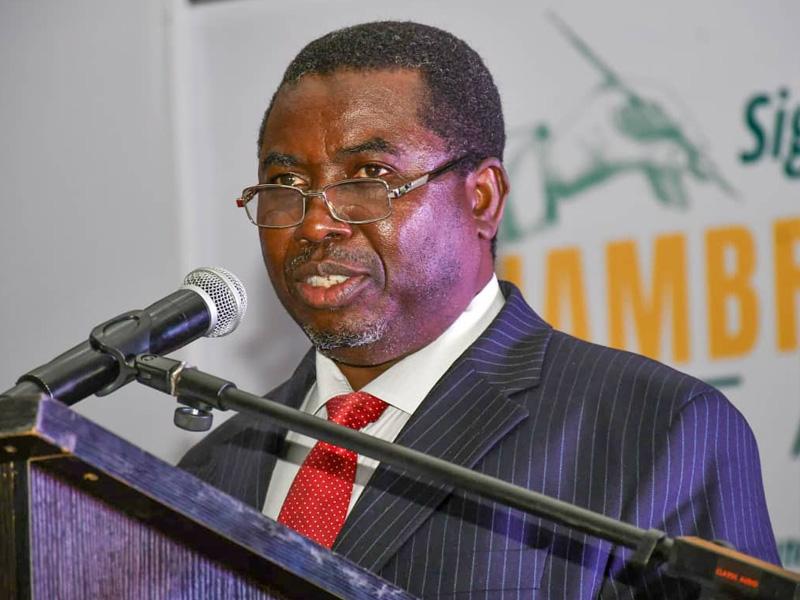
The Chairman of the Independent National Electoral Commission, INEC, Professor Joash Amupitan, has disclosed that he receives death threats almost daily, describing his role as the country’s chief electoral officer as a thankless job.
Amupitan also warned Resident Electoral Commissioners, RECs, against operational lapses ahead of the 2027 general elections, insisting that the commission could not afford mistakes as the country prepares for the polls.
He spoke on Wednesday in Abuja during a strategic consultative meeting with RECs from the 36 states and the Federal Capital Territory, where he said INEC had faced increasing attacks from groups seeking to intimidate electoral officials.
“On a daily basis, I receive threat messages, and sometimes, you just feel like whether those distractions are necessary,” he said.
The INEC chairman warned that attempts to undermine the commission amounted to attacks on Nigeria’s democracy, urging electoral officials not to allow intimidation to distract them from their constitutional responsibilities.
“If you think you are destroying INEC, you are only destroying democracy in Nigeria,” he said.
Amupitan lamented the intense scrutiny and hostility faced by electoral officials, regardless of their efforts to discharge their duties.
“Working for the commission is like a thankless job. No matter what you do, you are under serious scrutiny and sometimes even abused,” he said.
He said INEC would coordinate election activities across densely populated urban centres, remote riverine communities, insurgency-affected areas and locations hosting internally displaced persons.
According to him, minor administrative lapses in one state could attract national attention and cast doubt on the commission’s overall performance.
“In an exercise of that scale, even minor administrative lapses in one state can trigger national headlines and cast doubt on otherwise solid work elsewhere. Margin for error simply does not exist,” he said.
Amupitan said operational bottlenecks, communication gaps and logistical challenges identified during recent off-cycle elections must be addressed before the nationwide simulation and ahead of January 16.
He directed RECs to personally supervise preparations for the November 28 mock exercise, which would be conducted in two polling units per ward nationwide.
Also Read: INEC endorses conduct code for 2027 election results
The exercise, he said, would test the performance of the Bimodal Voter Accreditation System, BVAS, logistics arrangements and automated result validation safeguards introduced on the INEC Result Viewing Portal, IReV.
Under the strengthened IReV protocol, figures entered on polling unit result forms, Form EC8A, would undergo automated arithmetic consistency and over-voting checks before upload.
The chairman directed RECs to submit comprehensive technical reports to INEC headquarters by Monday, November 30, detailing challenges encountered during the exercise.
He also emphasised the importance of election personnel, including members of the National Youth Service Corps, university academics, vice-chancellors and career civil servants.
Amupitan said their competence, safety and welfare were crucial to the successful conduct of the elections, directing RECs to ensure practical training on electoral legislation, BVAS operations and result validation procedures.
He also urged the prompt processing of allowances to prevent welfare-related grievances from disrupting election activities.
The INEC chairman identified disinformation, synthetic media and coordinated false narratives as additional threats to the credibility of the 2027 elections.
He warned that delays or unclear official communication could create opportunities for misleading information to spread, urging RECs to maintain regular engagement with political parties, accredited election observers, civil society organisations and the media.
Amupitan further warned electoral officials against partisan conduct, saying the commission would not protect any staff member found to have compromised its neutrality or facilitated electoral malpractice.
“Under the Electoral Act 2026, including the deterrence provisions of Sections 96, 97, and 148, the Commission will not shield any staff member or official who compromises neutrality, facilitates malpractice, or breaches statutory rules,” he said.
He maintained that Nigerians expected electoral officials to deliver credible elections rather than provide explanations for operational failures.
“The Nigerian people are not asking us for excuses or explanations after the fact; they are asking for competence, impartiality, transparency, and courage in the execution of our constitutional mandate,” he said.
Amupitan urged RECs to personally supervise preparations in their respective states, maintain close contact with electoral officers and provide accurate reports on emerging challenges instead of relying on second-hand assurances.
He said every verified detail, tested contingency plan and upheld standard of neutrality would bring the country closer to an election reflecting the genuine and peaceful choice of voters.
PUNCH