The United States has entered an unprecedented political and administrative crisis as the ongoing federal government shutdown reached its 36th day on Wednesday—officially making it the longest shutdown in the nation’s history.
The deadlock, driven by a failure of Congress to pass a federal budget, has frozen large parts of the U.S. government and is now visibly impacting public services and millions of citizens.
The previous record for the longest shutdown occurred under former President Donald Trump during the winter of 2018–2019, when negotiations over funding for border security led to a 35-day standoff. The current impasse surpasses that record and shows no immediate signs of resolution.
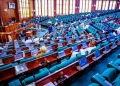
According to U.S. media reports, the Senate is scheduled to hold crucial votes in an attempt to break the deadlock, while the House of Representatives is not formally in session this week.
However, analysts say the political pressure may force the chamber to reconvene. Both parties—Trump’s Republicans and the Democrats—have put forward funding bills, but each proposal failed to secure the required majority.
The shutdown, which began on October 1 when the government ran out of approved spending authority, has halted funding for a wide range of federal agencies.
Only essential sectors such as national security, emergency services, and air-traffic management continue functioning, though even these sectors are under mounting strain.
ALSO READ: Senate gridlock deepens as US shutdown enters sixth day
Across the United States, the effects are becoming more disruptive by the day. Hundreds of thousands of federal workers have gone without pay for over a month, leaving many unable to meet basic financial obligations.
At airports, travelers face unusually long queues as understaffed security checkpoints struggle to operate at normal capacity.
Social programmes have also been disrupted. Food aid recipients are experiencing delays, while non-essential agencies—including national museums, scientific research institutions, and regulatory offices—remain closed or are operating with skeletal staff.
With no compromise in sight, concerns are rising that the shutdown could trigger deeper economic consequences if it extends into the holiday season.
At the centre of the dispute is the federal budget for the 2025/2026 fiscal year. Congress was constitutionally required to approve a spending plan by September 30, but a stopgap draft budget pushed by Republicans failed to gain support, while an earlier Democratic proposal was also rejected.
With both sides refusing to shift ground on key spending priorities, citizens remain caught in the crossfire of a historic political stalemate.