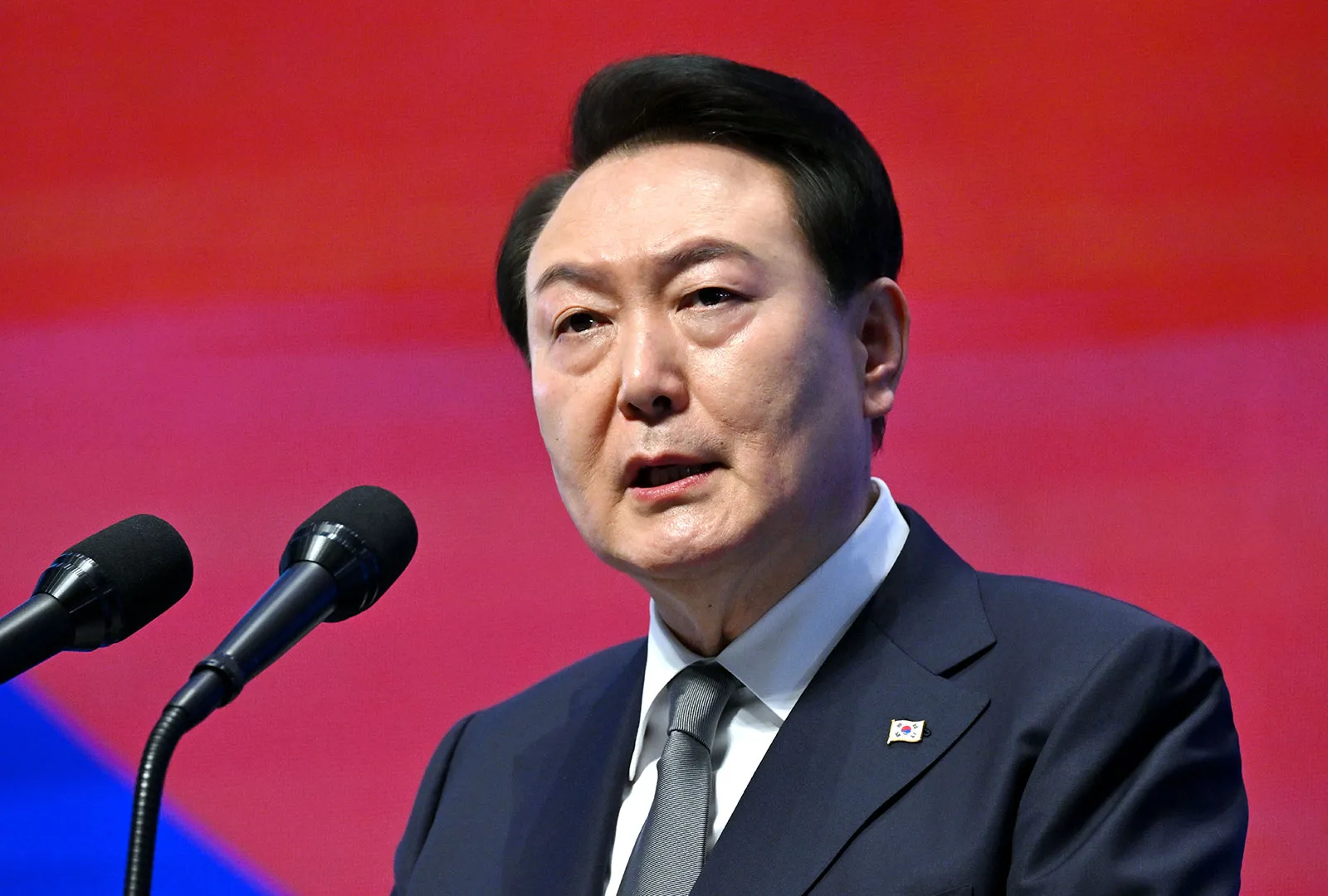
Former South Korean president Yoon Suk Yeol has been charged with aiding an enemy state, escalating the legal troubles that have followed his dramatic removal from office.
Yoon, 64, who is currently in pre-trial detention, faces serious allegations of attempting to provoke a military confrontation between South and North Korea.
Prosecutors say he covertly deployed drones into North Korean territory in October 2024, a move they claim led to the leak of military secrets when the drones crashed near Pyongyang.
This latest charge comes on top of previous accusations connected to Yoon’s controversial declaration of martial law last year, which was swiftly overturned amid widespread political uproar.
Prosecutors argue that his drone operation was intended to legitimize this state of emergency, highlighting the severity of his alleged actions.
Yoon’s actions on December 3, 2024, plunged South Korea into an unprecedented political crisis, shaking the nation’s confidence in its leadership and raising alarm among military and intelligence officials.
He defended his decision by claiming that left-wing opposition forces were infiltrated by communist and anti-state actors. However, no concrete evidence was provided to substantiate these claims.
ALSO READ: South Korea’s top court sacks President Yoon
The former conservative leader has now been formally charged with aiding an enemy state, a grave offense under South Korean law.
High treason is a punishable crime by life imprisonment, reflecting the seriousness with which the government views the alleged threats to national security.
South Korea has since transitioned to a new leadership, with left-leaning politician Lee Jae Myung winning an early presidential election in June 2025, following Yoon’s removal in April.
This change has provided a stabilizing influence, but the repercussions of Yoon’s actions continue to reverberate through the country’s political and military systems.
The drone incident is seen as a deliberate attempt to undermine South Korea’s security infrastructure while testing the nation’s internal response mechanisms.
The case has attracted significant international attention, with foreign media closely monitoring the legal proceedings and the implications for South Korean democracy.
NAN