The Economic Community of West African States, ECOWAS, has declared the region to be in a “state of emergency” as political instability, attempted coups and worsening security continue to spread across member states.
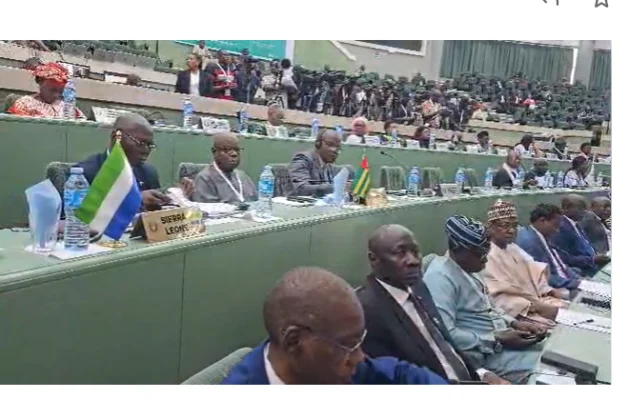
T President of the ECOWAS Commission, Omar Touray, made the declaration on Tuesday during the 55th Session of the Mediation and Security Council at ministerial level in Abuja.
Addressing ministers, diplomats and senior officials, Touray delivered a stark assessment of West Africa’s political climate, pointing to multiple crises as evidence of a rapidly deteriorating environment.
Touray said recent developments underscore the need for “serious introspection on the future of our democracy and the urgent need to invest in the security of our community.”
He explained that country-by-country analyses placed the region at an “average high-risk level,” a situation he described as unprecedented.
He listed a series of major concerns: persistent military interventions in member states such as Guinea-Bissau and the Republic of Benin; non-compliance with transition timetables, especially in Guinea; shrinking electoral inclusivity across multiple countries; the expanding influence of terrorists, armed groups and criminal networks; and rising geopolitical pressures affecting regional diplomacy.
Touray also highlighted a disturbing trend in which elections have increasingly become triggers for instability across the region.
He referenced recent attempted coups, as well as ongoing negotiations with the Alliance of Sahel States, stressing the need for a coordinated response to terrorism and cross-border threats.
“Faced with this situation, Excellencies, it is safe to declare that our community is in a state of emergency,” he said.
Calling for more frequent meetings of the Mediation and Security Council over the next year, Touray urged member states to pool resources and intensify oversight of high-risk areas.
Priority issues include the political crisis in Guinea-Bissau, stalled political transitions, rising political exclusion, and efforts to protect regional cohesion against external interference.
Touray also drew attention to the region’s worsening humanitarian landscape. Citing UNHCR data, he said that as of October 2025, about 7.6 million people were forcibly displaced across West Africa, including more than 6.5 million internally displaced persons.
Nigeria, Burkina Faso, Niger and Mali have the largest displaced populations, while Niger, Mali, Nigeria, Côte d’Ivoire and Togo host the highest numbers of asylum seekers.
“We must therefore take decisions and actions that will reverse this trend,” he urged.
Despite the challenges, Touray reaffirmed ECOWAS’s commitment to safeguarding peace, stability and constitutional order.
Also Read: Benin arrests coup plotters, ECOWAS activates intervention force
He urged governments to uphold regional principles and protect democratic norms, stressing, “We will continue to work harder to promote a peaceful, stable and stronger region for the overall benefit of Community citizens.”
Touray also welcomed new members attending the meeting for the first time, including Nigeria’s Minister of Defence, Rtd. General Christopher Musa, and Cabo Verde’s Minister of Foreign Affairs, José Luis Livramento.
Speaking at the session, Sierra Leone’s Minister of Foreign Affairs and Chair of the Council of Ministers, Timothy Kabba, called for decisive action and warned that recent events had exposed the fragility of democratic governance in West Africa.
He cited the political crises in Guinea-Bissau and the foiled coup attempt in Benin as worrying reminders of the region’s instability.
Kabba said he led a high-level delegation to Guinea-Bissau on December 1, to engage military leaders and political actors, a move he said helped ease tensions and reopen political dialogue under ECOWAS leadership.
He stressed that the region must not tolerate coups or political disruptions that “undermine everything our community stands for.”
He urged member states to deliver concrete decisions that restore public trust in ECOWAS. “Our people no longer have patience for commitments that remain unfulfilled. They expect us to confront these challenges with seriousness, unity and purpose,” Kabba said.
The Mediation and Security Council meeting precedes the summit of ECOWAS Heads of State and Government, who are expected to deliberate on the recommendations amid mounting pressure to restore stability across the bloc.
West Africa has faced escalating political turmoil in recent years. Mali, Niger and Burkina Faso remain under military rule, while Guinea-Bissau recently joined them after a military intervention.
On Sunday, security forces in Benin Republic foiled an attempted coup, further highlighting the erosion of constitutional order.
These developments, coupled with rising armed violence and deepening humanitarian crises, continue to threaten regional peace and security.
Punch News