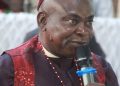
As banditry and terrorist attacks claim thousands of lives across Nigeria, activist Asari Dokubo said he is willing to collaborate with American forces in counterinsurgency efforts.
In a stark declaration that underscores the desperation gripping Nigeria’s security landscape, Niger Delta activist and Kalabari chieftain Asari Dokubo has announced his readiness to work alongside American troops deployed to combat the country’s spiraling insecurity crisis.
Speaking in a video shared on Facebook on Thursday, Dokubo stated unequivocally: “I will join Americans in tracking down these people for the good and safety of Nigeria,” referring to the bandits, terrorists, and armed groups that have transformed large swathes of the country into killing fields.
Dokubo’s controversial pledge comes against a backdrop of relentless violence that has devastated communities across Nigeria’s geopolitical zones. From the bandit-ravaged Northwest to the terrorism-plagued Northeast, and from the farmer-herder clashes in the Middle Belt to kidnapping epidemics in the South, Nigeria faces what security analysts describe as a multi-dimensional security crisis.
Recent months have witnessed particularly horrific massacres. Rural communities in Zamfara, Kaduna, Benue, and Plateau states have borne the brunt of coordinated attacks that have left hundreds dead and thousands displaced. Armed groups have operated with near-impunity, overwhelming local security forces and turning farming communities into ghost towns.
The humanitarian toll has been catastrophic. Beyond the mounting death toll, millions of Nigerians have been displaced from their ancestral homes, schools have been shuttered, farmlands abandoned, and economic activities paralyzed in affected regions. The psychological trauma inflicted on survivors—particularly women and children who have witnessed unspeakable atrocities—will reverberate for a long time.
Also Read: Group demands arrest of Ijaw leaders over threats
Addressing concerns about sovereignty and foreign military presence on Nigerian soil, Dokubo emphasized that the American deployment represents cooperation rather than occupation. According to the activist, the U.S. forces reportedly sent by President Donald Trump are working alongside—not independently of—Nigerian security agencies.
“Any support aimed at confronting bandits and violent groups should be welcomed if it respects Nigeria’s sovereignty and command structure,” Dokubo explained, making a careful distinction between collaborative assistance and unilateral intervention.
The Niger Delta leader, known for his militant past and outspoken criticism of government policies, stressed that his position stems from the extraordinary nature of the security emergency facing ordinary Nigerians. “Extraordinary challenges sometimes require collaboration, especially when such cooperation can help save lives and restore stability,” he said.
Dokubo was keen to address potential accusations of compromising national sovereignty. He argued that his willingness to work with foreign partners does not contradict his historical stance against disrespectful or forceful intervention in Nigerian affairs.
“The key difference lies in consent, coordination, and respect for Nigeria’s institutions,” Dokubo stated, drawing a line between invited assistance and unwelcome imposition. According to him, the current arrangement involves Nigerian authorities maintaining command authority while benefiting from American technical support, intelligence capabilities, and operational expertise.
This nuanced position reflects the difficult calculus facing Nigerian leaders and citizens alike: how to accept urgently needed help without surrendering sovereignty or creating dangerous precedents for future foreign military involvement.
Despite endorsing international collaboration, Dokubo emphasized the irreplaceable value of local intelligence and indigenous knowledge in counterinsurgency operations. “Those who understand the terrain and the people must play a central role in identifying and neutralizing threats,” he insisted.
This observation highlights a frequent criticism of purely military approaches to Nigeria’s security crisis—that sustainable solutions require not just superior firepower but intimate understanding of local dynamics, grievances, and social structures that armed groups exploit for recruitment and support.
Dokubo’s offer to contribute his knowledge of militant operations and local networks could prove significant. As a former militant leader in the Niger Delta who later renounced violence, he possesses insights into how armed groups organize, fund operations, and maintain territorial control—experience that could inform more effective countermeasures.
Throughout his statement, Dokubo returned repeatedly to the suffering of ordinary Nigerians, particularly in rural communities that lack the security infrastructure available in urban centers. These villages have become soft targets for armed groups that attack with devastating regularity, knowing that help—if it arrives at all—will come too late.
The activist’s emphasis on protecting civilians reflects growing frustration with security strategies that measure success in terms of territory controlled or enemies eliminated rather than lives saved and communities protected. “The ultimate goal of any collaboration must be the protection of Nigerians and the restoration of peace,” Dokubo declared.
He added that security efforts must “always prioritize the safety, dignity, and unity of the country”—a pointed reminder that heavy-handed tactics that alienate communities or exacerbate ethnic tensions ultimately serve the enemy’s interests.
A Controversial Alliance
Dokubo’s pledge will undoubtedly prove controversial in a country where nationalist sentiment runs deep and memories of colonialism remain fresh. Critics may question whether foreign troops—regardless of their stated mission—can operate in Nigeria without creating dependency, undermining local capacity, or pursuing hidden agendas.
Others will point to the troubled history of foreign military interventions globally, noting that even well-intentioned operations can produce unintended consequences, from civilian casualties to prolonged conflicts that outlast the original objectives.
Yet Dokubo’s supporters will counter that ideological purity offers little comfort to communities facing annihilation, and that Nigeria’s security forces—despite their courage and sacrifices—have been overwhelmed by adversaries who operate across borders and exploit governance vacuums.
The Path Forward
As Nigeria grapples with its worst security crisis since the civil war era, Dokubo’s statement crystallizes the agonizing choices facing the nation. Can Nigeria defeat these threats alone, or does the scale of the violence demand international assistance? If foreign help is accepted, how can Nigeria ensure it enhances rather than erodes national sovereignty?
These questions admit no easy answers. What remains undeniable, however, is the urgency of the crisis and the imperative to stop the bloodshed that has claimed too many Nigerian lives and displaced too many communities.
Whether Asari Dokubo’s controversial pledge represents pragmatic realism or dangerous compromise will ultimately be judged by a single metric: whether it helps restore the peace and security that Nigerians desperately deserve.
As violence continues to claim lives across multiple states, all eyes will now turn to whether this Nigeria-U.S. security partnership can deliver the results that have eluded previous strategies, and whether it can do so while preserving the sovereignty and dignity of the Nigerian nation.
Crediblenewsng.com