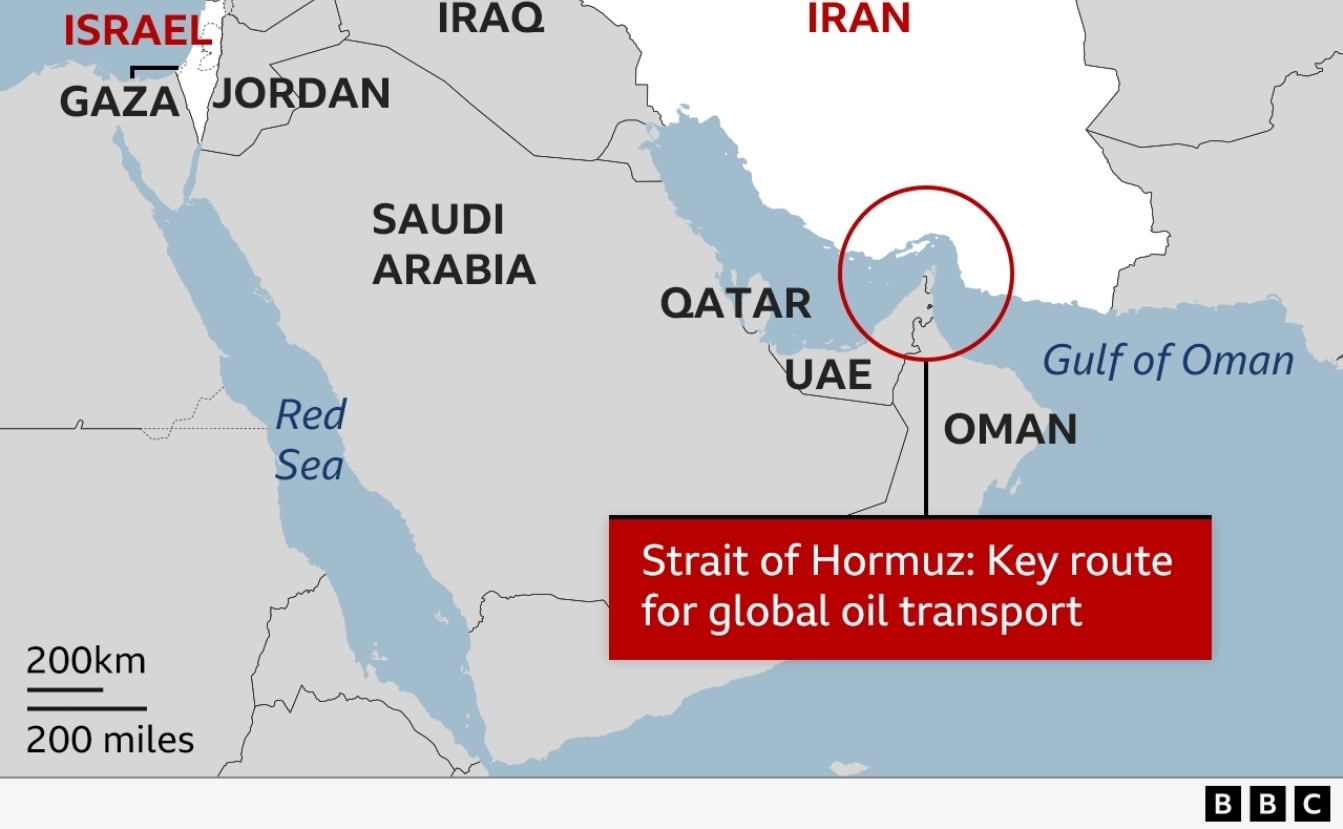
No fewer than 3,000 vessels and 20,000 seafarers are stranded in the Middle East with the closing of the Strait on Hormuz and the war by the U.S. and Israel against Iran, the International Maritime Organisation, IMO, reports.
The crucial Strait of Hormuz global shipping corridor marking the entrance to the Persian Gulf, is essentially closed due to the threat of strikes from Iran and elsewhere said IMO Secretary-General Arsenio Dominguez, who also warned of the global “knock-on” effect from the closure of the sea lane responsible for 20 per cent of the world’s oil.
Dominguez disclosed that the Strait of Hormuz was closed after a tugboat assisting another vessel in the strait on Friday morning was struck killing four seafarers.
The UN shipping agency chief condemned the attack and that the overall situation was “deteriorating” and urged ships to avoid navigating in the region.
He urged member states to “find solutions through dialogue in order to de-escalate” and restore free and safe movement across the region.
UN Emergency Relief Coordinator Tom Fletcher further warned that the widening conflict in the Middle East could trigger far-reaching humanitarian consequences well beyond the region. He said disruptions to key maritime routes such as the Strait of Hormuz could drive up food prices.
The UN relief chief added that the disruption could strain health systems and make humanitarian supplies harder to deliver, hitting the most vulnerable people first.
Also Read: Iran denies firing missile at Turkey amid rising tensions
Meanwhile, the UN Secretary-General, António Guterres has warned that the ongoing crisis in the Middle East, “could spiral beyond anyone’s control”.
“All the unlawful attacks in the Middle East and beyond are causing tremendous suffering and harm to civilians throughout the region,” Guterres said even as he warned that the crisis “pose a grave a risk to the global economy, particularly to the most vulnerable people”.
“The situation could spiral beyond anyone’s control.
“It is time to stop the fighting and get to serious diplomatic negotiations. The stakes could not be higher,” Guterres urged.
Military strikes and counter-strikes are continuing across the Middle East as the U.S., and Israel wage war on Iran. The crisis has entered its seventh day, with continued strikes and counter-strikes across the region.
UN High Commission for Human Rights has declared the escalating crisis a major humanitarian emergency, requiring an immediate regional response.
UN human rights chief Volker Türk warned the conflict is spreading beyond the initial parties and urged States to take urgent steps to de-escalate.
Meanwhile, the Permanent Representative for Iran, Amir Iravani, said his country was not seeking war or escalation “but Iran will never surrender its sovereignty.”
Iravani said his country would take all necessary measures to defend itself, its territory and independence and urged all Member States to condemn “this criminal war against the Iranian people”.
He called on the Security Council to “act now, firmly, clearly and without delay, warning, failure to act will have catastrophic consequences. “Today it is Iran, tomorrow it could be any other member state.”
UN Emergency Relief Coordinator Tom Fletcher, warned that the widening conflict in the Middle East could trigger far-reaching humanitarian consequences well beyond the region.
He reiterated his call for renewed commitment to international law and protection for humanitarian workers, stressing that aid teams will continue supporting civilians caught in the escalating violence.
Fletcher warned that the world is facing a moment of “grave peril” as conflicts escalate and humanitarian crises become increasingly interconnected.
He said the consequences of the fighting risk spiralling beyond the control of those instigating it.
The UN relief chief called for an urgent shift towards diplomacy and restraint.
“What we need is de-escalation and immediate cessation of hostilities, genuine dialogue and negotiations in line with the Charter of the United Nations. We need calmer heads to prevail.”
He regretted that vast resources were being poured into warfare even as humanitarian aid budgets are cut.
Fletcher cautioned that the crisis risks diverting attention and resources from other major emergencies, from Sudan and the Democratic Republic of the Congo to Ukraine.
NAN