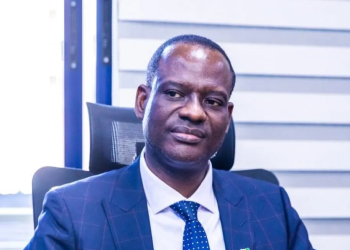
The Minister of Education, Tunji Alausa is facing fresh scrutiny over the continued withholding of the report of the Special Visitation Panel he constituted to investigate the protracted crisis at the Federal College of Education (Technical), Akoka, Lagos — a delay that has now triggered a Freedom of Information suit at the Federal High Court in Lagos.
The legal action, instituted by Ayodele Ademiluyi, Lead Partner at Newworth LLP, seeks to compel the minister to release the report after what is described as a refusal, failure and neglect to furnish it within the statutory period required under Nigeria’s Freedom of Information regime.
Section 4 of the FOI Act, mandates public officers to make inform ation on their activities available within seven working days unless a lawful exemption applies, with only a limited extension in special circumstances. Source
At the heart of the dispute is a question the Ministry of Education has so far failed to answer: why set up a panel, empower it to investigate a matter of urgent public concern, allow it to complete its assignment, and then keep its findings away from the public?
In any democracy governed by law, such silence does not merely appear bureaucratic; it raises legitimate concerns about transparency, accountability, and whether the government is shielding politically inconvenient conclusions.
The panel itself was not a minor administrative exercise. Minister Alausa in August last year inaugurated the Special Visitation Panel to investigate the institutional crisis rocking FCE (Technical), Akoka, with the minister stating that the intervention was intended to restore institutional integrity, good governance, and an atmosphere conducive to learning.
The panel, chaired by former Bauchi State Governor Mohammed Abubakar, SAN, was mandated to examine the roles of staff unions during the unrest, investigate the conduct of key college officials, identify those responsible for misconduct, assess the handling of disciplinary issues, and recommend reforms to prevent a recurrence.
That crisis did not emerge in a vacuum. It grew out of a bitter and highly public leadership struggle at the college, especially over the tenure of the provost, Dr Wahab Azeez. Reports from the period show that staff protests escalated after workers argued that his continued stay in office violated the amended law governing federal colleges of education.
Protesters said his tenure ended on May 26, 2024, while the provost insisted otherwise and accused elements within a “concerned staff” faction of intimidation, locking his office, and threatening his family.
The resulting turmoil was not merely procedural; it visibly destabilised the institution. The media space was awash with reports of described prolonged unrest, disruption of academic and administrative activities, and a widening credibility crisis around the management of the college. The government itself acknowledged as much when it set up the panel, warning that the prolonged crisis had disrupted normal operations and posed a threat to governance and institutional stability.
Also Read: Alausa confirms TETFund will no longer fund new projects
That is precisely why the minister’s continued silence is so troubling. Once a panel of this magnitude has concluded its work, the public has a right to know what it found — especially where the matter concerns a federal institution, public officers, allegations of misconduct, and a crisis that affected staff, students, and public confidence in governance.
An FOI request in such circumstances is not a nuisance; it is a lawful democratic demand for answers. The FOI framework expressly allows court action where a public institution refuses access to information that is not lawfully exempted.
Worse still, the delay feeds the impression that the ministry is sitting on a document that may contain uncomfortable truths. An opinion piece in Premium Times — reflecting wider public concern around the unresolved Akoka dispute — said the panel had completed its assignment as far back as September 2025 and alleged that efforts were made to submit the report without corresponding urgency from the minister to receive it.
Infact, many observers beleive that the prolonged non-release of the report had deepened uncertainty and prolonged injustice around the dispute.
The Ministry of Education cannot credibly claim commitment to reform while withholding the very findings that should guide reform. If the panel found wrongdoing, the public deserves to know. If it exonerated some of those accused, they deserve vindication. If it proposed structural fixes, students and staff deserve implementation. But keeping the report in the shadows fuels speculations that Alausa is trying with difficulty to create a job for his crony.
Now that the matter is before the Federal High Court, the minister has an opportunity to do what should have been done without litigation: release the report, respect the law, and show that public institutions are not personal vaults of official information.
Crediblenewsng.com