Tensions in the Middle East are rising as Iran has warned it may resume military actions if a newly imposed naval blockade by the United States threatens its commercial shipping.
According to statements reported by Iranian state-affiliated outlets, the country’s military leadership views any disruption to its merchant vessels or oil tankers as a violation of an existing ceasefire.
The warning underscores growing concern over the safety of maritime trade routes in the region.
Iranian media also indicated that, in the event of a breach, Tehran could respond by targeting key global shipping lanes.
This included the potential involvement of Yemen’s Houthi forces in restricting passage through the strategically vital Bab al-Mandab Strait a narrow corridor linking Europe and Asia via the Suez Canal.
The U.S. blockade, which began earlier this week, aimed to restrict vessels traveling to and from Iranian ports in the Persian Gulf and the Gulf of Oman.
However, transit through the Strait of Hormuz remains open, provided ships are not directly linked to Iranian ports.
U.S. President Donald Trump announced the measure following stalled diplomatic talks between Washington and Tehran held in Islamabad.
The blockade is intended to curb Iran’s ability to generate revenue from shipping and oil exports, while also addressing disputes over transit fees in the region.
Analysts warn that any escalation could have significant implications for global trade, given the region’s central role in international energy and shipping networks.
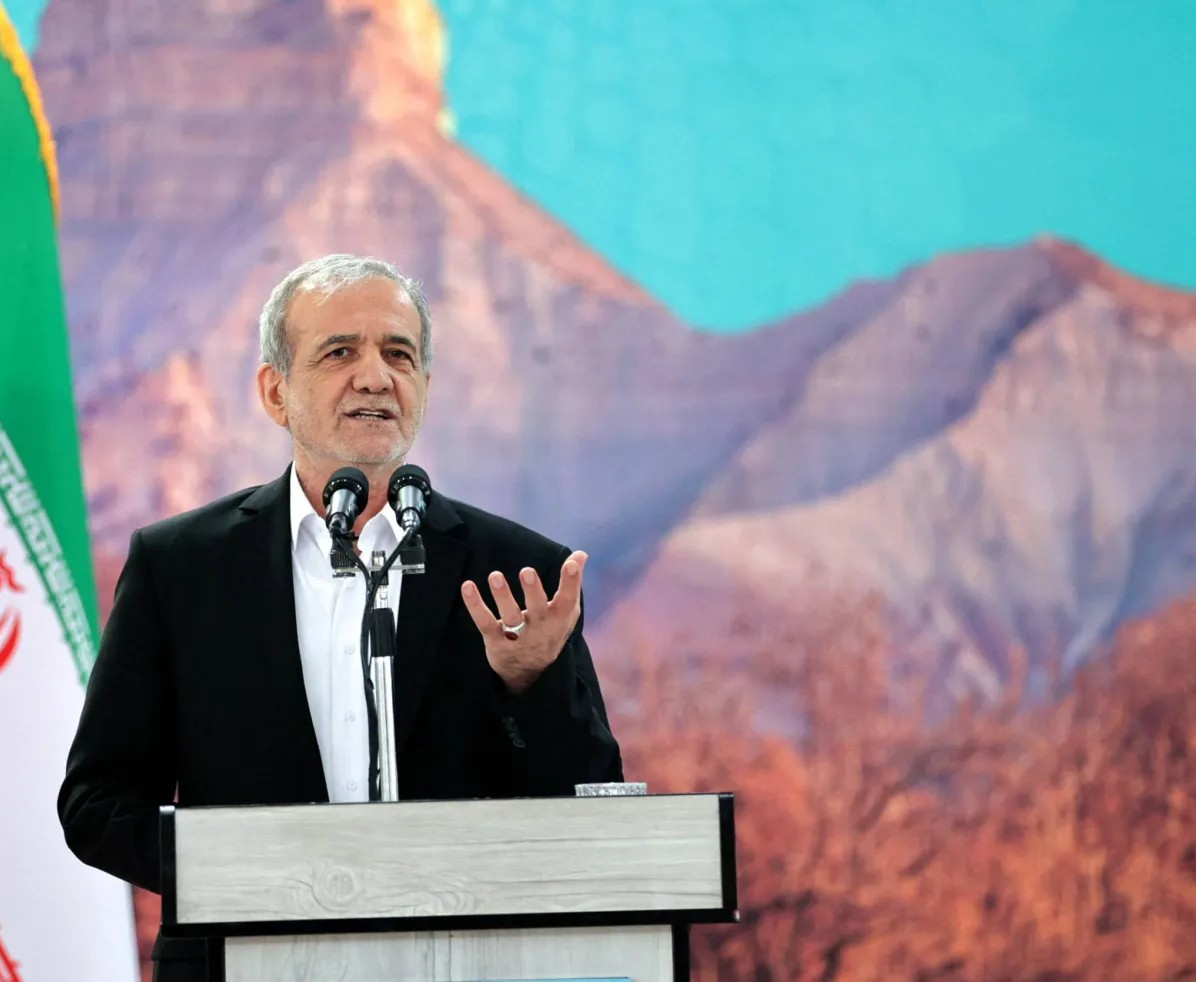
In another development, Iranian President, Masoud Pezeshkian, has reiterated that Tehran is not pursuing war and remains open to diplomatic engagement, while warning that any attempt by external powers to impose their will on the country would be unsuccessful.
In a statement that underscored Iran’s current diplomatic posture, Pezeshkian said Iran is committed to dialogue but will not accept pressure or forced concessions, declaring that any coercive approach “will fail”.
His comments come amid renewed diplomatic manoeuvres involving Iran and the United States, with Pakistan proposing to host a second round of negotiations in Islamabad in the coming days.
The initiative is aimed at sustaining momentum after what was described as inconclusive high-level discussions over the weekend, according to the Associated Press.
Two Pakistani officials, speaking anonymously, told the AP that Islamabad has offered to serve as a neutral venue for renewed engagement before the end of the current ceasefire period.
Also Read: US, Iran may resume talks this week despite port blockade
They noted that the proposal remains flexible and could change depending on whether Tehran and Washington agree on an alternative location.
The development places Pakistan at the centre of a fragile but continuing diplomatic effort intended to narrow long-standing disagreements over Iran’s nuclear programme, even as earlier rounds of talks failed to produce any agreement.
The proposed Islamabad meeting follows heightened tensions after reports that the United States rejected an Iranian proposal to suspend uranium enrichment for five years.
According to The New York Times, Washington instead demanded a significantly longer freeze, reportedly insisting on a halt lasting at least 20 years.
The competing proposals were exchanged during marathon discussions held over the weekend, but neither side accepted the other’s terms.
Officials said the breakdown reflected deep disagreements that remain unresolved despite ongoing diplomatic engagement.
Although no breakthrough was achieved, diplomatic channels have not been fully closed.
Officials involved in the process indicated that a second round of talks could still take place if both sides agree on conditions and venue, even as core differences persist.
Following the discussions, JD Vance, who played a leading role in the American delegation, outlined Washington’s position in strong terms.
He stressed that any agreement must provide a permanent guarantee that Iran will not acquire nuclear weapons, emphasizing that commitments must extend far beyond short-term arrangements.
He stated that such a commitment was “not just now, not just two years from now, but for the long term”.
In subsequent remarks on Fox News, Vance hardened the US position further, describing Iran’s nuclear ambitions as a “red line” for Washington and saying responsibility for progress now lay with Tehran.
“I really think the ball is in the Iranian court, because we put a lot on the table,” he said.
They noted that the proposal remains flexible and could change depending on whether Tehran and Washington agree on an alternative location.
The development places Pakistan at the centre of a fragile but continuing diplomatic effort intended to narrow long-standing disagreements over Iran’s nuclear programme, even as earlier rounds of talks failed to produce any agreement.
The proposed Islamabad meeting follows heightened tensions after reports that the United States rejected an Iranian proposal to suspend uranium enrichment for five years.
According to The New York Times, Washington instead demanded a significantly longer freeze, reportedly insisting on a halt lasting at least 20 years.
The competing proposals were exchanged during marathon discussions held over the weekend, but neither side accepted the other’s terms.
Officials said the breakdown reflected deep disagreements that remain unresolved despite ongoing diplomatic engagement.
Although no breakthrough was achieved, diplomatic channels have not been fully closed.
Officials involved in the process indicated that a second round of talks could still take place if both sides agree on conditions and venue, even as core differences persist.
Following the discussions, JD Vance, who played a leading role in the American delegation, outlined Washington’s position in strong terms.
He stressed that any agreement must provide a permanent guarantee that Iran will not acquire nuclear weapons, emphasizing that commitments must extend far beyond short-term arrangements.
He stated that such a commitment was “not just now, not just two years from now, but for the long term”.
In subsequent remarks on Fox News, Vance hardened the US position further, describing Iran’s nuclear ambitions as a “red line” for Washington and saying responsibility for progress now lay with Tehran.
“I really think the ball is in the Iranian court, because we put a lot on the table,” he said.
SAHARA REPORTERS