The European Commission on Wednesday urged EU countries to work together to avoid a jet fuel shortage as the bloc faces the fallout from the war in Iran.
“The availability and operational capacity of Europe’s oil refining sector must be maximized to meet the current demand, especially for jet fuels, since approximately 40% of our jet fuel consumption is imported.
“About half of all imports pass through the Strait of Hormuz,” reads a guidance document sent to capitals.
The concentration of refining capacities in some EU countries makes “coordinated monitoring and potential collective action necessary to maximize existing European refinery output, including through the coordinated and timely release of emergency stocks.”
The commission called on capitals to consider alternative supplies and imported fuel types.
According to the EU, to facilitate better coordination, the commission will “provide scenario analyses and coordinate the timing and volumes per region and for the EU” on potential stock releases.
The EU’s executive arm is also to map the supply of transport fuels, coordinate the sourcing of alternative jet fuel supplies and propose measures to better distribute available fuel across the EU.
Since the war in Iran began almost two months ago, the EU has spent an additional 24 billion euro, $28 billion, on energy imports due to rising prices, according to commission figures.
EU leaders are to discuss the commission’s recommendation at a summit in Cyprus on Thursday.
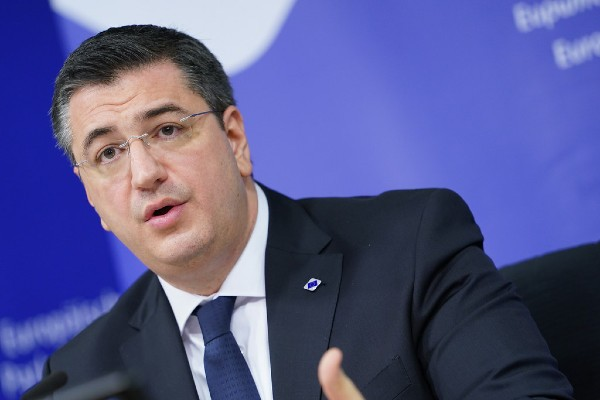
EU Transport Commissioner, Apostolos Tzitzikostas on Tuesday downplayed fears of a looming jet fuel shortage, saying there is no indication of widespread flight cancellations in the coming months.
In another development, the German Centre for Research and Analysis on Migration said the number of immigrants residing in the European Union climbed to a record high of 64.2 million in 2025, up about 2.1 million from 2025.
Also Read: FG, EU unveils £2.7m earth observation project
According to a report published on Wednesday at RFBerlin, the figure compares with 40 million in 2010, citing Eurostat and UN Refugee Agency data.
Germany remained the bloc’s biggest host of foreign-born people at nearly 18 million, 72 per cent of them of working age, while Spain posted the fastest recent growth, adding about 700,000 to bring its foreign-born population to 9.5 million.
Tommaso Frattini, one of the authors of the report said, “Germany remains the main destination for migrants in Europe, both in absolute terms and, to a significant extent, relative to its population.’’
The study said migration patterns were uneven across the bloc, with Luxembourg, Malta and Cyprus facing higher shares of immigrants relative to their population size.
Asylum claims were also concentrated in certain countries, with Spain, Italy, France and Germany accounting for nearly three-quarters of all applications. Germany hosted the largest number of refugees overall, at 2.7 million.
dpa/NAN