The parliament in Ghana has approved a new bill criminalising homosexuality and the promotion of LGBTQ+ activities.
Identifying as lesbian, gay, bisexual transgender or queer can be punished by up to three years’ imprisonment. The bill also introduces a “duty to report” prohibited acts to police.
Religious leaders have pressured President John Dramani Mahama, who still needs to ratify the legislation, to strengthen anti-gay laws since he came to power last year.
The ban has been sharply criticised by international organisations, including Human Rights Watch, which said it placed LGBTQ+ peoples’ lives at risk while also “encouraging citizens to surveil and denounce one another”.
Same-sex relationships have been banned in Ghana under laws dating from the British colonial era.
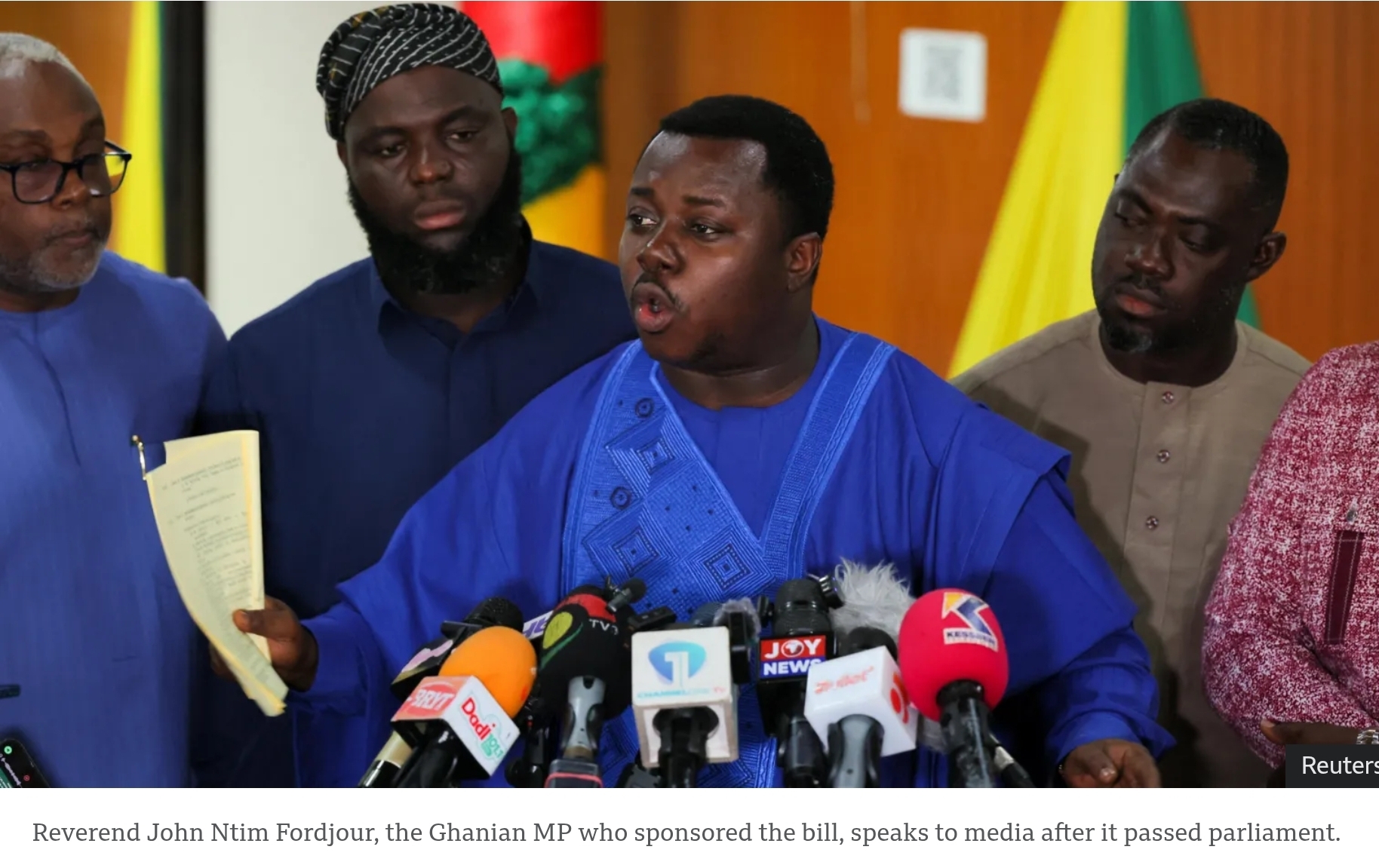
In an address to Parliament, the bill’s sponsor Reverend John Ntim Fordjour said the bill protected Ghanaian family and cultural values.
He said the new bans would make existing laws “more robust, more encompassing, and more stringent in dealing with the practices of LGBTQI”.
Anyone who identifies as an “ally”, a general term for a supporter of LGBTQ+ people, could also face a prison sentence.
Exemptions were included for legal, media and healthcare professionals who report on LGBTQ+ issues or provide medical treatment or other services for gay people.
Human Rights Watch recommended the bill be abandoned, in a formal submission to the constitutional and legal affairs committee scrutinising the legislation in the capital Accra.
Ghana passed a similar bill in 2024 but it did not become law after former president Akufo-Addo failed to sign it amid legal challenges.
President Mahama has indicated he would support the bill’s passage, saying shortly after he took office that “I believe in the principles and values that only two genders exist – man and woman. And that marriage is between a man and a woman.”
BBC