Energy expert Dan Kunle has called on Nigeria to urgently transform its abundant oil and gas resources into tangible economic benefits for citizens, warning that natural wealth alone would not guarantee national development without deliberate investment, engineering capacity and industrial value addition.
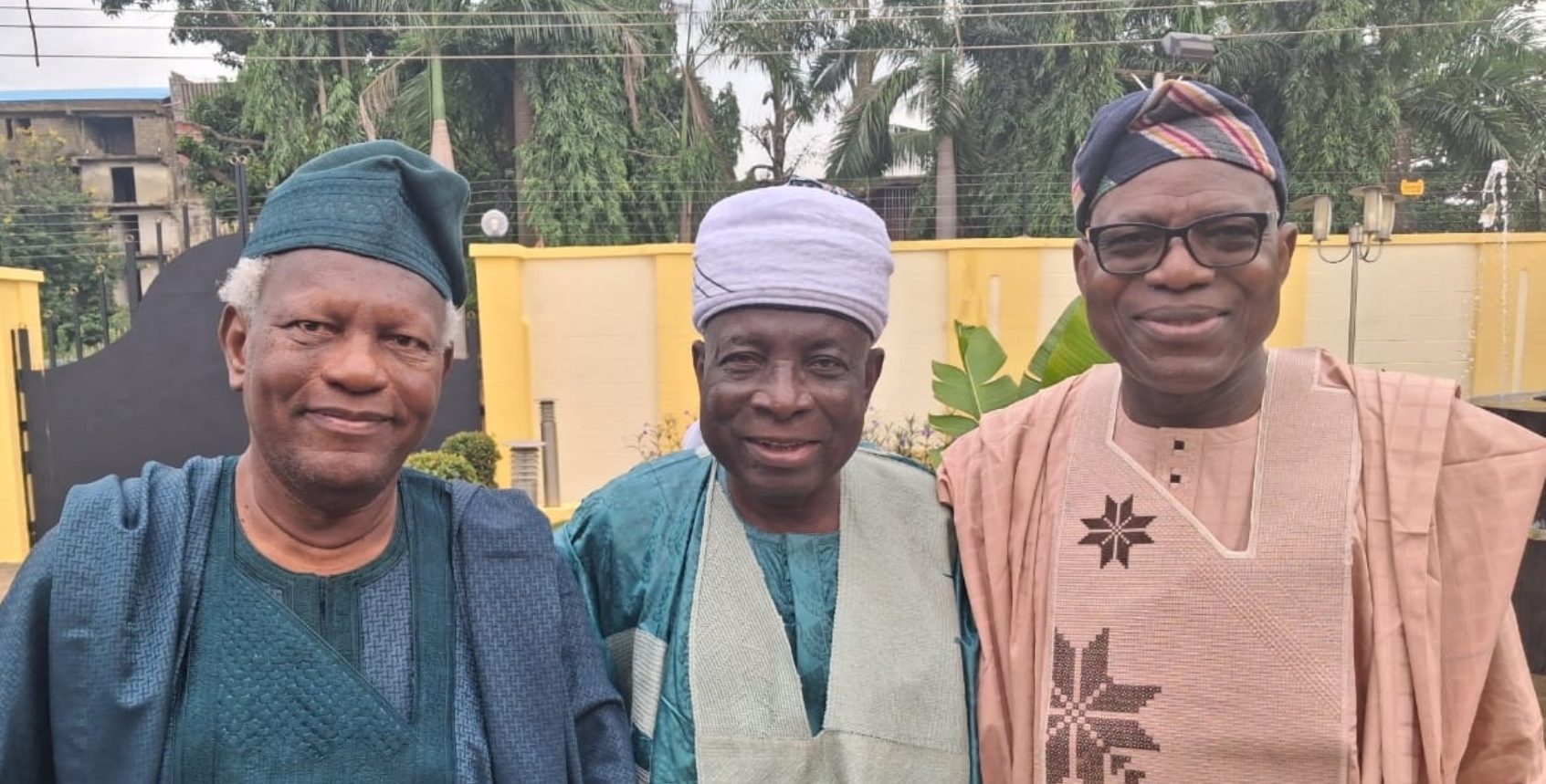
Kunle spoke in Ilorin at the 4th Annual Distinguished Lecture, book presentation, golf tournament and 80th birthday celebration of Engr. Yusuf Lanre Sagaya, where he delivered a keynote titled, “Availability, Accessibility and Sustainability of Oil and Gas Resources for Enhanced Benefits to Nigerians.”
In his address, Kunle said the debate over petroleum resources should go beyond crude extraction and focus instead on how Nigeria can convert its natural endowment into jobs, infrastructure, industrial growth and long-term prosperity.
“At first sight, this appears to be a conversation about petroleum resources. However, it is far more than that. It is a conversation about civilisation, development and whether Nigeria will successfully convert its enormous natural endowment into prosperity for its people,” he said.
He traced human civilisation through the evolution of natural resources, from stone, wood and iron to coal, oil and gas, arguing that history has consistently shown that resources only become wealth when supported by knowledge, innovation, technology and engineering.
According to him, Nigeria’s hydrocarbon potential is substantial, spread across offshore and onshore assets, shallow and deep waters, as well as frontier basins including the Niger Delta, Anambra Basin, Benue Trough, Bida Basin, Sokoto Basin, Gongola Basin and Chad Basin.
Also Read: Kebbi unveils six-state energy hub backed by $1.4bn
But he stressed that the mere presence of resources beneath the ground does not create prosperity.
“Oil beneath the ground is not wealth. Gas trapped beneath geological formations is not wealth. They are merely potential wealth,” he said, adding that exploration and reserve replacement must remain a strategic national priority.
Kunle identified accessibility as the true test of resource usefulness, saying it depends on engineering, investment, institutions and infrastructure. He noted that geological surveys, seismic acquisition, drilling, reservoir evaluation, pipelines, processing plants and distribution systems are all critical to transforming hydrocarbons into economic value.
He cited large-scale industrial projects, especially the Dangote Refinery and Petrochemical Complex, as examples of how engineering and industrial ambition can convert resource potential into productive assets. He said such investments demonstrate the gains of refining and processing hydrocarbons locally rather than exporting them in raw form.
Beyond refining, he pointed to petrochemicals, fertiliser production and industrial manufacturing as higher-value segments that Nigeria must pursue if it hopes to maximise benefits from its natural resources.
Kunle also urged the country to broaden its perspective beyond crude oil, arguing that Nigeria should increasingly see itself as a gas nation. He described natural gas as a strategic resource capable of powering industries, supporting fertiliser and petrochemical production, improving electricity generation and driving broader industrialisation.
He said Nigeria’s proven gas reserves stand at about 210 trillion cubic feet and suggested the country could hold far more if a deliberate exploration campaign is pursued.
Projects such as the Ajaokuta-Kaduna-Kano pipeline, he said, should be viewed not merely as energy infrastructure but as channels for opportunity, industrial growth and economic expansion.
On sustainability, Kunle acknowledged the reality of the global energy transition and the expansion of renewable energy. However, he argued that developing economies such as Nigeria must approach the transition in a way that reflects domestic realities, especially widespread energy poverty and the urgent need for industrialisation.
“The challenge is not whether hydrocarbons should be abandoned. The challenge is how they can be developed responsibly while preparing for the future,” he said.
He warned that delays in developing Nigeria’s oil and gas assets could leave the country with stranded resources and lost opportunities as global markets and technologies evolve.
Kunle therefore called for intensified exploration, expanded refining and gas development, stronger infrastructure, stable policies, support for innovation and greater encouragement for entrepreneurs willing to undertake transformational industrial projects.
He also emphasised the importance of producing more engineers, scientists and skilled professionals, saying future generations would judge Nigeria not by the volume of hydrocarbons in its soil, but by what the country builds with them.
“The opportunity is before us. It will not remain forever. The responsibility is ours. The time to act is now,” he said.
Crediblenewsng.com