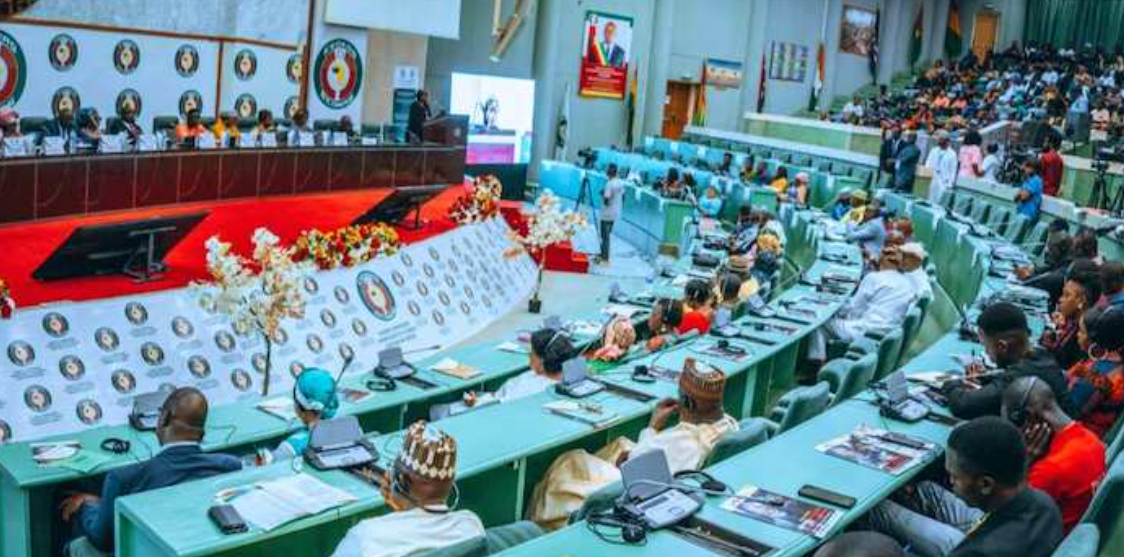
West African leaders have approved the construction of the Nigeria-Morocco Gas Pipeline after signing a landmark agreement during the Economic Community of West African States, ECOWAS, summit held on Sunday, July 19, in Freetown, Sierra Leone.
The project, estimated to cost about $27 billion, is expected to strengthen energy cooperation across West Africa, improve access to natural gas and create a new export route linking Africa with Europe.
The proposed pipeline, which will stretch about 6,000 kilometers, will transport natural gas from Nigeria through 13 countries along Africa’s Atlantic coastline before reaching Morocco, where it will connect to the existing Maghreb-Europe Gas Pipeline.
Speaking at the summit, ECOWAS Chairman and President of Sierra Leone, Julius Maada Bio, confirmed that member states had endorsed the project.
“We have already signed the West Africa-Morocco gas pipeline,” Bio said. “Don’t be surprised when the gas comes your way.”
His remarks underscored the regional bloc’s commitment to improving energy infrastructure and boosting economic integration across West Africa.
In a joint statement, Morocco’s National Office of Hydrocarbons and Mines and the Nigerian National Petroleum Company Limited, NNPCL, said the project is designed to connect West Africa’s abundant natural gas resources with major regional and international markets.
According to the two state-owned energy companies, the pipeline is expected to strengthen the integration of African energy markets while creating a new economic corridor linking West Africa, the Sahel, Morocco and Europe.
Also Read: Tinubu stakes $3bn to fight poverty
The partners said the project would also promote industrial development, improve energy security and expand access to cleaner sources of energy across participating countries.
The next phase of the project will involve the establishment of a special project company to be headquartered in Casablanca, Morocco.
A separate governing authority will also be created with its headquarters in Abuja to oversee the implementation of the cross-border infrastructure project.
The project promoters said investors would be invited after these structures are put in place and a Final Investment Decision is reached.
According to a source at Morocco’s hydrocarbons agency, construction of the pipeline is expected to begin in 2028, while the first gas deliveries are projected for 2031.
The Nigeria-Morocco Gas Pipeline was first proposed in 2016 during the visit of Morocco’s King Mohammed VI to Abuja, where he met with President Muhammadu Buhari.
The project has gained renewed momentum following Algeria’s decision in 2022 to halt gas exports to Spain through Morocco after diplomatic relations between the two North African countries deteriorated.
When completed, the pipeline is expected to become one of Africa’s largest energy infrastructure projects, opening up new markets for Nigerian gas while deepening economic cooperation among participating countries and expanding energy supplies to Europe.