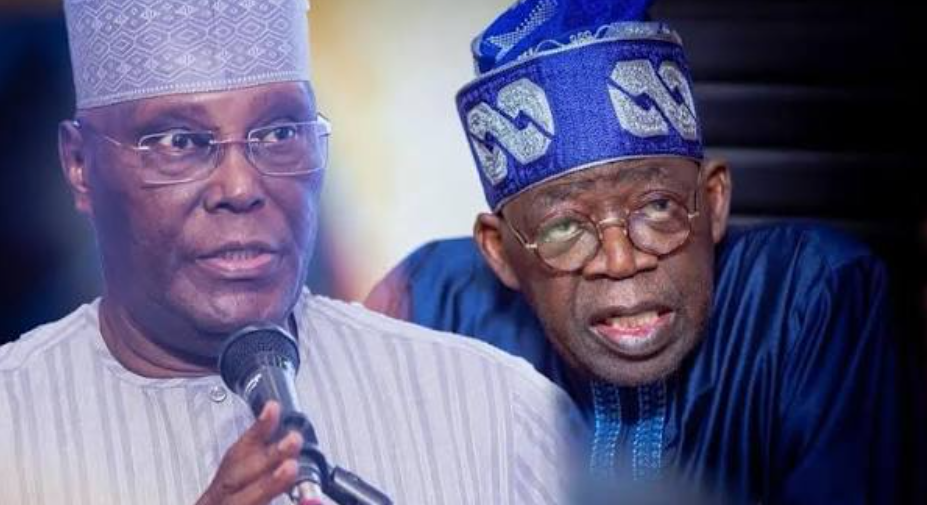
Former Vice President Atiku Abubakar has approached the Federal High Court seeking the disqualification of President Bola Ahmed Tinubu from the 2027 presidential election over an alleged discrepancy involving an NYSC discharge certificate.
Atiku, who is the presidential candidate of the African Democratic Congress, ADC, personally visited the Federal High Court registry on Friday to file the suit.
The former vice president alleges that Tinubu submitted a forced NYSC certificate to the Independent National Electoral Commission, INEC, arguing that the document contains a name different from that of the President.
At the centre of the suit is an alleged discrepancy in the name appearing on the NYSC discharge certificate. According to Atiku’s affidavit, the certificate submitted to INEC bears the name “Tinubu Bola Adekunle”, while the President is known as “Bola Ahmed Tinubu.”
The suit alleges that the certificate was submitted in connection with both the 2023 and 2027 presidential elections and argues that the document was not legitimately obtained by Tinubu.
Atiku and the ADC are relying on provisions of the 1999 Constitution and the Electoral Act, 2026, particularly provisions relating to the eligibility of presidential candidates and the presentation of forged certificates to INEC.
Section 137(1)(j) of the Constitution provides grounds for disqualification where a person presents a forged certificate to INEC.
Atiku personally deposed to the affidavit supporting the case, saying he decided to appear at the court because of the constitutional significance of the matter.
“I came here personally because the issues before the court go to the heart of our Constitution and the integrity of the office of President,” he said after taking the oath.
Atiku said the matter should be treated with the seriousness it deserves, adding that the President would now have an opportunity to respond to the allegations through the judicial process.
The ADC presidential candidate is also asking the court to compel INEC to produce Tinubu’s Form CF001 submitted for the 2023 and 2027 presidential elections.
He said he had previously requested certified true copies of the documents from the electoral commission but did not receive a response before commencing the suit.
Beyond the alleged certificate discrepancy, Atiku and the ADC are challenging aspects of the Electoral Act, 2026, which they argue could restrict pre-election challenges relating to candidates’ qualifications.
They contend that provisions of the Act cannot override the Constitution, particularly where the Constitution expressly provides grounds for disqualification.
Also Read: Atiku raises alarm over suspicious bank credit
Atiku questioned whether legislation passed by the National Assembly could effectively prevent Nigerians from challenging a candidate’s eligibility where the Constitution provides for such scrutiny.
He maintained that the Constitution remains the supreme legal authority and that no ordinary legislation should provide an exemption from constitutional requirements.
Atiku also argued that candidates for public office should be subjected to the same level of scrutiny as ordinary Nigerians.
He drew attention to the rigorous documentation and verification processes faced by Nigerian graduates and job seekers, arguing that discrepancies in official certificates should not be overlooked because an individual is seeking the highest political office in the country. He stressed that holding the presidency should not provide immunity from constitutional scrutiny.
Atiku also called on INEC to make relevant documents available to the court, arguing that the commission holds the records needed to establish the facts surrounding the case.
Atiku and the ADC are seeking several declarations and orders from the court, including: A determination on whether provisions of the Electoral Act can restrict challenges based on Section 137(1)(j) of the Constitution.
An order compelling INEC to produce Tinubu’s nomination documents and Form CF001 for the 2023 and 2027 elections.
An order disqualifying Tinubu and the APC from the 2027 presidential election if the allegations are established by the court.
Lead counsel Joseph Onu Silas said the case was not about personalities or political privilege but about constitutional compliance and equal treatment under the law. He maintained that no individual, including the President, should be considered above the Constitution.
The allegations contained in the suit have not been determined by the court. President Tinubu, the APC and INEC are expected to respond to the claims as the legal proceedings progress.
Atiku said the case was intended to ensure that questions surrounding the qualification of presidential candidates are addressed before Nigerians cast their votes in 2027.
He argued that voters should have clarity about the eligibility of candidates before the election rather than being required to vote first and investigate questions of qualification afterward.
The Conclave