The United Kingdom has announced a ban on the import of all goods produced by illegal Israeli settlements in the occupied West Bank, in the country’s most significant policy since London’s historic recognition of Palestinian statehood last year.
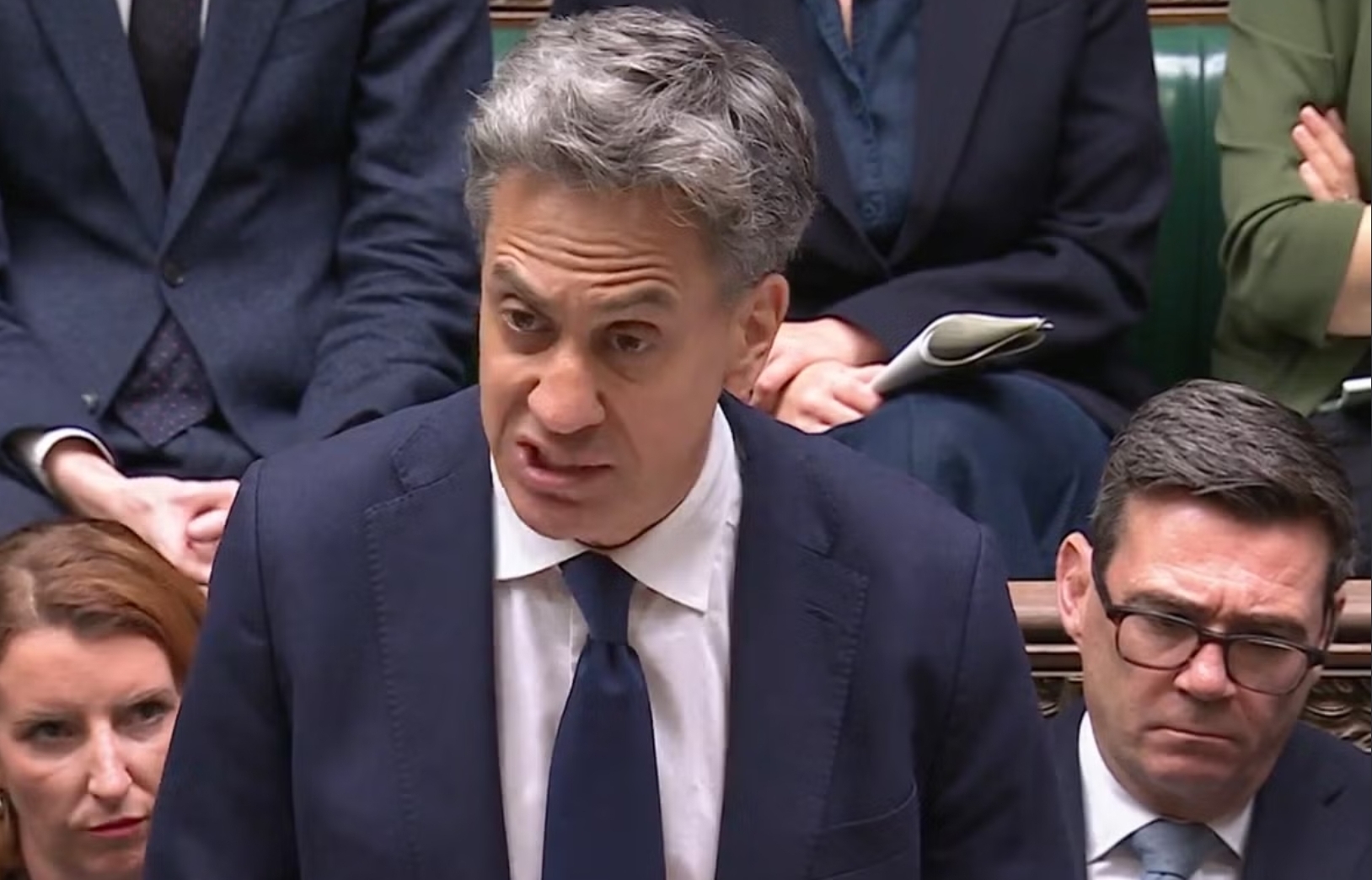
In a speech to Parliament, UK Foreign Secretary Ed Miliband accused Israel of carrying out “ethnic cleansing” in Palestine and affirmed that it is official UK policy that the Israeli settlements rapidly expanding across the occupied West Bank are “unlawful”.
said he did not believe “the British people want us supporting the occupation by accepting products from settlements in our shops”.
Miliband also announced tougher new restrictions on arms sales to Israel.
Israel announced four “counter measures”, including banning 12 British MPs from entering Israel and closing the British consulate in Jerusalem, following his speech.
The UK’s trade ban on goods from illegal settlements comes amid an intensifying wave of Israeli settler pogroms on Palestinian communities in the occupied West Bank and controversial settlement expansions that have prompted a UK-led debate on Europe-wide trade restrictions.
After Miliband’s speech, 12 countries shared a joint statement supporting the two-state solution and announcing their own intentions to impose restrictions on trade with illegal Israeli settlements.
Also Read: US directs Israel to end West Bank settler violence
France, the UK, Canada, Denmark, Spain, Finland, Ireland, Iceland, Norway, Poland, Portugal and Sweden called on the Israeli government to immediately halt the expansion of settlements.
Here’s what we know.
What did Miliband say in Parliament?
Ahead of Tuesday’s announcement, Miliband said new trading bans and sanctions would represent a “comprehensive reset” of the UK’s policy on Israel, amounting to an approach that “not only calls out the injustice [in Palestine], but acts”.
However, he added: “The sanctions regime will target illegal settlements and settlement expansion, not Israel.”
“I can also announce that we’re extending the existing global human rights regime such that it will enable swifter action to deter settlement expansion, including crucially seeking to prevent the development of E1,” Miliband added. E1, a proposed settlement in the West Bank, would divide the Palestinian territory in two and put an end to hopes for a two-state solution, he said.
In support of Israel, Miliband also announced new sanctions against the financing arm of the Lebanese group Hezbollah – Al-Qard al-Hasan – and said the UK will reimpose sanctions on Iran, in line with those imposed by the European Union and United States.
However, he said the UK government “agrees” that settler violence in areas of the West Bank amounts to ethnic cleansing and labelled those carrying it out as “settler terrorists”. He accused the Israeli government of turning a blind eye to the violence and intimidation of Palestinians.
Miliband reaffirmed the UK’s commitment to a two-state solution for Palestine and sharply criticised the rhetoric of Israeli politicians, such as Minister of Finance Bezalel Smotrich, who have called for an end to any notion of a Palestinian state.
Miliband, who is himself Jewish, said the UK government will take a tougher approach towards rising anti-Semitism in the UK. He emphasised that measures by the UK government are being taken against the government of Israel, not the Israeli people, and that targeting Jewish people in the UK for the acts of the Israeli government is “anti-Semitism, pure and simple”.
Britain is a country “that upholds its values at home and around the world, a Britain that fights against oppression and suffering wherever it occurs, a Britain that stands up for what is right”, he said.
Al Jazeera