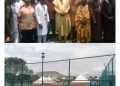
Bauchi, Gombe and Jigawa State governments have embarked on flood and erosion control projects worth over N35 billion to tackle erosion, flooding and land degradation through drain construction, gully reclamation, tree planting and environmental restoration.
A cross section of stakeholders in the environment sector, stated this in separate interviews with the in Bauchi, Dutse and Gombe.
Mr Mukhtar Giade, Project Engineer, Agro-Climatic Resilience in Semi-Arid Landscapes, ACReSAL, project in Bauchi, said that the Bauchi government had initiated a comprehensive flood and erosion control projects across the state.
He said that the intervention is being complemented by the state government to restore vegetation and improve drain systems in vulnerable communities.
It will be recalled that the Bauchi state government has embarked on a N29.7 billion flood and gully erosion control project in collaboration with the ACReSAL.
The 15.2-kilometre project is being funded by the World Bank, while the state government contributed 40 per cent of the contract sum, and another N1 billion for payment of compensation to landowners affected by the project.
It was designed to reclaim degraded lands, control stormwater and gully erosion at various communities in Bauchi metropolis.
The benefiting communities include Tsohon Kamfani; Sabon Kaura, Wunti Dada, Abubakar Tatari Ali Polytechnic, Tambari Housing Estate, Yelwa Bridge, and the Bauchi State College of Agriculture.
Mr Dauda Mohammed, Director of Forestry in the state Ministry of Housing and Environment, said that the government distributed one million tree seedlings for planting at schools, offices, strategic locations, and places of worship.
Also Read: FG partners ACReSAL to curb land degradation, boost agriculture
He highlighted that natural regeneration remained one of the most effective and sustainable erosion and flood control measure.
The director advised farmers to allow vegetation to regenerate after harvesting rather than complete clearance of farmlands.
According to Mohammed, vegetation helps reduce soil exposure and the surface runoff.
Mr Abdullahi Umar, an Environmental Officer in the ministry, said that the state government had executed and completed drain projects at Badara, Duguri, Gwaram, and Barno communities in Kirfi, Alkaleri and Bauchi LGAs.
Mr Adamu Nayola, Director of Relief and Rehabilitation, Bauchi State Emergency Management Agency (SEMA), advocated for a public enlightenment campaign to discourage overgrazing and deforestation.
In Gombe, the state government said that the erosion control intervention had improved the lives of 1.6 million people along different corridors.
Mr Yusuf Jalingo, Commissioner for Environment and Forest Resources, said that the intervention implemented in partnership with the ACReSAL and the Nigeria Erosion and Watershed Management Project impacted over 400,000 people living along gully corridors in Gombe metropolis.
He listed other benefiting communities to include Shada Mansur, Bajoga, Lafiya Talle, Uban Doma, Malleri, Jauro Musa, Sabuwa and Jauro Tukur in Funakaye, Dukku, Nafada, Kwami and Akko LGAs.
Jalingo said that other gully control projects included the Federal College of Education (Technical), Gombe, and the GGC Doma, which reached about 80 per cent completion.
He said that the government had paid compensation to residents affected by the projects, to enable them to rebuild their livelihoods.
“The state government also responded through channelisation, water-diversion outlets, ecological restoration and afforestation programmes, including the Gombe Goes Green (3G) initiative, which involves planting of trees,” he said.
Some of the residents in the affected communities described the intervention as a “game changer” towards addressing environmental challenges in the state.
Malam Haruna Musa, a resident of Hayin Kwarin Misau, said that erosion destroyed houses in his neighbourhood. “About 10 years ago, there were houses here, but eventually they were washed away by erosion,” he said.
Another resident, Mr Cletus Mela, said that the intervention had brought relief to the residents, hitherto threatened by the negative impacts of erosion.
Mr Sagir Musa, Jigawa Commissioner for Information, said that the state government had spent about N3 billion on the Kila erosion control project in Gwaram LGA.
He said that the state government was also discussing with the Federal Ecological Project Office, to strengthen collaboration with ACReSAL on erosion control.
Musa said that the Federal Ministry of Water Resources and Sanitation in collaboration with the Hadejia-Jama’are River Basin Development Authority had embarked on drain and erosion control in Jahun LGA.
He said that the project was designed to address perennial flooding and erosion in the affected communities.
To address environmental challenges, Mr Mansur Ahmad, a lecturer in the Department of Ecology, Hussaini Adamu Federal Polytechnic, Kazaure, called for strong land-use planning and monitoring of vulnerable communities, particularly those located along river channels and waterways.
He identified several erosion-prone areas that require close monitoring to include Dutse, Gwaram, Kiyawa, Buji, Birnin Kudu, Kafin Hausa, Jahun, Miga, Malam Madori, Ringim and Taura.
Moreso, Shittu Kabiru, Executive Director, Youth Aid and Development Association of Nigeria said that erosion was aggravated in Jigawa by excessive rains, flooding, poor drain systems, exposed soils and vegetation removal.
The effects, he said, resulted in expanded gullies, loss of agricultural lands and livelihoods, damage roads and culverts.
NAN