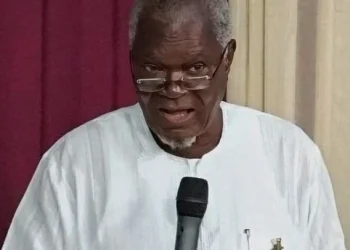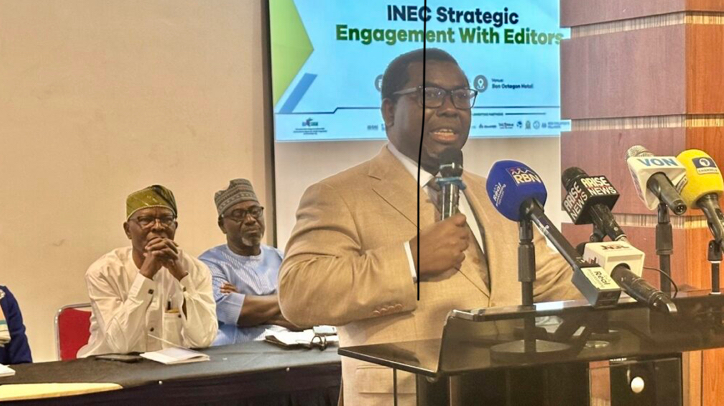
Nigeria has no fewer than 103 million voters registered for the 2027 general elections, the Chairman Independent National Electoral Commission, INEC, Joash Amupitan disclosed on Monday in Abuja at a strategic workshop for media executives organised by the commission in collaboration with Development Alternatives Incorporated and the Nigerian Guild of Editors.
The workshop was themed, “Strengthening Democracy Through Partnership Among Editors, Civil Society and Electoral Institutions.”
Amupitan said the commission’s three-phase Continuous Voter Registration exercise attracted more than 10.6 million new applicants.
He said the public display of the preliminary register of voters for claims and objections had been completed, while the final Automated Biometric Identification System cleanup of the register had also been concluded.
The INEC chairman said the commission would commence nationwide collection of PVCs on October 9.
He urged eligible citizens who participated in the registration exercise to collect their cards and ensure they were ready to participate in the 2027 elections.
Amupitan said INEC was also committed to continuously improving the Bimodal Voter Accreditation System and the INEC Result Viewing Portal to strengthen the credibility and transparency of elections.
“The ultimate arbiter of electoral integrity is public trust,” he said.
Also Read: INEC warns against fake voter registration site
The chairman called for stronger collaboration among INEC, media organisations, civil society groups and other stakeholders ahead of the 2027 elections.
Amupitan said the commission was prepared to listen to editorial concerns, address operational challenges and provide timely information to prevent misinformation from filling communication gaps.
He said INEC would provide editors with direct access to verify field incidents, logistical developments and security reports in real time.
The chairman also proposed a sustained editorial feedback mechanism between INEC and the Nigerian Guild of Editors to review the commission’s operational progress and address emerging challenges throughout the 2027 election cycle.
Amupitan said stronger engagement with the media would help ensure that accurate information reached voters, particularly during periods when electoral activities generated heightened public interest.
Rudolf Elbling, Team Leader at DAI, said credible elections depended not only on effective electoral administration but also on professional, ethical and fact-based journalism.
Elbling identified electoral integrity, election technology, the security of journalists and voters, and information disorder as some of the major challenges confronting the media ahead of the 2027 elections.
He said journalists had an important role to play in providing voters with accurate information and holding electoral institutions and other stakeholders accountable.
The workshop brought together electoral officials, editors, civil society representatives and other stakeholders to strengthen cooperation and improve public communication ahead of the 2027 elections.
Thecable