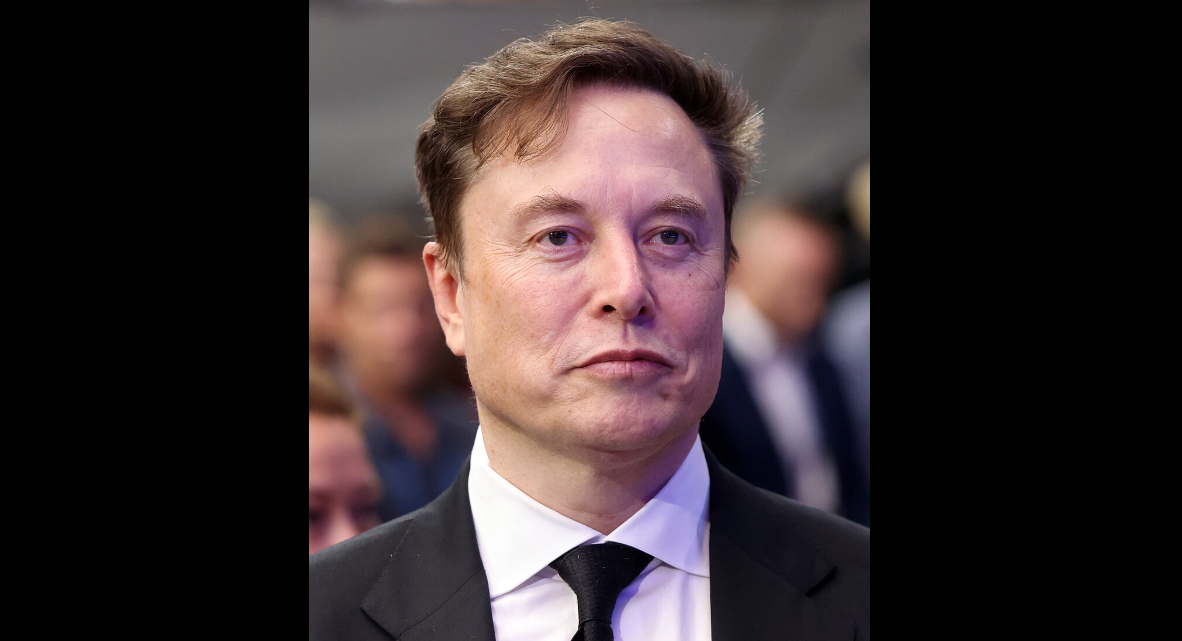
Elon Musk has expressed regret over spending nearly $500 million backing Republican candidates in the 2026 US midterm elections, admitting he felt “pretty foolish” after Democrats recorded sweeping victories.
Musk, the chief executive of Tesla and SpaceX, made the remarks during a virtual appearance at The New York Times DealBook Summit in New York where he acknowledged that his substantial financial contributions had yielded limited political gains.
“I feel pretty foolish about having spent so much money and not seeing much for it,” Musk said during his conversation with journalist Andrew Ross Sorkin.
The technology billionaire, who has been a close ally of President Donald Trump, said he believed Republican candidates might have performed even worse without his financial backing.
However, he acknowledged that the election results demonstrated the limitations of campaign spending in determining electoral outcomes. “Probably, if I could rewind the clock, I would have spent less money,” he added.
Musk’s spending was aimed at helping Republicans retain control of Congress and preserve their political dominance in Texas, a state with significant business interests for his companies.
According to reports, he directed hundreds of millions of dollars towards Republican candidates and political groups during the election cycle, making him one of the most prominent financial backers of the party.
The scale of Musk’s political expenditure was particularly evident in the results of congressional races. A Reuters report published after the November 3 elections found that only three of the 37 Republican House candidates he supported won, while 33 lost.
Of the seven Republican Senate candidates backed by the billionaire, six were defeated. The remaining contest was still unresolved at the time of the report.
His political efforts were particularly concentrated in Texas, where Tesla and SpaceX have major operations and where he is pursuing a planned chipmaking venture involving the two companies.
Musk reportedly spent approximately $230 million on the Texas Senate contest, $5 million on the gubernatorial race and $500,000 on the lieutenant governor’s election.
His spending included support for Republican Senator-elect Ken Paxton’s unsuccessful campaign against Democrat James Talarico.
Also Read: Musk accuses Ukraine of violating Starlink terms
The Texas Senate contest became the most expensive non-presidential election race in US history, attracting approximately $573.2 million in total spending, according to political advertising tracker AdImpact.
Democrats also secured a significant victory in the gubernatorial election, with state representative Gina Hinojosa defeating incumbent Republican Governor Greg Abbott.
Her victory marks the return of a Democratic governor to Texas for the first time since Ann Richards left office in 1995. Hinojosa has also indicated plans to take a more critical approach to Musk’s business activities in the state, including raising concerns about the use of public resources and the expansion of data centres.
The election results also carry potential implications for Musk’s business interests, particularly his companies’ relationships with the federal government.
Democrats have indicated plans to increase congressional scrutiny of Musk’s companies, including their federal contracts, artificial intelligence projects and activities involving government agencies.
His involvement in the Department of Government Efficiency, which he previously led, is also expected to attract further attention from Democratic lawmakers.
Beyond politics, Musk used his appearance at the DealBook Summit to discuss SpaceX’s growing artificial intelligence ambitions and its commercial relationship with AI company Anthropic.
He said Anthropic was extremely likely to continue renting computing capacity from SpaceX and was interested in securing significantly more capacity.
According to Musk, the most likely outcome would involve Anthropic seeking an additional 10 gigawatts of computing capacity from SpaceX, highlighting the potential scale of demand for computing infrastructure as artificial intelligence development expands.
His comments come as technology companies increasingly compete for the computing resources required to develop and operate advanced AI systems.
Musk’s remarks therefore combined a reflection on the financial outcome of his political involvement with an indication of SpaceX’s potential role in the expanding AI infrastructure market.
The 2026 midterm results have reshaped the political landscape in Washington, with Democrats preparing to take control of both chambers of Congress.
For Musk, the outcome raises questions about the effectiveness of his record political spending and the implications of a changed political environment for his business interests.
REUTERS