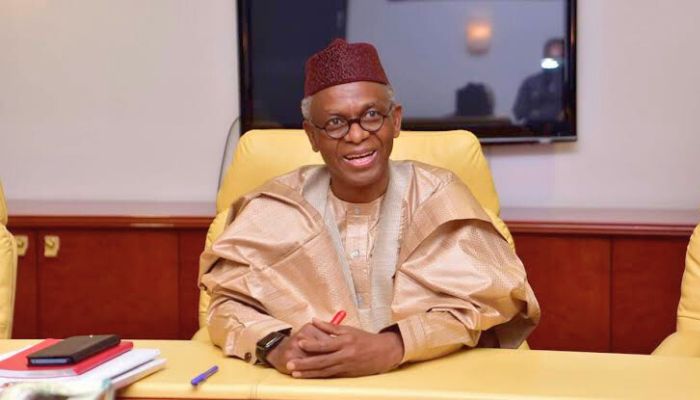
The Federal Government, through the Ministry of Petroleum Resources and the Nigerian National Petroleum Company Limited, NNPC, has debunked the claims by the former Governor of Kaduna State, Nasir El-Rufai, that the fuel subsidy has returned.
The government also challenged those who make this argument to provide evidence to justify their allegations, stressing that since President Bola Tinubu had declared the end of subsidy on petrol, the situation remains so.
The Minister of State for Petroleum Resources, Heineken Lokpobiri, stressed that fuel subsidy was a sensitive issue, but noted that the government had made its position known on the matter.
In a video clip, Lokpobiri insisted that petrol subsidy had ceased to exist, and urged those who alleged that the government was still subsidizing the commodity to provide evidence and facts.
On whether the price being paid for petrol currently is determined by market forces, the minister replied, “It may not be determined by market forces but let us deal with the price as it is today.
“Every government has a duty to do certain things, not only in the petroleum sector but in several other sectors, to be able to cushion the effect and burden on Nigerians,” he said.
READ ALSO: Kaduna Assembly sets up committee to probe former Gov. El-Rufai
The NNPC also said it was recovering its full cost on the petroleum products that it imports into Nigeria, and insisted that there was nothing like petrol subsidy any more. NNPC is the sole importer of petrol into Nigeria currently.
El-Rufai had told journalists in Maiduguri that many citizens were not aware that the government had reintroduced the PMS subsidy.
“The Federal Government is now subsidizing fuel; many people don’t know this. It is the right policy. I have always supported the withdrawal of oil subsidies; but in the course of implementing the policy, the government realized that subsidy has to be back; right now, the government is paying a lot of money for subsidy, even more than before.
“You start implementing a policy because you are sure it is the right policy, but in the course of implementation, you come across bottlenecks, and you modify.
“The keyword in leadership, in my view, is pragmatism. You should be pragmatic. So when you make a policy, you start implementing it, and it doesn’t seem to work well. You should have the humility to stand back and say this is not working, and you modify it,” the former governor stated.
Credible News.ng