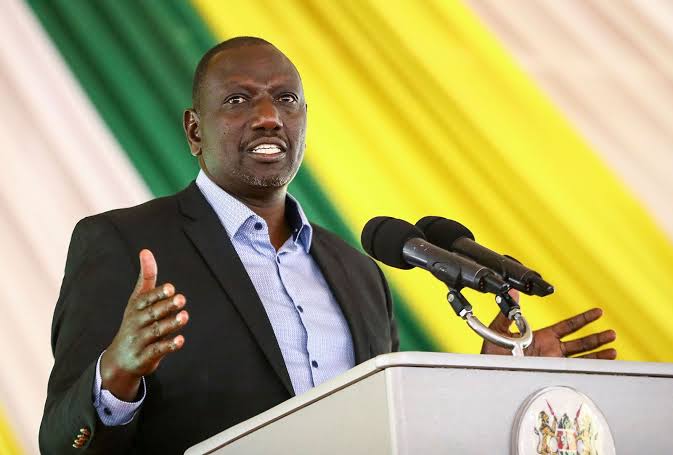
Kenyan protesters have demanded the resignation of President William Ruto after at least 39 people were killed and 361 injured in anti-tax demonstrations over the past two weeks.
The country’s military was deployed by the evening of June 25, and live ammunition was used against demonstrators. Ruto’s announcement that he would scrap the tax-heavy finance bill that initially drew the fury of citizens does not seem to have quelled the wave of discontent.
Nationwide protests continued into a third week on Tuesday, with tear gas canisters used on demonstrators and reports emerging of police beatings in the capital, Nairobi, and the coastal city of Mombasa. Kenya’s young activists say they will not be dissuaded by police brutality and have demanded that corrupt officials be fired. Further marches are planned for Thursday.
Last week, around 35 people suspected of leading demonstrations against the finance bill were reportedly picked up by a specialized police unit. Most were released after protests subsided.
Kenya’s deputy president, Rigathi Gachagua, blamed the National Intelligence Service for the abductions and issued a plea for further demonstrations to be called off. Ruto has defended his handling of the protests. “I have no blood on my hands,” he said in a televised roundtable with Kenyan media on Sunday night. The president said that there would be an investigation into the officers’ conduct.
The president said 2.4 billion shillings ($18.7 million) worth of property was destroyed by criminals who took advantage when demonstrators stormed parliament. The legislature buildings, the chief justice’s offices, and Nairobi City Hall were partly burned.
Ruto disputed the death toll and added that all persons detained had been released, but local rights groups say some people are still missing. “We maintain that the force used against the protestors was excessive and disproportionate,” said Roseline Odede, the chair of the Kenya National Commission on Human Rights.
Around 80 percent of the Kenyan population is below 35 years old, and most who voted for Ruto did so due to his campaign promise of being a self-styled “hustler-in-chief” who would create jobs and lower the cost of living for ordinary people.
READ ALSO: Kenya resort to more borrowing after withdrawal of finance bill
Young Kenyans are among the most educated on the continent, but the country’s 5 percent growth rate has not resulted in an abundance of highly skilled jobs.
The withdrawn bill sought to raise $2.7 billion in taxes to reduce the country’s debt burden of more than $80 billion. It is part of a fiscal pledge to keep in line with a $3.6 billion International Monetary Fund program agreed in April 2021 as well as a $1.2 billion World Bank loan approved in May this year. Ruto’s proposed reforms included several tax hikes, such as a digital tax (impacting many, since more than 80 percent of Kenyans use mobile money—or digital payment services accessed via cellphones); hiked wage taxes; a social health tax; and taxes on bread, fuel, specialist hospital care, and small businesses.
About 60 percent of Kenya’s collected tax revenues go to servicing debt. The National Treasury had to borrow additional money for allocations to counties and for school education, Ruto said.
The anger among young Kenyans is also directed at the International Monetary Fund and World Bank, which they argue are making decisions for the country that are worsening hardship and creating slower-than-average growth. They perceive alleged corruption and wasteful spending in government as a greater priority in tackling the country’s debt. “Kenyan legislators are the second-highest paid in the world relative to GDP,” writes Nanjala Nyabola in the Guardian. “The finance bill was described as austerity, but this is not austerity: this is a cash grab from the poor to sustain the lifestyles of the rich.”
But Ruto insists that the withdrawal of his finance bill will only bring further economic pain for Kenyans, as the government will be forced to borrow 1 trillion shillings ($7.6 billion)—a 67 percent increase on what had been planned. “What we have done with the finance bill going down, is that instead of borrowing 600 billion, we are going to borrow 600 billion plus 346 billion—that is close to a trillion,” Ruto said. “We are in a very difficult financial position. This is something that the people of Kenya must understand.”
Kenyans lashed out on social media, drawing again on the failure to provide teacher wages and other public spending. In April, U.S. Trade Representative Katherine Tai warned that state graft was hampering efforts to attract more U.S. investment. “Kenya has not effectively implemented its anticorruption laws. U.S. firms routinely report direct requests for bribes from all levels of the Kenyan Government,” flagged a 2024 U.S. report on foreign trade barriers.
For months, there had been an increasing divide in international and domestic opinion regarding Ruto, with a clear disconnect between the U.S. government’s embrace of the president and his extremely low approval ratings at home. Ruto’s political career began murkily—the International Criminal Court once charged him with crimes against humanity, accusing him of inciting the ethnic violence that followed Kenya’s 2007 election, but it abandoned the case. Ruto has since reinvented himself as a key U.S. ally.
Ruto will need to convince young Kenyans that he has listened to them on government graft and that he is willing to take action. Otherwise, his position looks increasingly untenable.
Credible News.ng