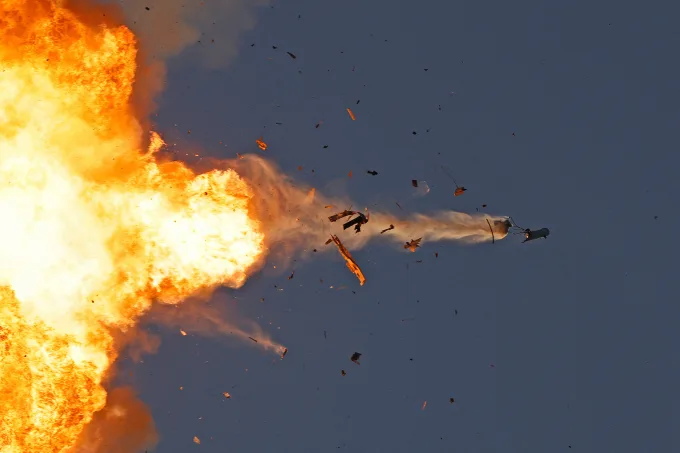
The Israeli military launched what it termed “preemptive” strikes against Hezbollah in Lebanon, while the Iran-backed militant group claimed it conducted its own attacks in retaliation for the killing of a top commander.
These overnight strikes mark some of the most intense exchanges between Israel and Hezbollah, who have been trading fire for months.
The escalating hostilities have heightened fears of a broader regional conflict, prompting urgent diplomatic efforts to ease tensions.
The Israel Defense Forces, IDF, reported that around 100 fighter jets struck and destroyed thousands of Hezbollah rocket launcher barrels across numerous launch sites in Lebanon on Sunday, followed by additional attacks later in the day. Israel justified the strikes as self-defense, stating it had identified Hezbollah’s preparations to fire missiles and rockets toward Israeli territory. However, Hezbollah dismissed Israel’s claim of a preemptive strike as baseless.
READ ALSO : Isreal and US prepare for Iran’s attack
“We removed a wider threat, probably also a future threat in some areas,” IDF spokesperson Rear Admiral Daniel Hagari said on Sunday.
Following recent Israeli airstrikes, the IDF reported that around 200 rockets were fired from Lebanon into Israel early Sunday morning, though there have been no reports of injuries.
Hezbollah, in response declared the first phase of their attacks on Israel a success, claiming they had launched 320 rockets and a series of drones.
Hezbollah stated that its recent strikes on Israel were a retaliation for the killing of top military commander Fu’ad Shukr last month in the southern suburbs of Beirut, a densely populated area and a key stronghold for the Iran-backed group.
Israeli Prime Minister Benjamin Netanyahu said that “what happened today is not the end and Hezbollah leader Hassan Nasrallah in Beirut and Iranian Supreme Leader Ali Khamenei in Tehran should know that this was another step on our way to change the situation in the north and safely return our residents to their homes.”
For the Lebanese group, Shukr’s assassination was a change in the rules of engagement, Danny Citrinowicz, research fellow in the Iran Program at the Institute for National Security Studies in Tel Aviv, said. “They had to retaliate,” Citrinowicz said adding that the group may have been trying to draw a line in the sand to avoid further attacks.
The attacks occurred just hours before mediation talks resumed in Cairo, aiming to broker a ceasefire and hostage release between Israel and Hamas. An Israeli official confirmed that Israeli negotiators arrived in the Egyptian capital on Sunday afternoon to participate in these crucial discussions.
Meanwhile, US President Joe Biden is closely monitoring events in Israel and Lebanon, the White House noted on Saturday night.
Credible News.ng