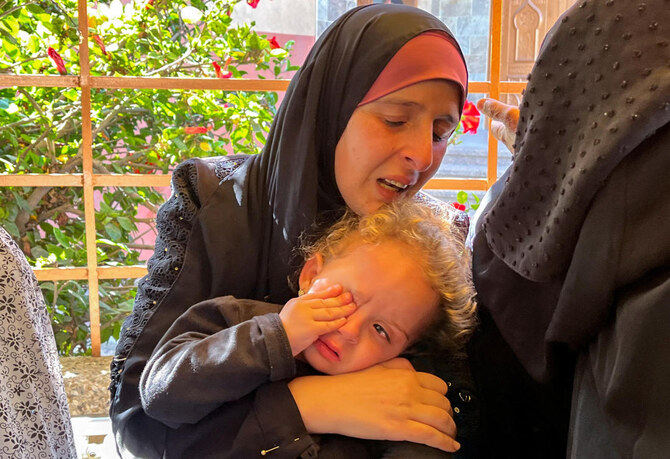
Up to 1,000 women and children needing medical care will shortly be evacuated from Gaza to Europe, the head of the World Health Organization’s, WHO, Europe branch said in comments published on Monday.
Israel, which is besieging the war-devastated Palestinian territory, “is committed to 1,000 more medical evacuations within the next months to the European Union,” Hans Kluge said in an interview with AFP.
He said the evacuations would be facilitated by the WHO; the United Nations’ health agency and the European countries involved.
On Thursday, UN investigators said Israel was deliberately targeting health facilities in Gaza, and killing and torturing medical personnel there, accusing the country of “crimes against humanity”.
Rik Peeperkorn, WHO representative in the occupied Palestinian territories, said in May that around 10,000 people needed evacuating from Gaza for urgent medical care.
The WHO Europe has already facilitated 600 medical evacuations from Gaza to seven European countries since the latest war began there in October 2023.
“This would never have happened if we did not keep the dialogue open,” Kluge said.
“The same is true for Ukraine,” he added. “I keep the dialogue open with all partners.
READ ALSO: WHO warns against circulation of counterfeit diabetes drugs worldwide
“Now, 15,000 HIV-AIDS patients in Donbas, the occupied territories of Ukraine, are getting HIV-AIDS medications,” the 55-year-old Belgian said in English, stressing the importance of “not politicising health,” he said.
“The most important medicine is peace,” he said, noting that healthcare workers had to be allowed to do their jobs in conflict zones.
Around 2,000 attacks have been registered on health centers in Ukraine since Russia’s invasion in February 2022, according to the WHO
“There may be a kind of acceptance almost but this should cause outrage every single time,” he said.
“We will always continue to condemn this in the strongest possible terms.”
Kluge expressed concern ahead of Ukraine’s third winter of war.
“Eighty percent of the civilian energy grid is damaged or destroyed. We saw it in the hospitals, surgeons operating with a lamp on their heads,” he said.
“It will be a very, very tough” winter.
Despite strains on Europe’s healthcare systems, he said the 53 countries that make up the WHO European region — which includes central Asian countries — were able to come together to prepare for future pandemics.
“In Europe, we did our homework,” he said.
Credible News.ng