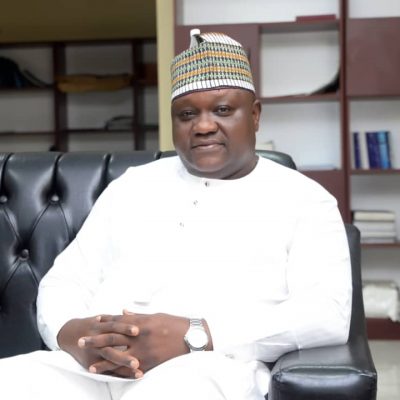
President Bola Tinubu has reappointed Professor Samson Duna as the Director General of the Nigerian Building and Road Research Institute, NBRRI, for a second four-year term.
The announcement was made in a statement released by Mr. Peter Mashem, Deputy Director of Information at NBRRI, on Tuesday in Abuja. This reappointment was confirmed through an official letter from the Secretary to the Government of the Federation, Senator George Akume.
Professor Duna, who first took on the role of Director General in 2020, is an accomplished academic and professional in the field of civil engineering. He hails from Billiri Local Government Area in Gombe State. Duna’s professional credentials are impressive, with extensive affiliations in national and international engineering circles.
READ ALSO : Tinubu to swear in new ministers Monday, says Onanuga
A COREN-registered engineer, Duna is a member of the Nigerian Institute of Engineering Management and a Fellow of the Nigerian Institution of Civil Engineers, the Nigerian Association for Engineering Geology and the Environment, and the Nigerian Society of Engineers.
His influence in the engineering and infrastructure sectors extends beyond Nigerian borders. He is a council member of the Standards Organisation of Nigeria and also serves as a board member on the Industrial/Sectorial Board for the Regional Transport Research and Education Centre in Kumasi, Ghana.
Duna’s reappointment is seen as a strategic decision to further enhance the research and development initiatives in Nigeria’s building and road construction industries, with expectations for continued progress under his expertise and leadership.
NBRRI was established to conduct integrated applied Research and Development into the various aspects of the building and construction sectors of the economy. The mandate was later in 1993 expanded to include R&D into all aspects of Engineering Materials related to the construction industry.
In the Act setting up of NBRRI, she is required to conduct research on: Local building and construction materials to determine the most effective and economic methods of their utilization, architectural design of buildings to suit Nigerian climatic conditions with respect to lighting, ventilation, thermal comfort and humidity, the design and performance of functional units in buildings including electrical installations, plumbing, painting, drainage, ventilation and air-conditioning system and local construction, foundation and earth-works for buildings and bridges, especially on problem soils.
Credible News.ng