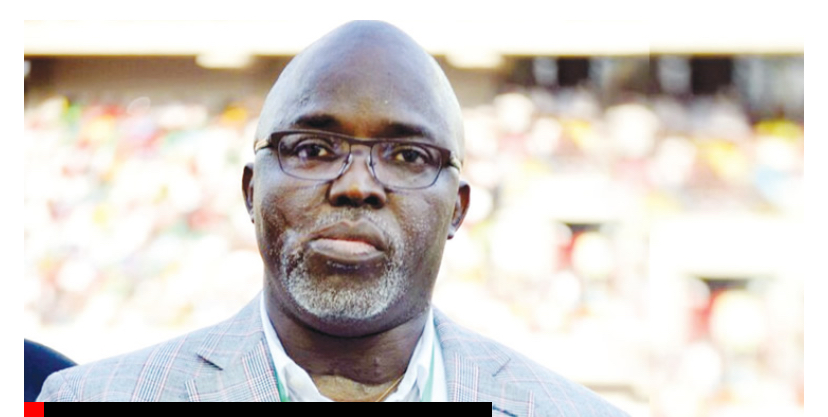
The exit of Amaju Pinnick from the FIFA Council has reignited discussions on Nigeria’s football administration, with former international Paul Okoku insisting that the country gained nothing from his tenure.
Pinnick lost his seat on Wednesday in Cairo, Egypt, during an election where he was defeated by Ahmed Yahya of Mauritania and Souleman Hassan Waberi of Djibouti—both from relatively unknown football nations.
His departure has drawn mixed reactions, with some seeing it as a missed opportunity and others viewing it as a necessary reset for Nigerian football governance.
For Okoku, who spoke from the United States, Pinnick’s tenure failed to deliver meaningful benefits to Nigerian football. “His exit should be a wake-up call. If Nigeria ever secures another FIFA Council seat, it must go to someone who prioritizes national interest over personal ambition,” he said.
The former Flying Eagles midfielder argued that had Pinnick used his position to enforce financial accountability within the Nigeria Football Federation, NFF, coaches and players wouldn’t be left struggling for salaries while administrators thrived.
Adegoke Adelabu, a former IICC Shooting Stars winger, echoed similar sentiments, questioning Pinnick’s impact. “If he couldn’t make a difference at NFF, what do you expect at FIFA’s highest level?” he asked.
Ex-national team player, Harrison Jalla described Pinnick’s four years in FIFA Council as “a complete disaster,” claiming Nigeria gained nothing from his membership. He compared Pinnick to football administrators like Patrice Motsepe, Fouzi Lekjaa, and Samuel Eto’o, who, he argued, had made tangible contributions to their nations’ football growth.
Ahmed Shuaibu Gara-Gombe, former chairman of Gombe FC, added that Pinnick’s downfall was self-inflicted. “He denied others the chance to contribute to Nigerian football governance. The law of karma is real,” he said.
However, Bukola Olopade, Director General of the National Sports Commission, commended Pinnick’s resilience despite the loss, adding that the Nigerian delegation, led by Shehu Dikko, witnessed firsthand the tough politics behind the election.
Pinnick, reflecting on his defeat, expressed gratitude and acknowledged the intensity of football politics. “I campaigned hard, traveled to over 30 countries, and was sure of close to 40 votes. But politics happened,” he said.
As the debate over his legacy continues, the question remains—was Pinnick’s time in FIFA Council a wasted opportunity, or did he pave the way for future Nigerian representation on the global stage?
Reported by The Guardian.