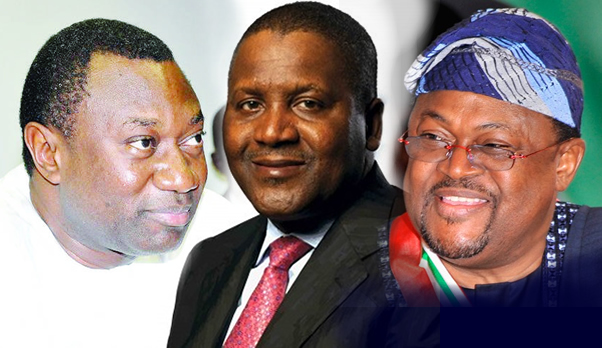
Wealth disparity remains a defining feature of global economics, with Black billionaires making up less than 1% of Forbes’ 2025 billionaire rankings.
Of the 2,781 billionaires listed, only 21 are Black, and just two are women, underscoring the persistent wealth gap across racial lines.
Topping the list of Black billionaires is David Steward, with a net worth of $11.4 billion. As the co-founder and chairman of World Wide Technology, an IT services provider, Steward has built a business empire that serves top-tier clients like Citi, Verizon, and the U.S. federal government.
Aliko Dangote, Africa’s richest man, follows with a net worth of $10.9 billion. The Nigerian industrialist’s fortune is largely derived from Dangote Cement, where he holds nearly 88% ownership. His investments extend to salt, sugar, and flour production, cementing his influence in Africa’s manufacturing sector.
Robert F. Smith, with $10.8 billion, made his fortune through Vista Equity Partners, a private equity firm specializing in software investments.
Smith’s philanthropy includes a $50 million pledge to Cornell University and covering student debt for Morehouse College’s 2019 graduates.
Another major player is Alexander Karp, co-founder and CEO of Palantir Technologies, whose net worth stands at $9.7 billion. His company specializes in big data analytics, serving both corporate and government clients.
Nigerian billionaires making an impact
Nigeria has six representatives on the list, showing the country’s strong influence in Africa’s economic landscape.
Mike Adenuga, worth $6.9 billion, built his wealth through investments in telecommunications and oil production. He started his entrepreneurial journey young, making his first million at 26 from selling lace and distributing soft drinks.
With $5.1 billion, Abdulsamad Rabiu is another Nigerian powerhouse, heading BUA Group, a conglomerate spanning cement production, sugar refining, real estate, and shipping.
Adebayo Ogunlesi, a co-founder of Global Infrastructure Partners, boasts a net worth of $2.3 billion. His firm, which was valued at $12.5 billion before its 2024 buyout, focuses on private equity investments in infrastructure assets.
Femi Otedola, worth $1.7 billion, owns over 70% of Geregu Power and holds investments in Zenith Bank and FBN Holdings. His real estate portfolio spans Lagos, Dubai, London, and Monaco.
Tope Awotona, valued at $1.4 billion, is the founder of Calendly, a widely used scheduling software. His success came after multiple failed business attempts, proving resilience in entrepreneurship.
READ ALSO: Dangote, Adenuga, Abdulsamad, Otedola make Forbes list, amassing $26 billion
Entertainment and Sports icons
Michael Jordan, the basketball legend, has amassed $3.5 billion through sponsorship deals with Hanes, Gatorade, and Upper Deck. Even years after retiring, his brand remains influential in sports and lifestyle marketing.
Oprah Winfrey, with $3 billion, continues to expand her media empire. She owns shares in Weight Watchers and has donated over $100 million to the Oprah Winfrey Leadership Academy for Girls in South Africa.
Rap mogul Jay-Z, valued at $2.5 billion, built his fortune through music, investments, and his liquor brands. He became hip-hop’s first billionaire in 2019 and continues to grow his business empire.
Earvin “Magic” Johnson, now worth $1.6 billion, transitioned from basketball into business, with investments in Starbucks and real estate. He officially reached billionaire status in 2023.
Tyler Perry, the prolific filmmaker and owner of Tyler Perry Studios, is worth $1.4 billion. His success in writing, directing, producing, and acting has solidified his status as one of Hollywood’s most powerful figures.
Women in the billionaire club
Only two Black women made the billionaire list, highlighting a significant gender gap in wealth accumulation.
Rihanna, with $1.4 billion, built her fortune through Fenty, her beauty and fashion empire. Expanding beyond cosmetics, Fenty now includes sleepwear and lingerie, making it one of the most successful celebrity-founded brands.
Oprah Winfrey remains the richest Black woman, with her diversified investments in media, wellness, and education philanthropy.
The first Black African billionaire
Patrice Motsepe, worth $2.8 billion, was the first Black African to appear on Forbes’ billionaire list in 2008. He is the founder and chairman of African Rainbow Minerals, a major player in the mining industry.
A Future of Black wealth growth?
The presence of only 21 Black billionaires out of 2,781 globally underscores the persistent wealth gap. However, the achievements of these individuals demonstrate resilience, strategic investments, and innovation across various industries. Their continued influence paves the way for future generations of Black entrepreneurs and investors to break into the billionaire ranks.
Crediblenewsng.com