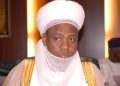
![INEC Chairman, Mahmood Yakubu. [PHOTO CREDIT: Official Website of INEC]](https://crediblenewsng.com/wp-content/uploads/2025/04/images-25.jpeg)
The National Assembly, NASS, and the Independent National Electoral Commission, INEC, have underscored the importance of regularly reviewing Nigeria’s electoral laws to ensure better election outcomes.
They expressed this view on Monday at a retreat aimed at addressing the challenges in the country’s electoral legal framework.
The two-day retreat, held in Lagos, was supported by the Policy and Legal Advocacy Centre, the UK Foreign, Commonwealth, and Development Office, and Development Alternatives Inc. Officials from both the NASS and INEC participated in the discussions, emphasizing the need for ongoing reforms.
Senator Sharafadeen Alli, Chairman of the National Assembly Joint Committee on Electoral Matters, stated that there was still much to be done regarding Nigeria’s electoral laws.
He highlighted the 2023 general election and the petitions that followed as a catalyst for this renewed debate about reforming the electoral legal framework. The aim, he said, was to ensure that election results genuinely reflect the wishes of the people.
“All elections are central to the functioning of democracy, and reforming electoral laws is an ongoing effort,” Senator Alli noted. He also pointed out that both the Legislature and INEC must work together to address emerging challenges and improve public trust in the electoral process.
Senator Alli praised INEC for the progress made in recent elections but acknowledged that there were still issues such as electoral misconduct and disregard for laws that needed to be addressed.
The retreat provided a platform for lawmakers, electoral officials, and experts to exchange ideas, identify bottlenecks, and propose changes to improve the electoral system. Co-chairman of the Joint Committee, Representative Adebayo Balogun, stressed that the continuous improvement of the electoral system was vital to meet the evolving needs of Nigeria’s democracy.
READ ALSO: INEC commends NIPR FCT chapter leadership
Balogun thanked the retreat’s partners for their commitment to Nigeria’s democratic development and emphasized the importance of ensuring that any changes to the electoral law reflect practical realities.
INEC Chairman Professor Mahmood Yakubu acknowledged that the retreat had helped refine the Electoral Act 2010, which was subsequently replaced by the Electoral Act 2022. He urged the National Assembly to expedite electoral reforms to give INEC enough time to implement any new laws effectively.
Clement Nwankwo, Executive Director of PLAC, lauded NASS and INEC for their efforts in shaping Nigeria’s electoral framework, noting that significant progress had been made over several election cycles. He emphasized that the challenge now was in effectively implementing these laws, particularly with the high stakes expected in the 2027 elections.
Dr. Matthew Ayibakuro, Governance Adviser at FCDO, stressed the need for continuous commitment to building trust in the electoral process, promoting a more inclusive democracy, and ensuring a credible electoral system for Nigeria.
NAN