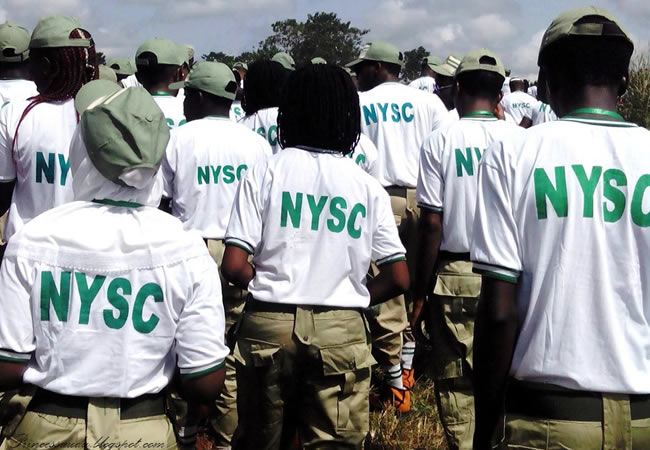
A Federal High Court in Abuja has ruled that the National Youth Service Corps, NYSC, refusal to allow female corps members to wear skirts for religious reasons is unconstitutional and a violation of their fundamental rights.
The judgement came after two separate suits filed by former corps members, Miss Ogunjobi John Blessing and Miss Ayuba Vivian, were consolidated and heard by Justice Hauwa Joseph Yilwa.
The case revolved around the NYSC’s policy mandating trousers as part of its official uniform for female corps members. The applicants argued that the policy conflicted with their Christian faith, which they said prohibits women from wearing male garments, citing Deuteronomy 22:5.
They claimed the enforcement of trousers during their service year amounted to religious discrimination and a breach of their constitutional rights to freedom of religion, as provided in Section 38(1) of the 1999 Constitution (as amended).
In her judgment delivered on June 13 and 14, 2025, Justice Yilwa ruled in favour of the applicants, stating that the NYSC’s insistence on trousers violated their rights to religious freedom and human dignity.
The court also held that the treatment of the applicants—including harassment and humiliation by NYSC officials—amounted to degrading treatment.
The court granted all the reliefs sought by the applicants. It issued a declaration that the NYSC’s refusal to permit skirts for religious purposes was unconstitutional and ordered the corps to allow such clothing for female corps members with genuine religious objections.
ALSO READ: NYSC extends Raye’s service over Tinubu bashing
Additionally, the court directed the NYSC to recall the affected former corps members and issue them their NYSC certificates accordingly.
Furthermore, the court awarded ₦500,000 in damages to each applicant, acknowledging that while they had requested ₦10 million, the court found the ₦500,000 award sufficient under the circumstances.
Justice Yilwa emphasized that denying the applicants the opportunity to complete their national service due to their attire amounted to unlawful religious discrimination.
The suits, marked FHC/ABJ/CS/989/2020 and FHC/ABJ/CS/988/2020, listed the NYSC and its Director-General as respondents.
The applicants filed the cases under the Fundamental Rights (Enforcement Procedure) Rules 2009, citing several constitutional and human rights provisions, including Sections 38 and 42 of the 1999 Constitution and relevant articles from the African Charter on Human and Peoples’ Rights.
The judgment sets a significant legal precedent on the intersection of religious rights and institutional dress codes in Nigeria, particularly for government-run programs like the NYSC.
It also underscores the courts’ role in safeguarding constitutional freedoms against uniform enforcement practices that may marginalize individuals based on their beliefs.