The United Nations has sounded a stark warning that Africa, particularly West Africa and the Sahel region, has now overtaken the Middle East as the world’s most dangerous hub of terrorism.
This shift marks a disturbing trend in global security, with the continent recording the highest fatalities and housing some of the most terrorised countries in 2024, according to the latest Global Terrorism Index.
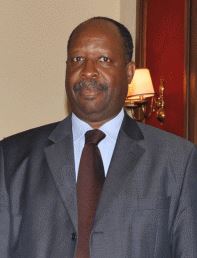
Delivering the message in Abuja, the UN Special Representative of the Secretary-General for West Africa and the Sahel, Leonardo Simão, described the development as alarming.
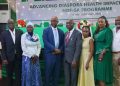
He was speaking at the opening of a regional conference on combating emerging terrorist groups and strengthening sustainable security in the ECOWAS region, organised by Nigeria’s National Counter Terrorism Centre.
Simão noted that five of the world’s ten most terrorism-impacted countries are in West Africa. Significantly, Burkina Faso has now displaced Pakistan as the most terrorised nation globally.
He stressed that groups in the Sahel are becoming increasingly sophisticated, forging alliances and adopting advanced technologies such as drones, encrypted communications, and cyber tools to conduct more precise and psychologically damaging attacks.
The human cost, he added, is devastating. In 2024 alone, armed groups across six countries recruited at least 1,364 children, while 466 cases of sexual violence were recorded.
An estimated 14,364 schools were also shut down due to insecurity, leaving millions of children without education.
“These numbers represent stolen futures, fractured communities, and deepening fragility,” Simão said.
While acknowledging the heavy financial investments being made in defence, Simão warned that military force alone could not bring lasting solutions.
ALSO READ: US blocks Palestinian leader from attending UN meeting
He pointed out that the Central Sahel is projected to spend $3.2 billion on defence in 2025, funds that could otherwise support education, healthcare, and climate adaptation.
Instead, he urged governments to adopt a holistic approach that combines security operations with political dialogue, stronger social services, and inclusive development policies that particularly engage women and youth.
On regional cooperation, Simão commended ECOWAS for reaching out to the Alliance of Sahel States, a military-led bloc of Mali, Burkina Faso, and Niger.
He described the recent decision to preserve free movement of goods and people across their borders as proof that dialogue remains possible despite political and security crises.
Also addressing the conference, the ECOWAS Commissioner for Political Affairs, Peace and Security, Amb. Abdel-Fatau Musah, represented by Dr. Cyriaque Agnekethom, said the bloc was finalising plans to operationalise a regional anti-terrorism force. According to him, ministers of defence and finance recently agreed on funding models.
The options include a 5,000-strong brigade costing $2.61 billion for its first year or a phased 1,650-strong force costing $481.5 million.
Musah stressed the need to choke terrorist networks by cutting off their access to weapons, ammunition, illicit funds, and dual-use items like fertilisers and batteries used in making improvised explosive devices.
He praised Nigeria’s leadership role and reaffirmed ECOWAS’ commitment, alongside the UN and AU, to protect citizens from extremist violence.
The warnings echo a larger trend: since 2020, the Sahel has steadily risen as the world’s deadliest region for terrorism, surpassing Afghanistan and Syria.
NAN