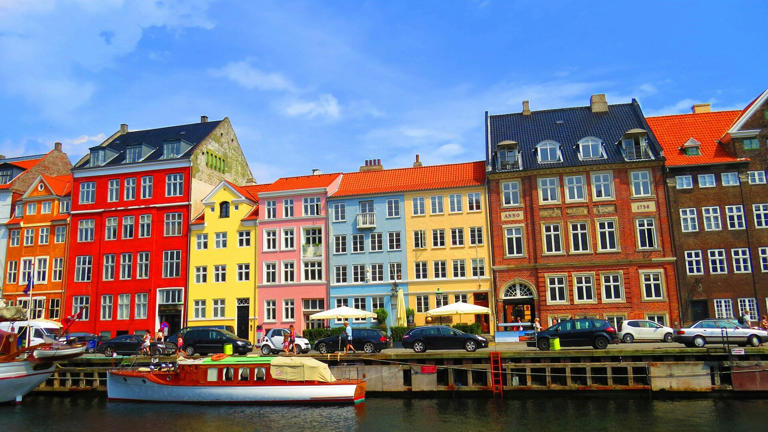
The 2025 Happy City Index isn’t about towering skylines or booming economies. It’s about the art of making city life not only liveable, but at times, delightfully joyful. The surprise? Seven European cities dominate this year’s global top ten.
Created by the Institute for Quality of Life to assess ‘urban well-being,’ the index examines 82 criteria covering governance, environment, mobility, health, economy and social cohesion. It is a kind of barometer for everyday life—from the comfort of public benches to the smoothness of city transport. This year, Europe leads the way, with seven cities in the global top ten. Here is a closer look!
Copenhagen
City of cyclists and ever-present parks, Copenhagen doesn’t just theorise about well-being—it lives it, every day. In its streets, families glide by on bicycles, cafés double as public living rooms, and the harbour water is so clean that people swim in it without a second thought. Here, trust flows as freely as the air—and as easily as ideas.
Also Read: Russia’s latest attack hits Ukraine cities, injures many
Zurich
Swiss prosperity and a gentle art of living—Zurich combines the two with effortless grace. Immaculate trams, well-oiled public services and a lake that stretches like an antidote to financial seriousness define daily life here. The city likes things done to perfection, yet it knows how to unwind by the water. Zurich blends rigour and reflection, offering discreet rather than ostentatious luxury.
Aarhus
Copenhagen’s little sister, but with a spirit all her own, Aarhus blends the energy of a student city with the calm of an old harbour. Its futuristic museums draw the curious, its festivals mark the rhythm of the seasons, and its universities attract bright minds. Among the bicycles, brick cafés and sea-scented lanes, Aarhus breathes modernity without ever losing its maritime soul.
Antwerp
A city of diamantes, yes—but its sparkles isn’t confined to shop windows. Antwerp combines the power of a great port with the vitality of a thriving art scene. Its economy hums, its governance stays the course, and everyday life unfolds through museums, markets and lively terraces. Merchant grandeur and urban elegance meet here with effortless ease.
Stockholm
An urban archipelago spread across fourteen islands, Stockholm has mastered the art of blending nature and capital life. Forests begin almost at the end of a metro line, water mirror pastel façades like a living postcard, and social equality is visible in everyday habits. A rare balance between Nordic efficiency and an unmistakable gentleness of living.
Munich
Munich takes itself seriously—but never too seriously. The Englischer Garten, a vast green lung in the city’s heart, more than offsets its economic rigour. Here, beer is celebrated as much as painting, Oktoberfest as much as the Pinakotheks. Along the Isar and in the museums, Bavaria’s capital cultivates a convivial prosperity, far from any cold stereotype.
Rotterdam
A phœnix city rebuilt after the war, Rotterdam has turned modernity into identity rather than constraint. Daring towers, futuristic market halls, ambitious museums and striking bridges tell a story of resilience. Behind this architectural energy lies a deep care for daily life: participatory neighbourhoods, reinvented public spaces, seamless mobility. A city looking the future squarely in the eye—and moving forward without nostalgia.
The 20 happiest cities in the world according to the Happy City Index
- Copenhagen
- Zurich
- Singapore
- Aarhus
- Antwerp
- Seoul
- Stockholm
- Taipei
- Munich
- Rotterdam
- Vancouver
- Vienna
- Paris
- Helsinki
- Aalborg
- Berlin
- New York
- Dresden
- Brussels
- Geneva
Envol / MSN