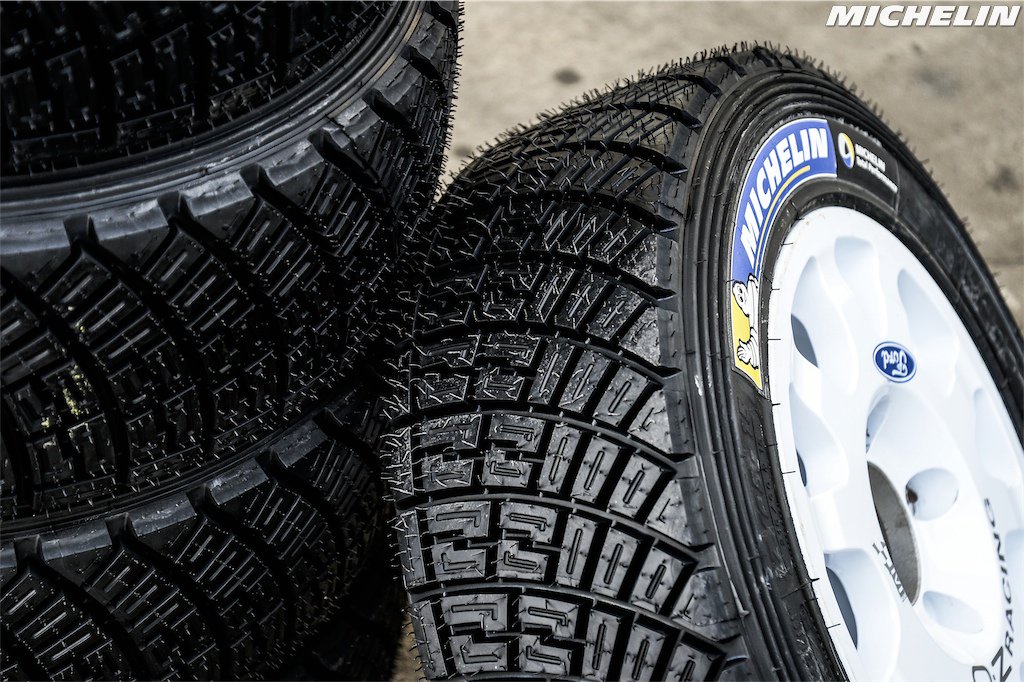
Eighteen years after shutting down its production plant in Port Harcourt, French tyre manufacturing giant Michelin is making a strategic comeback to a market it once dominated.
The company has not announced plans to reopen a factory, it wants to rebuild its brand visibility, strengthen local presence, and position Nigeria as a key growth hub in Sub-Saharan Africa.
Michelin’s shutdown of production in 2007 marked the end of an era in Nigeria’s tyre manufacturing history. Alongside Dunlop, the company once accounted for most of the country’s domestic tyre production. However, unfavorable business conditions, inconsistent government policies, and the influx of cheaper Asian imports forced both firms to close their local operations. By 2008, 90% of tyres sold in Nigeria were imported, up from just 25% in 2005, a shift that reshaped the industry entirely.
Today, Nigeria’s tyre market is worth an estimated $820 million, projected to hit $1.12 billion by 2030 at a 6.4% compound annual growth rate. Yet, despite growing demand, driven by the country’s 40 million-strong vehicle fleet and expanding road networks, the market remains dominated by low-cost brands. About 80% of Nigerian consumers buy budget tyres, mostly from Asia.
For Michelin, this represents both a challenge and an opportunity.
Also read: Nationwide protest: Police may seize tyres in vulcanizing shops
“It’s true that after the shutdown, many Nigerians thought Michelin had left the country,” said Amaury Vadon, Managing Director and Vice President of Sales for Michelin Sub-Saharan Africa, in an interview with Tech Cabal. “But Michelin never truly left. We may have stopped manufacturing, but we remained commercially active and are now more present than ever before.”
Michelin has restructured its operations in Nigeria, transitioning from an export model to a fully owned local agency. The company now maintains an office on Victoria Island, Lagos, staffed by Michelin employees who oversee direct sales, marketing, and customer engagement.
“We are not importers or distributors,” Vadon said. “We have Michelin employees in Nigeria. That’s a key difference. We believe in having people who can explain our value, our innovation, and why Michelin products matter.”
The company’s renewed focus is on two major growth segments: passenger car tyres and beyond-road activities such as agriculture, construction, and port operations. The size of the passenger car tyre market in Nigeria for 2025 is estimated at over $0.82 billion for producer and importer revenues, with passenger car Tyres being the dominant segment in the nation’s overall tyre market.
Popular passenger car Tyres in Nigeria, such as 195/65R15 and 205/70R15, measure about 195–205 millimeters in width and fit 15-inch wheels. Their proportions and related variants are valued for their strength and reliability on rough local roads.
Nigeria’s evolving automotive landscape, with a growing preference for larger, high-end vehicles, drives demand for premium Tyres in the 18-inch-and-above category. Meanwhile, the government’s ongoing road construction and infrastructure projects have created new opportunities in heavy-duty and off-road segments.
“We see strong potential not only in Lagos but also in Abuja and Port Harcourt,” Vadon explained. “We’re already setting up partnerships and local stock in Abuja to reduce delivery times and better serve customers.”
Nigeria now sits at the center of Michelin’s Sub-Saharan Africa strategy, which is structured around three pillars: people, profit, and planet.
“Nigeria is one of our key countries in West Africa,” Vadon noted. “It’s a contributor to our business, a source of incredible talent, and a market where sustainability efforts are taking shape.”
On the “planet” front, Michelin is launching sustainability partnerships in Nigeria focused on tyre recycling and circular economy initiatives. Vadon revealed that the company will begin recycling tests in October 2025, converting old Tyres into new products such as bags and industrial materials, part of Michelin’s long-term plan to reduce waste and promote responsible manufacturing.
As Michelin prepares for a broader rollout in 2026, its immediate goal is to consolidate its foundation and scale up growth. The company plans to deepen its presence in key cities, expand its customer base, and build brand engagement through awareness and visibility campaigns.
“2026 will be the year when Nigerians truly see Michelin again,” Vadon said. “The groundwork is done. Now it’s about visibility and engagement.”
Longer term, Michelin hopes to remain an integral part of Nigeria’s mobility future, not just as a tyre brand but as a symbol of sustainable innovation.
“Success for us by 2050 means being present, profitable, sustainable, and developing Nigerian talent that leads Michelin in the future,” Vadon said. “If one day my successor is a Nigerian, that will be a proud moment.”
As Nigeria’s roads grow busier and its economy diversifies, the French manufacturer is betting that innovation, presence, and local commitment will put it back in the driver’s seat.
techcabal
![Nnamdi Kanu, the leader of the proscribed Indigenous People of Biafra, IPOB.[PHOTO CREDIT: Ripples Nigeria]](https://crediblenewsng.com/wp-content/uploads/2025/04/Nnamdi-Kanu--75x75.jpg)