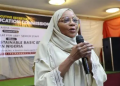
The Nigerian Academy of Medicine, NAMed , has urged all stakeholders to strengthen interprofessional relationships and increase funding for the healthcare sector.
Stakeholders, including government agencies, policymakers, educators, healthcare professionals, organizations, academic institutions, non-governmental organizations (NGOs), and communities, to strengthen interprofessional relationships and increase funding for the healthcare sector.
More funds for the health sector are urgently needed to strengthen interprofessional relationships among practitioners.
This call was made on Tuesday during the 2023 Annual Lecture and Induction Ceremony in Abuja.
The theme of the event, according to Crediblenews, was “Interprofessional Relationships in the Health Sector: Enhancing the Healthcare Workforce in Nigeria in the Presence of Challenging Demographics.”
Former Minister of Health Prof. Isaac Adewole delivered the lecture, emphasizing the importance of interprofessional relationships in the healthcare sector.
Adewole, who works as a Foundation Fellow of NAMed, highlighted the demographic challenges faced by Nigeria’s health sector, including rapid urbanization, an aging population, and an increasing prevalence of non-communicable diseases.
He stressed the need to unite various healthcare professionals, including doctors, dentists, nurses, pharmacists, and other allied healthcare professionals, to establish an efficient and comprehensive care system for all Nigerians.
He pointed out that healthy interprofessional relationships yield benefits such as improved health outcomes, enhanced communication, reduced conflict, increased confidence, and innovation among healthcare workers.
However, he also identified several challenges in interprofessional relationships, including a lack of mutual understanding and respect, hierarchical structures, inadequate communication, limited interprofessional education, and insufficient funding.
He addressed the issue of strikes in Nigeria’s healthcare system, which are caused by factors such as professional rivalry, inadequate funding, poor working conditions, management conflicts, corruption, and general insecurity.
Another pressing issue he brought up was medical tourism and overseas treatment.
“Nigeria loses an estimated one billion US Dollars annually due to the preference for seeking medical treatment abroad,” he added.
Adewole proposed promoting mutual respect and understanding among healthcare professionals, addressing hierarchical structures, improving communication, enhancing interprofessional education, and addressing legal and regulatory barriers to address these challenges.
He also advocated for novel financing mechanisms to encourage private-sector investment in healthcare.
He also emphasized the importance of primary healthcare and the need to achieve the 90 percent target score in the Primary Health Care Under One Roof , PHCUOR, policy assessment.
Prof. Samuel Ohaegbulam, the founding President of NAMed, emphasized the importance of improving the healthcare workforce in the face of challenging demographics.
Ohaegbulam emphasized the importance of increasing political will and mobilizing resources to strengthen and adequately fund Nigeria’s health system.
Crediblenews.ng