The US Federal Reserve’s recent decision to cut its key lending rate by half a percentage point marks a significant shift from its previous high-interest rate environment, which was designed to curb demand and control inflation.
This rate reduction, the Fed’s first in over four years, is expected to lower borrowing costs for consumers and businesses, impacting everything from mortgages to credit cards.
The timing of this cut is notable as it comes just ahead of the November presidential election. For Democratic presidential candidate and US Vice President Kamala Harris, the rate cut could be seen as positive news, potentially easing financial pressures on Americans and helping her campaign. Harris acknowledged the move, emphasizing her commitment to continuing efforts to reduce prices.
In contrast, Republican former President Donald Trump criticized the Fed’s decision, suggesting it might be a response to a struggling economy or a politically motivated action. Despite his criticism, Trump acknowledged the significance of the rate cut.
The Fed’s decision is occurring against a backdrop of easing inflation, approaching the central bank’s long-term target of two percent, and a cooling labor market amidst a resilient post-Covid economy. Following the announcement, major US stock indices ended the day lower, reflecting market uncertainty and reactions to the Fed’s policy shift.
READ ALSO : US sues ship firm for $100m over Baltimore bridge crash
The Federal Reserve’s decision to lower its benchmark rate by half a percentage point, moving it to a range of 4.75% to 5.00%, was approved with an 11-to-1 vote. This rate cut is part of a broader strategy that includes penciling in additional reductions: another half-point before the end of this year and a full percentage point by 2025.
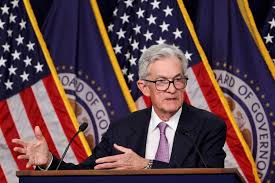
Fed Chair Jerome Powell emphasized that this rate adjustment represents a recalibration of policy in response to progress on inflation and employment. He described it as the beginning of a new phase in monetary policy.
The larger-than-expected rate cut surprised some analysts, who had anticipated a more conservative 25 basis points reduction. The decision reflects a response to recent weaker job data and positive inflation news. Former Boston Fed President Eric Rosengren and Citi Global Chief Economist Nathan Sheets viewed the larger cut as a strategic move rather than a panic reaction.
Updated Fed forecasts project an unemployment rate of 4.4% by the fourth quarter of this year, up from 4.0% previously. The annual headline inflation rate is projected at 2.3%, slightly lower than earlier estimates. Futures markets indicate a 65% chance of further cuts totaling at least 75 basis points by year-end.
The Fed’s move carries political implications, especially with the presidential election approaching. While the Fed operates with a dual mandate to manage inflation and employment independently of political pressures, the rate decisions will undoubtedly influence public perception and campaign dynamics. Former President Donald Trump, who has criticized Fed Chair Powell and suggested greater presidential influence over rate decisions, remains a vocal critic of the Fed’s actions.
Powell reaffirmed the Fed’s commitment to its independent role, stating that its decisions are made based on economic data and not political considerations.
Credible News.ng