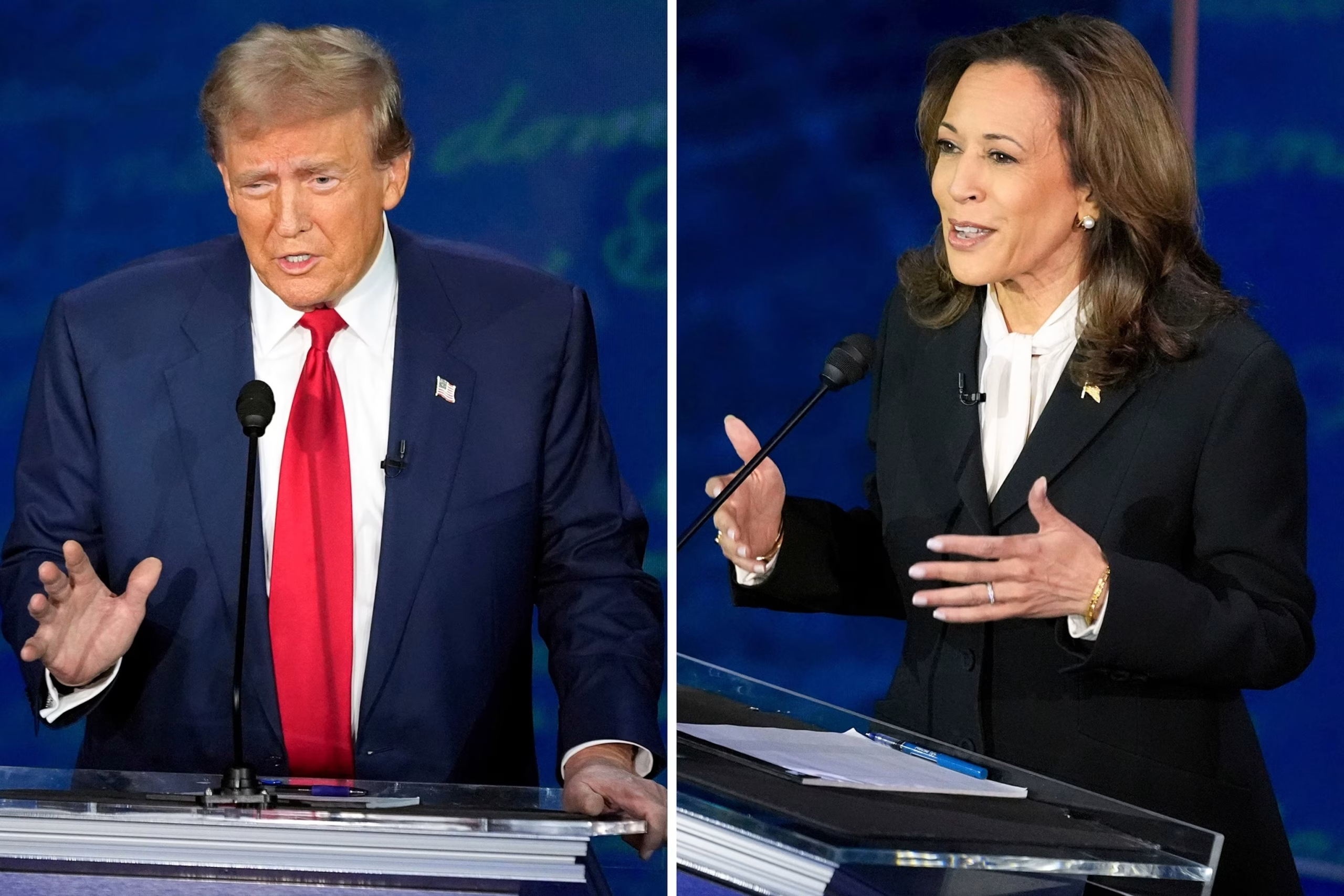
Former President Donald Trump has officially turned down Vice President Kamala Harris’ invitation for a second debate.
This announcement comes in the wake of Harris confirming her participation in a CNN-hosted debate scheduled for October 23, a pivotal moment intended to engage voters just weeks before Election Day.
During a rally in Wilmington, North Carolina, Trump articulated his reasoning for rejecting the debate, stating that the timing was not conducive given that early voting has already commenced in several states across the nation. “It’s just too late; voting has already started,” he declared emphatically, suggesting that another debate would not provide any substantial benefit to the electoral process at this stage of the campaign. His comments reflect a strategic decision to focus on rallying his supporters rather than participating in what he perceives as an unnecessary forum.
The refusal to engage in further debates has sparked considerable discussion among political analysts and campaign strategists. Harris’ campaign chair, Jen O’Malley Dillon, expressed her disappointment over Trump’s decision, emphasizing the importance of debates as a crucial platform for voters to hear directly from the candidates about their visions for the country. “American voters deserve another opportunity to see how we compare,” Dillon stated, arguing that it is “unprecedented in modern history” to have only one general election debate. She underscored that such forums are essential for informed decision-making and voter engagement.
Read also: Trump signals 2024 presidential run could be his last
Despite Trump’s dismissal of the upcoming debate, he acknowledged its potential entertainment value but reiterated his stance against participating. “I’ve already won,” he claimed, referring to their first encounter on September 10, where many pundits noted Harris’ performance as particularly strong. Trump’s confidence may stem from his belief that he can maintain momentum through his rallies and media appearances without needing to engage directly with Harris again.
As early voting continues in key battleground states, the implications of Trump’s refusal to participate in a second debate could be significant for both campaigns. Polls indicate a competitive race between Harris and Trump, with some surveys showing Harris holding a slight edge in national polling averages following their first debate. Analysts suggest that Trump’s decision could alienate undecided voters who are looking for more opportunities to assess both candidates’ positions on critical issues facing the nation.
With Election Day fast approaching and voter sentiment shifting rapidly, the dynamics of this election cycle remain fluid. The absence of another debate may leave some voters craving more direct interaction between the candidates, potentially impacting turnout and engagement levels as they head to the polls. As both campaigns navigate these uncharted waters, all eyes will be on how they adapt their strategies in light of this latest development.
Credible News.ng