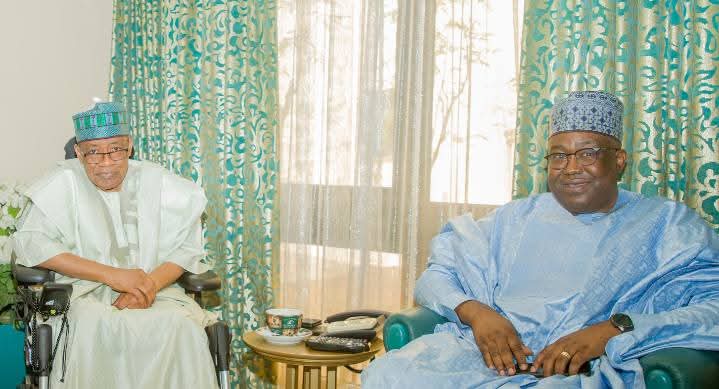
Politics often creates surprising partnerships, and the relationship between Gbenga Olawepo-Hashim and former military Head of State, General Ibrahim Badamasi Babangida, GCFR, showcases the power of reconciliation and how time can transform relationships.
Recently, Olawepo-Hashim, a renowned politician, businessman, and former presidential candidate, led a delegation to visit Babangida at his residence in Minna to mark the New Year.
READ ALSO: Aiyedatiwa declares three days mourning for Oluwatuyi
This visit represented a significant shift in their relationship, as Olawepo-Hashim was once imprisoned during Babangida’s regime.
In the late 1980s, as a passionate student leader and activist, Olawepo-Hashim was a vocal critic of Babangida’s administration. His opposition during Nigeria’s pro-democracy struggles led to his arrest and detention.
However, the passage of time has allowed both men to move past their differences and develop a relationship built on mutual respect.
Speaking about the visit, Olawepo-Hashim noted that Babangida is “still very alert and relevant in the affairs of Nigeria.”
He commended Babangida’s lasting contributions to the nation and emphasized how shared dedication to national progress has redefined their connection.
This reconciliation is a powerful example of political maturity and personal growth. It also aligns with Olawepo-Hashim’s philosophy of unity and collaboration, central to his #BetterTogetherWithGOH movement.
The bond between Gbenga Olawepo-Hashim and Ibrahim Babangida mirrors the reconciliatory approaches of global figures like Nelson Mandela and Mahatma Gandhi, who turned personal adversities into opportunities for peace and unity.
Like Mandela, who emerged as a symbol of reconciliation after 27 years of imprisonment under apartheid, Olawepo-Hashim’s experience of political detention during Babangida’s regime could have resulted in resentment.
Instead, it laid the groundwork for a renewed relationship based on shared patriotism and forward-thinking leadership.
Similarly, Gandhi’s philosophy of forgiveness and non-violence prioritized dialogue over conflict.
His approach resonates in Olawepo-Hashim’s decision to prioritize reconciliation and national development over past grievances.
Olawepo-Hashim’s friendship with Babangida embodies these ideals, reflecting his commitment to unity and national progress.
As he once opposed military rule, his actions now highlight the importance of collaboration and moving forward.
This evolving relationship underscores a critical lesson: Nigeria’s future lies in the hands of leaders who can rise above their personal histories and work toward a shared vision of peace, prosperity, and unity.
Crediblenewsng.com