Anthony Ibrahim
The long-drawn dispute on the Mambilla Project listed as Case No. 26260/SPN/AB at the International Court of Arbitration under the International Chamber of Commerce, ICC, in Paris, France, has now reached its final phase.
This case involves a dispute over the Mambilla Hydroelectric Power project, with Sunrise Power and Transmission Company as the Claimant/Counterclaim-Respondent and the Federal Government of Nigeria as the Respondent/Counter claimant.
READ ALSO: BRICS admits Nigeria as partner, FG lists benefits
The Mambilla project, envisioned over five decades ago has faced numerous obstacles, and its fate remains uncertain as deliberations continue at the ICC.
Unfortunately, the odds of the Nigerian Government emerging unscathed from the arbitration appear slim.
A Complicated History
The Mambilla Hydroelectric Power project in Nigeria was initially proposed in 1972 during the military regime of General Yakubu Gowon.
However, it is clear from statements made by various figures involved in the case that the project has been subject to mismanagement and corruption.
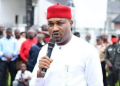
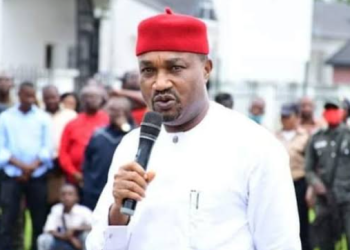
Dr. Anthony Ibrahim stated; “The Mambilla Hydroelectric Power project has become a symbol of mismanagement, corruption, and delayed action.
“This is not just a technical issue but one rooted in political and administrative failings.”
For nearly two decades, little progress was made until 2000 when Mr. Leno Adesanya, a first cousin of the prominent Yoruba leader Senator Abraham Adesanya revived the project.
Sunrise Power and Transmission Company Limited, owned by Mr. Adesanya facilitated a bilateral agreement in 2001 between Nigeria and China, signed in Beijing.
Following this agreement, technical partnerships were formed with Chinese hydroelectric dam construction companies to support the project.
In 2003, the Mambilla project took shape with the awarding of a Build, Operate and Transfer, BOT contract to Sunrise Power. The agreement tasked Sunrise with securing private sector financing to construct the dam, estimated at $6 billion and operate it for 35 years.
Revenue from electricity sales to the Nigerian grid at predetermined tariffs was expected to recover the investment.
However, to date, the Nigerian Government has not made any payments to Sunrise Power.
Abrupt Changes
Progress made between 2000 and 2003 was disrupted when President Olusegun Obasanjo, who served from 2003 to 2007, moved all power projects to his office from the Ministry of Power.
He replaced the BOT model with procurement contracts and, using $16 billion from “excess crude funds,” split the Mambilla project into separate components, awarding contracts to a different company in 2007.
Subsequent administrations, led by Presidents Umaru Musa Yar’Adua and Goodluck Jonathan, reversed these decisions in 2008 and restored the full contract to Sunrise Power in 2012.
During President Muhammadu Buhari’s administration, the Minister of Power, Mr. Babatunde Fashola, reassigned the Mambilla project to another company in 2017. This decision triggered legal action, leading to Nigeria’s appearance before the Arbitration Court in France in 2021, following failed settlement efforts with Sunrise Power in 2020.
At the arbitration, lawyers representing Nigeria employed strategies focused on criminalizing actions to minimize liabilities for any alleged breaches or wrongdoing.
Arbitration Hearing
The ICC Court is set to hold the final stage of a highly anticipated arbitration hearing in the fourth week of January 2025.
Over the past 20 months, the Court has carefully reviewed several submissions, including plea submissions, statements of claims, defense documents, counterclaims, witness testimonies, expert reports and other supporting materials.
The hearing will kick off with opening statements from the Panel and the litigants, with each party being given three to four hours to present their case.
The following day will be dedicated to the cross-examination of the Claimant, while the remaining five days will focus on the cross-examination of witnesses and experts from both sides.
Witnesses of Defence
However, a significant development has emerged as the Federal Government of Nigeria, FGN, will not be able to present two of its star witnesses—former ministers Alhaji Abubakar Malami, the former Attorney General of the Federation and Engr. Mamman Salleh, the former Minister of Power.
Both played pivotal roles in negotiating and signing settlement agreements with Sunrise, the Claimant, on behalf of the FGN.
Alhaji Malami and Engr. Mamman Salleh first signed a settlement agreement with Sunrise in January 2020, offering a $200 million cash payment and a Local Content contract.
However, when Nigeria defaulted on this deal, the two ministers renegotiated the terms and signed a second agreement in March 2020, offering $400 million in cash without the Local Content contract.
The reasons for their refusal to appear before the ICC Panel remain unclear, but it is widely believed that Alhaji Malami’s witness statement is riddled with loopholes that would be detrimental during cross-examination.
Engr. Mamman Salleh’s absence may be attributed to his discrediting by the Nigerian government due to allegations of embezzling N33 billion of funds allocated for the Mambilla project.
Despite these absences, other key witnesses are set to testify. Former Minister of Power, Mr. Babatunde Fashola, who re-awarded the Mambilla project to another company in 2017, is scheduled for two hours of cross-examination regarding the processes that led to the re-awarding without terminating the original 2012 contract.
Additionally, former Minister of Agriculture, Engr. Adamu, will testify on the discussions he, Alhaji Malami, and two other government officials had with Sunrise in November 2019, which ultimately resulted in the settlement agreement signed in January 2020.
Witnesses of Claimant
A key figure among Sunrise’s witnesses in the ongoing arbitration is Mr. Michael Aondoakaa, former Minister of Justice and Attorney General of the Federation under President Alhaji Musa Yar’Adua.
Aondoakaa, who presided over the investigation into the authenticity of the 2003 BOT award for the Mambilla project, is set to offer crucial testimony.
In 2007, President Yar’Adua instructed him to probe the award’s legitimacy, and Aondoakaa later chaired the committee that re-awarded the Mambilla contract to Sunrise Company in 2012 under the General Project Execution Agreement, GPEA.
Furthermore, Aondoakaa oversaw the swearing-in of the Special Panel in 2009 to investigate the Halliburton Project, whose report is also before the Arbitration Panel.
He was also responsible for the formal cancellation of the Mambilla project components awarded in 2007 by former President Obasanjo due to defects and improprieties in the procurement process.
Witness Buhari
Among the most notable Nigerian witnesses are two former presidents—General Muhammadu Buhari and General Olusegun Obasanjo. General Buhari is expected to explain why he set aside the 2012 GPEA, despite the Chinese Government Bank’s allocation of funds for the execution of the Mambilla project by Sunrise Company and its partners.
He will also clarify his decision to re-award the contract to a different company, as well as his reasons for not questioning or prosecuting the ministers who committed the Nigerian government to a $400 million agreement.
Additionally, Buhari is set to provide insight into the involvement of the Chinese President in 2019 and the failed settlement agreements with Sunrise Company in 2020.
Witness Obasanjo
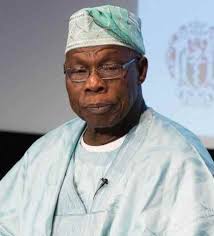
General Olusegun Obasanjo’s testimony in the arbitration case is expected to be more complicated. While General Buhari’s testimony is clearly aligned with defending the 2017 Mambilla project award, Obasanjo’s stance remains uncertain.
The former president will be cross-examined for an entire day, and his statement touches on a wide range of issues.
Obasanjo will explain why he replaced BOT awards with procurement contracts in the power sector and discuss how he was unaware that the Mambilla project was awarded as a BOT contract to Sunrise in 2003, even though he served as president from 1999 to 2007.
His cross-examination is expected to be as intricate as his recent BBC HARDTalk interview, where he was labeled “the grandfather of corruption in Nigeria.”
Institutional Experts
In addition to the prominent political figures, a group of expert and technical witnesses is poised to shape the outcome of the arbitration.
The panel will hear from renowned experts like Professor Mark Pieth, Professor Sope Williams, Mr. Kiran Sequeira, and Mr. Eric Russo. These world-class institutional experts are respected for their knowledge in law, equity, corruption, and cost evaluation. Both Nigeria and Sunrise have presented their respective experts to challenge and support various claims. Nigeria’s experts have raised counterclaims against Sunrise, while Sunrise’s experts aim to weaken Nigeria’s arguments.
Technical Witnesses
The technical witnesses particularly from the Nigerian government, will explain government operations, including Federal Executive Council meetings, contract awards and the workings of the Ministry of Justice.
Special Interest Witnesses
Sunrise has also brought forward special interest witnesses who are expected to challenge Nigeria’s defense and counterclaims. These witnesses are likely to raise controversial topics, including the BBC HARDTalk interview, Halliburton bribery allegations, the personal life of Mrs. Moji Obasanjo, related to Mr. Leno Adesanya, owner of Sunrise, the 35-year mortgage on Mr. Jide Agunloye’s property, son of the former Minister of Power, Mr. Agunloye and the Third Term Agenda.
Their testimonies are set to add complexity to the case, further challenging Nigeria’s position in the Mambilla arbitration.
The beginning of a new era
The arbitration is set to conclude its proceedings in January 2025, with a verdict expected in the first quarter of the year. This decision will mark the end of the arbitration ordered by Sunrise, but it will not resolve the ongoing disputes surrounding the Mambilla project.
A new battle is anticipated, likely stretching for another four to six years in France before returning to Nigeria for further legal confrontation.
Meanwhile, the Nigerian Government, along with its lawyers, experts, and high-profile witnesses, will likely face aggressive cross-examinations by Mr. Adesanya’s Sunrise Company.
This could tarnish Nigeria’s international image, portraying the country as a symbol of incompetence, corruption, and inefficiency. The upcoming testimony of two former Nigerian presidents, two former Attorneys General, and four former ministers is poised to bring further shame and dishonor to the nation.
Even before the hearings began, it was clear that the ICC verdict would not settle the Mambilla disputes. In December 2024, a representative of the Nigerian Government warned the court that the country would appeal the judgment if it proved unfavorable.
This preemptive declaration signals that appeals are likely to extend the dispute, further delaying the Mambilla project, which has already been stalled for 40 years due to poor governance and malfeasance.
The project’s delayed launch will now likely be pushed back another six years, adding to escalating costs and intensifying hardships for Nigeria’s 240 million people, who currently share a limited 4,000 megawatts of electricity amidst frequent grid failures and daily power outages.
Epilogue – Dashed Hopes
Over the past 25 years of Nigeria’s Fourth Republic, four administrations—led by Presidents Obasanjo, Yar’Adua, Jonathan, and Buhari—have failed to overcome the shady dealings that have kept the Mambilla hydroelectric project in limbo.
Despite the efforts of Presidents Yar’Adua and Jonathan, whose tenures were cut short, the project has remained stalled.
Now, with President Bola Ahmed Tinubu presiding over the Fifth Republic, there is renewed hope that the chains holding back the project may finally be broken. However, without a solid electricity infrastructure, the aspirations for progress under the current administration could remain out of reach. Industrial and technological growth, essential for national competitiveness and socioeconomic stability, will fade into the distance, potentially giving way to greater insecurity and chaos.
Dr Anthony Ibrahim, Truth and Justice Group, Camberwell Green, London.