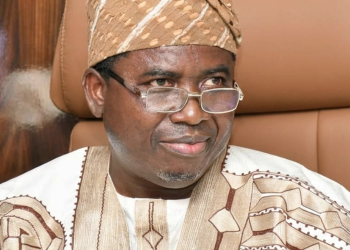
Groundbreaking advancements in modern medicine could extend human lifespan to 250 years within the next four decades, Dr Ibrahim Wada has suggested.
Wada, founder of Nisa Medical Group and Associate Professor of Obstetrics and Gynaecology at Abubakar Tafawa Balewa University, Bauchi, shared this bold projection while delivering the Second Nimi Dimkpa Briggs Legacy Lecture Series at the University of Port Harcourt, UNIPORT, on Thursday.
Speaking on “The Longevity of Man,” Wada explained that rapid progress in medical technology and genetic engineering is pushing the boundaries of human lifespan. He pointed to significant breakthroughs, including the ability to create artificial eggs and sperm from human saliva, which have already led to live births in rats.
“This technology will eventually benefit humans,” he stated, adding that stem cell regeneration, artificial organs, and genetic reprogramming could soon make it normal for people to live for 200 years or more.
He emphasised that science now has the capacity to decode and manipulate human genetics to enhance longevity.
“Reintroducing stem cells into the body can regenerate dead cells and significantly extend lifespan,” Wada noted. “We are now in the age of computer reprogramming, where longevity will no longer be a dream but a reality.”
Despite these advancements, he acknowledged that such medical technologies remain unavailable in Nigeria. In the meantime, he stressed the importance of regular check-ups, healthy eating, exercise, and adequate rest.
“Rest is essential for brain function. When it is time to rest, you must allow the brain to rest – no compromise,” he advised.
The lecture also honoured the legacy of Prof. Nimi Briggs, a respected medical scholar and philanthropist.
UNIPORT’s Vice-Chancellor, Prof. Owunari Georgewill described him as an academic giant whose contributions extended beyond medicine.
Prof. Ngozi Orazulike, Chair Occupant of the Nimi Briggs Professorial Chair in Obstetrics and Gynaecology, highlighted Briggs’ remarkable impact as a doctor, teacher, and mentor.
In appreciation, the late professor’s son, Nima Briggs, expressed gratitude for the ongoing recognition of his father’s work.
“It is humbling to see my father’s legacy live on,” he remarked.
NAN