Nosmot Gbadamosi / Africa Brief
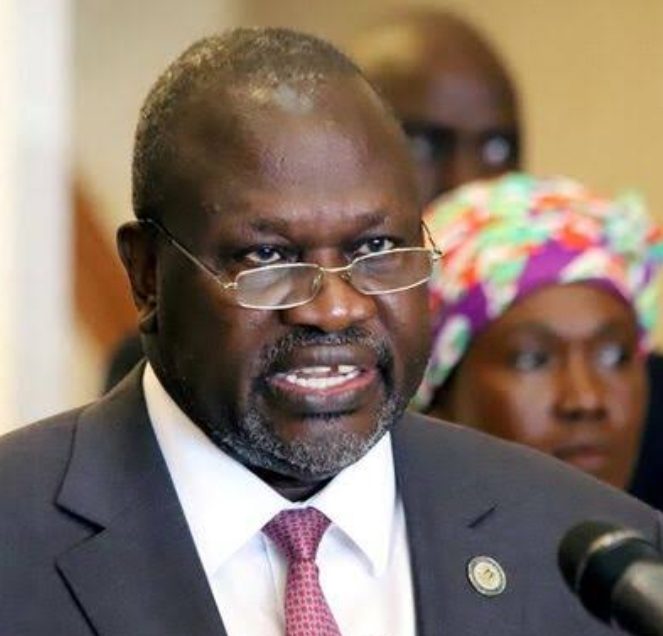
South Sudan’s first vice president and main opposition leader, Riek Machar, was detained last week and charged with attempting to incite rebellion. The arrest has fractured the 2018 power-sharing agreement between Machar and President Salva Kiir, which ended a five-year civil war that killed an estimated 400,000 people.
Machar’s party, the Sudan People’s Liberation Movement-In Opposition (SPLM-IO), issued a statement saying that his arrest “effectively” voided the agreement and that the “prospect for peace and stability in South Sudan has now been put into serious jeopardy.” United Nations spokesperson Stéphane Dujarric has also warned that the move takes the country “one step closer” to the return of civil war.
Kenya—which chairs the East African Community, a bloc of eight states including South Sudan—dispatched former Kenyan Prime Minister Raila Odinga to defuse the situation. Odinga said on X that he had met with Kiir on Friday and was “encouraged” about the possibility of resolving the conflict. However, South Sudanese officials denied Odinga a meeting with Machar.
South Sudan’s military, which is overseen by Kiir, has clashed with forces loyal to Machar outside the capital of Juba and in Upper Nile state since March 4, when the so-called White Army, an armed youth group from the same ethnic Nuer community as Machar, attacked an army garrison. Since then, Kiir has attempted to bolster his position by arresting ministers loyal to Machar and appointing his own advisor, Benjamin Bol Mel, as second vice president. (The United States sanctioned Bol Mel in 2017 for graft.)
On March 16, the army launched an airstrike on the town of Nasir in Upper Nile to crush the White Army, which fought alongside Machar’s forces in the 2013-18 civil war. Officials in Nasir said the bombing killed at least 21 civilians, and photos shared on social media show women and children with horrific burns; a Sudans Post investigation found that ethyl acetate, a highly flammable chemical, was likely used in the strike. More than 60,000 people have fled Upper Nile in the past month.
Since mid-March, Uganda, an ally of Kiir’s government, has entered the dispute, deploying special forces to help “secure” Juba at South Sudan’s request.
Analysts fear that Sudan’s and South Sudan’s conflicts are converging. South Sudan gained independence from Sudan in July 2011, ending more than two decades of civil war. Since April 2023, Sudan has been experiencing a civil war driven by a conflict for power between rival generals. In February, the paramilitary Rapid Support Forces (RSF) formed a rival Sudanese government with the Sudan People’s Liberation Movement-North, an offshoot of South Sudan’s SPLM, which spearheaded the country’s independence push and now runs the government under Kiir.
Sudan’s army believes that Kiir is backing the new RSF alliance. Sudanese Minerals Minister Mohamed Bashir Abunommo accused South Sudan last month of allowing the United Arab Emirates, which supports the RSF, to establish an “aggression base” under the guise of a field hospital in Aweil East County near the Sudanese border. In turn, officials loyal to Kiir fear that the Sudanese army has reignited its historical ties to Nuer militias allegedly linked to Machar in South Sudan’s Upper Nile and supplied them with weapons, enabling the recent spike in attacks.