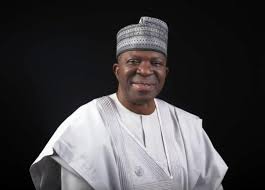
The National Boundary Commission, NBC, says it is actively addressing the social and infrastructural needs of Nigerian communities affected by boundary realignments and international demarcation disputes, through its ongoing Resettlement Project.
At a media briefing to assess President Bola Tinubu’s two years in office, NBC Director-General Adamu Adaji explained that several communities along Nigeria’s borders had been impacted by alignment processes, especially in areas where land was ceded following international arbitration or bilateral agreements.
Adaji noted that in some cases, boundary adjustments—such as those involving Nigeria’s borders with Benin and Cameroon—had left Nigerian communities stranded on the “wrong” side of the international line, sometimes inadvertently becoming citizens of another country.
“Most times we try to relocate the affected people back to the indigenous side, resettle them, and provide them with basic amenities,” Adaji said.
The NBC’s Resettlement Project provides vital infrastructure such as boreholes, solar-powered lighting, market stalls, schools, and in some cases housing, for resettled Nigerians. These efforts are made before handing over longer-term development plans to the Border Communities Development Agency.
Adaji cited specific examples such as Gamuye in Kwara State, where residents were relocated from disputed areas and resettled within Nigeria’s legal borders, receiving infrastructure like market stalls, water facilities, and classrooms.
In Ogun State, communities that were once on the Benin side due to colonial-era boundary definitions have also received amenities to restore a sense of national identity and ensure basic livelihoods are sustained.
READ ALSO: NBC fast-tracks Delta state boundary demarcation
“It’s about making them feel they still belong—to show that Nigeria hasn’t forgotten them,” Adaji emphasized.
On the Nigeria-Cameroon front, Adaji acknowledged that while some residents in the Bakassi Peninsula—affected by the International Court of Justice’s 2002 ruling—chose to remain in Cameroon for economic reasons, others opted to return and were assisted by NBC.
The Commission, he added, is also working to ensure that Nigerians who remain in foreign-controlled areas are supported diplomatically to retain their rights and privileges.
Despite initial resistance from some communities during relocation efforts, Adaji said that ongoing sensitisation and dialogue are gradually improving cooperation, helping communities understand the importance of lawful borders and national security.
“We’re making progress—slow but steady—because what’s at stake is not just land, but people’s futures,” he said.
The NBC says it remains committed to ensuring that every affected Nigerian feels protected, resettled, and supported, and that the country’s territorial integrity is upheld peacefully.
NAN