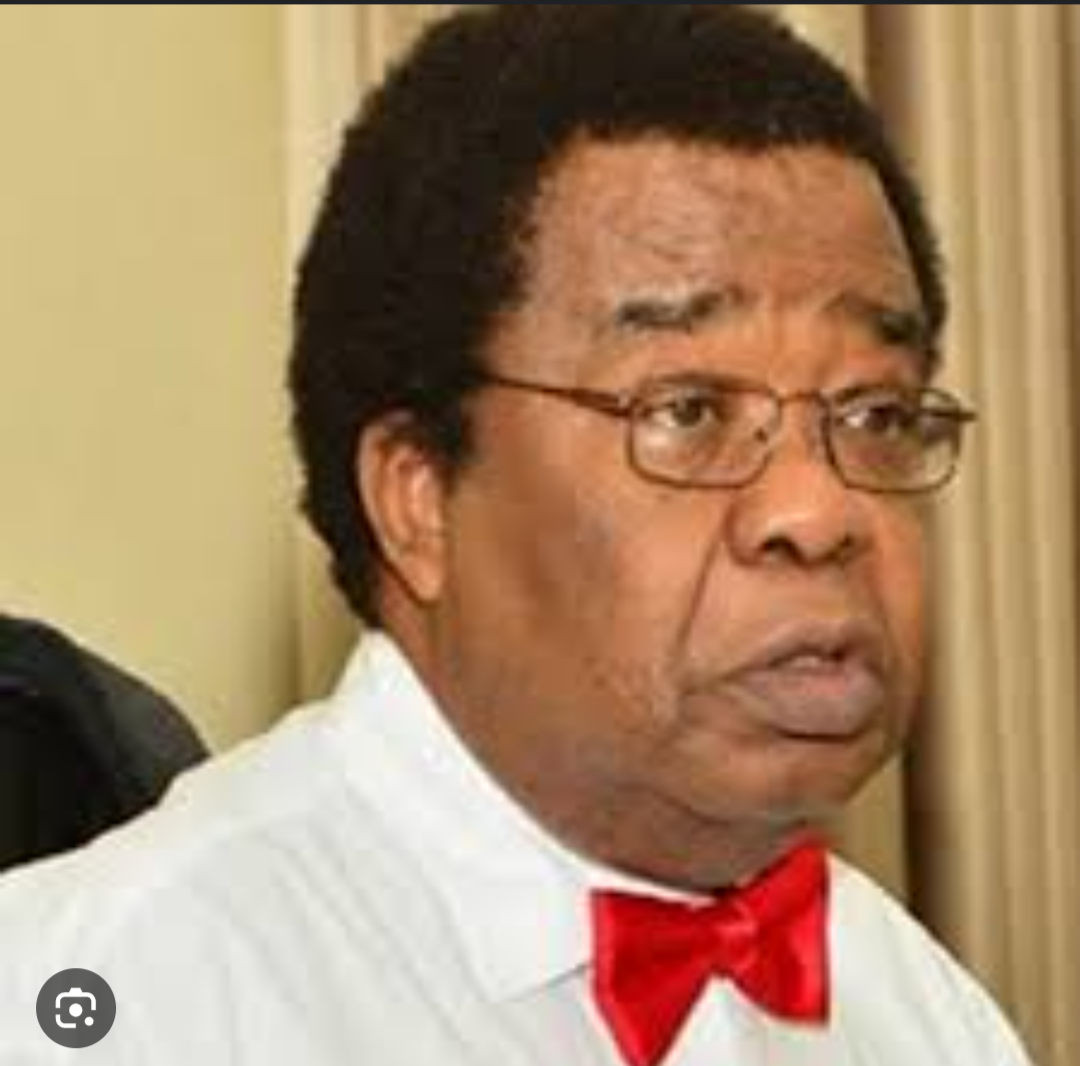
Former Nigerian Minister of Foreign Affairs, Professor Bolaji Akinyemi, has condemned recent statements by the United States that appeared to threaten the Iranian Supreme Leader, Ayatollah Ali Khamenei.
He said such rhetoric violates both international and American laws.
On ARISE News on Wednesday, Akinyemi said: “It is against international law to threaten to assassinate a head of state. And, incidentally, it is also against American law.”
He recalled that after the CIA’s involvement in global assassinations became public, a Senate committee was established to investigate. “Out of that committee came the decision that it is illegal under American law to assassinate or threaten to assassinate a head of state,” he explained.
READ ALSO:Iran defies Trump, Khamenei vows no surrender
Referring to remarks by former US President Donald Trump directed at the Ayatollah, Akinyemi said: “Here is an American president saying to the Ayatollah, who is Iran’s head of state, ‘We know where you are, and our patience is running out.’ What does that mean? That they are going to attack? And yet, if someone tries to assassinate an American leader, all hell breaks loose.”
He warned that Washington’s current stance is intensifying the Iran-Israel conflict. “Rather than acting as a force for peace and reconciliation, the United States has encouraged Israel to proceed with actions against Iran, placing the world on the brink of a larger war,” he stated.
Akinyemi also criticized Trump’s unpredictability and performative diplomacy, calling him one of the most dangerous figures globally. “About four years ago on this very programme, you asked me to name the two most dangerous people in the world. I named Netanyahu and the Ayatollah. At the time, Trump wasn’t president otherwise, I would have added him to the list.”
“In diplomacy, the most dangerous moment is when you can’t predict the behavior of the people you’re dealing with—especially the world’s most powerful man”, said the diplomatic.
Akinyemi also referenced Trump abandoning a global summit to return to Washington, saying, “He left the most powerful nations of the world to put everyone on edge with unpredictable actions.”
On potential US military intervention in the Iran-Israel conflict, Akinyemi noted a shift in Washington’s messaging: “First, they said they weren’t consulted. Then it changed to ‘they did it and informed us,’ and now the language is ‘we have conquered Iran’s airspace.’”
Asked about Iran possibly withdrawing from the Treaty on the Non-Proliferation of Nuclear Weapons, NPT, Akinyemi harshly criticized the global nuclear order.
“The Non-Proliferation Treaty has never been one of my favorite treaties,” he said. “It locks weak countries into powerlessness, while allowing the powerful ones to maintain a monopoly on nuclear weapons.”
He called the system hypocritical, noting that countries like India, Pakistan, and Israel developed nuclear capabilities outside the NPT framework and faced no consequences. “If you’re aligned with the West, you can break the rules and get away with it,” he added.
He reiterated his opposition to Nigeria signing the NPT: “I opposed Nigeria’s decision to join. Sadly, we are still a signatory, and that won’t benefit us unless we’re content with being weak.”
Responding to a viewer’s question about American double standards—especially having helped Iran start its nuclear program under the Shah only to oppose it later—Akinyemi said, “The world will never outgrow double standards. Diplomacy is built on them. The strong get away with anything; the weak get punished. That’s the way of the world.”
He stressed the need for national strength: “That’s why I always emphasized power—build your state on power. A strong economy supports a strong power base.”
Recalling his earlier advocacy for a Nigerian nuclear program, Akinyemi stated, “I was mocked, even told to have my head examined. But I must say that both General Babangida and General Abacha supported me. They saw no reason Nigeria should remain among the weak nations of the world.”
NEWSEXPRESSNG