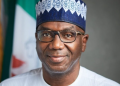
Vice-President Kashim Shettima says Nigeria is deploying Artificial Intelligence, AI, and other modern technologies to monitor food production, enhance transparency, connect producers to markets, and reduce waste across the agricultural value chain.
At the opening session of the United Nations Food Systems Summit Stocktake in Addis Ababa on Monday, Shettima said these modern tools are helping the country monitor agricultural production, improve transparency, reduce waste, and connect farmers directly to markets.
“The Fourth Industrial Revolution has not only disrupted the old order,” he said, “it has gifted us tools once confined to the imagination. Artificial intelligence and satellite-driven analytics are now part of our agricultural vocabulary.”
Shettima emphasized that these technologies are already being deployed across Nigeria’s agricultural value chain. “We are using them to monitor food production, enhance transparency, reduce waste, and bridge producers with markets,” he stated.
The vice president explained that food and nutrition are now central pillars of Nigeria’s National Development Plan 2021–2025 and its long-term Nigeria Agenda 2050. “Food insecurity is no longer a distant threat,” he said. “Whether you live by the Niger or the Tiber, the challenge is shared.”
He highlighted Nigeria’s collaboration with the African Development Bank and the International Fund for Agricultural Development to establish Special Agro-Industrial Processing Zones. “These hubs are not just sites of food production,” he said. “They are engines of transformation—creating jobs, attracting private capital, and linking rural producers to national and global markets.”
Still, Shettima stressed that food production alone is not enough. “A sustainable food system must also be a healthy one,” he said.
ALSO READ: FG says 161 million Nigerians now food insecure
To that end, Nigeria has ramped up investments in nutrition-sensitive initiatives. “We’ve scaled up school feeding programmes, community-based nutrition education, and the Nutrition 774 initiative, which places every one of our 774 local governments at the centre of nutrition delivery,” he said. “This is how we’re turning the Sustainable Development Goals into meals on the table.”
Shettima also announced that the Federal Executive Council has approved the National Multi-Sectoral Plan of Action for Food and Nutrition as the operational framework for Nigeria’s revised food policy. “We’ve directed the creation of Nutrition Departments in relevant ministries. These are not just bureaucratic changes—they’re the building blocks of institutional reform and nutrition governance.”
He framed the summit not just as a diplomatic event but as a moral imperative. “This is more than a summit,” he declared. “It is a reckoning. The world is changing before our eyes, and we must act together. The road ahead is long and complex, but we are not paralysed by fear.”
“Nigeria is ready to listen, to learn, and to lead where leadership is required,” he added. “We are here because we believe the arc of history doesn’t just bend toward justice—it bends toward food justice.”
Ethiopian Prime Minister Abiy Ahmed, who also addressed the gathering, said the summit was a moment to reflect and recommit to building resilient, inclusive, and just food systems. He urged for predictable concessionary finance for Africa to invest in agriculture, rural transformation, infrastructure, and literacy.
“We are investing in local production, reducing dependency on imports, and building a resilient system that serves our people and our future,” Ahmed said. “We have made a deliberate choice to act boldly, think holistically, and place human dignity at the centre of our transformation.”
In a recorded video address, United Nations Secretary-General António Guterres echoed the urgency. “Food systems are about more than food,” he said. “They touch climate, justice, and the right to a better future. But global hunger is rising. Climate change is destroying harvests, supply chains, and humanitarian responses.”
Guterres stressed that the crisis of food insecurity is also one of justice and equity. “Progress has been made,” he said, “but it’s not fast or fair enough. We must accelerate action.”
NAN