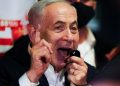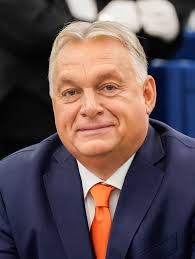
Hungary’s Prime Minister Viktor Orbán has declared that Ukraine has lost the war against Russia, days before a highly anticipated summit between U.S. President Donald Trump and Russian President Vladimir Putin.
In a controversial statement made ahead of the scheduled Trump-Putin meeting in Alaska, Orbán asserted that Ukrainian President Volodymyr Zelensky “has lost this war.” Known for his close ties with Russian President Vladimir Putin and his skepticism toward Western military aid to Ukraine, Orbán described Russia as the clear victor in the prolonged conflict. He questioned the political will of the West to acknowledge this reality and urged European leaders to consider how and when to accept the new status quo.
The war, now in its fourth year since Russia’s full-scale invasion of Ukraine in February 2022, has witnessed fierce battles, particularly in Ukraine’s eastern regions such as Donetsk and Donbas. Russia has made territorial gains despite ongoing Ukrainian resistance, supported heavily by Western military aid. While many European countries and Ukraine insist that any lasting peace must involve Ukrainian participation in negotiations and respect for its territorial sovereignty, Orbán stood apart by refusing to endorse the European Union’s joint statement backing Ukraine’s autonomy.
READ ALSO: Hungary’s PM blocks aid for Ukraine, may halt EU admission
In interviews and social media posts, Orbán criticized the EU’s approach and declared that the conflict is not an indefinite struggle but a conclusive victory for Russia. He called for an EU-Russia summit modeled after the upcoming U.S.-Russia talks, suggesting that Europe needs to engage Russia directly rather than sidelining it. His stance has drawn criticism from other European leaders, who stress that conceding territory to Russia undermines Ukraine’s right to self-defense and sets a dangerous precedent for European security.
President Zelensky and most European leaders have maintained that peace cannot be secured without Ukraine at the negotiating table, and any peace agreement must uphold international law. Kyiv has made clear it will not withdraw from territories under its control, especially in regions like Donbas, which hold strategic and symbolic importance.
On the eve of the Trump-Putin summit, President Trump indicated openness toward mediating an end to the war, suggesting that territorial swaps might be part of any peace deal. However, this approach has alarmed Kyiv and its allies, who warn against rewarding Russian aggression and undermining Ukraine’s sovereignty.
The summit is being watched closely by the international community, as it could profoundly influence the future trajectory of the war and the broader geopolitical landscape. Orbán’s stark position underscores the deep divides within Europe regarding how to handle the ongoing conflict and Russia’s ambitions. While many Western nations continue to bolster Ukraine’s defense capabilities, Hungary’s leader stands as a vocal proponent of recognizing Russia’s gains a stance that threatens to further complicate efforts to forge a unified European response.
As President Trump and President Putin prepare to meet, Kyiv and its European partners plan to hold virtual consultations aimed at urging continued support for Ukraine and ensuring that any peace efforts do not come at the cost of Ukrainian sovereignty. The coming days will be critical in defining whether the war’s end will enforce justice and territorial integrity or formalize Russia’s expansion at Ukraine’s expense.
NAN