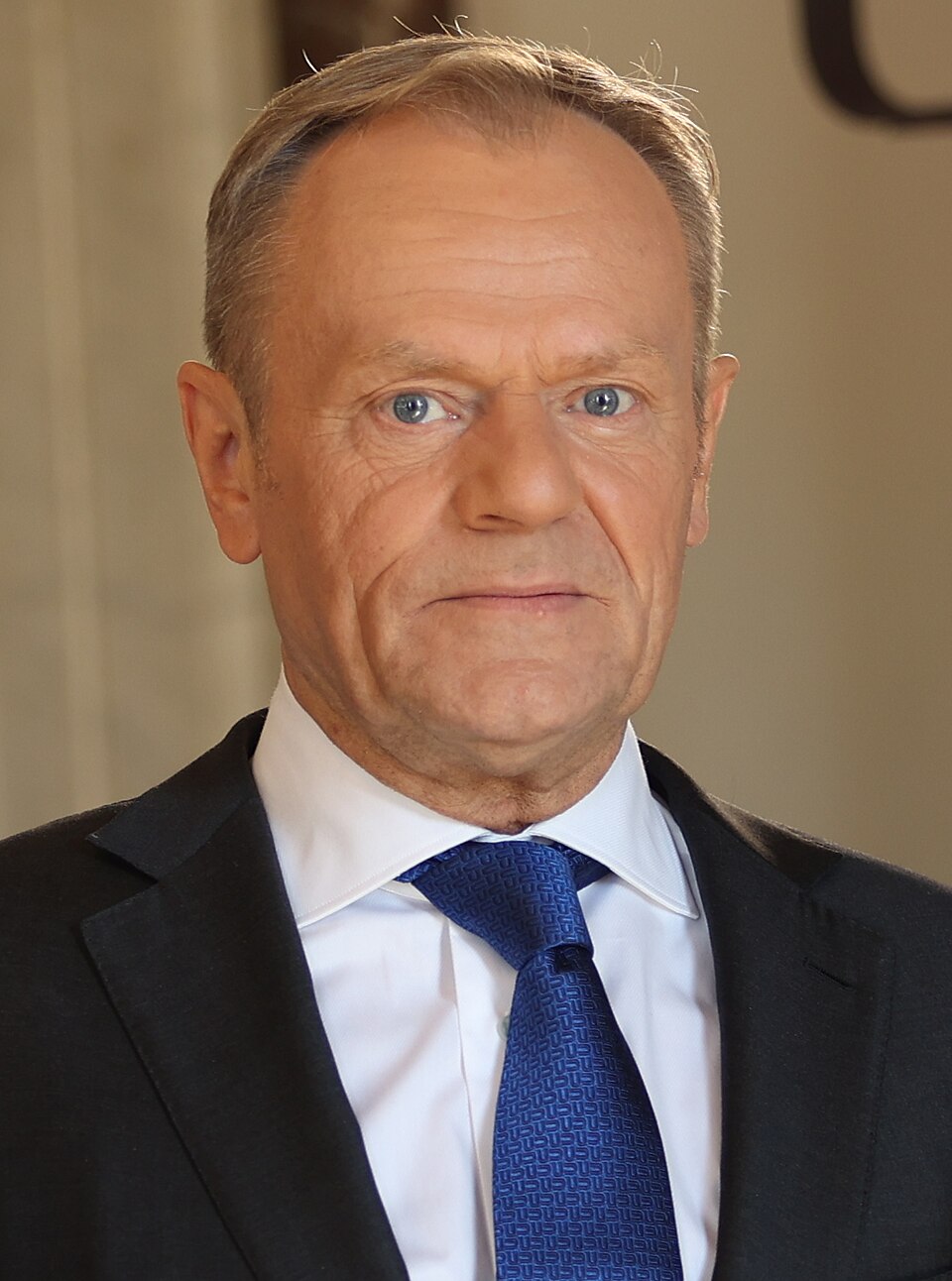
Polish Prime Minister Donald Tusk has issued a stark warning that the consequences of a Russian victory in Ukraine would reverberate for generations, reshaping the security order not just in Europe but across the world.
Speaking on Monday at a major security forum in Warsaw, Tusk underscored that the war in Ukraine cannot be viewed in isolation, describing it as a decisive struggle between authoritarian aggression and democratic resilience.
“This war is also our war,” the Polish leader declared, stressing that Russia’s invasion is part of a broader political project aimed at subjugating neighboring nations and rewriting international norms.
“If we lose this war, the consequences will affect not only our generation, but also the next generation in Poland, Europe, the United States and everywhere else in the world.”
Tusk’s remarks reflected both Poland’s deep solidarity with Ukraine and its own sense of vulnerability as one of Kyiv’s closest political and military allies.
For Warsaw, Russia’s aggression is not a distant conflict but a direct threat to regional stability and national security.
That sense of immediacy was underscored just weeks ago when Russian drones launched against Ukraine veered into Polish airspace, forcing Poland’s air force—alongside NATO partners—to intercept and shoot them down for the first time.
The prime minister dismissed suggestions that a compromise with Moscow could offer a path to peace, framing such thinking as dangerous self-delusion.
ALSO READ: Russia may raise VAT to fund Ukraine war
Capitulation, he argued, would only be driven by “weakness of will, doubt, cowardice or lack of imagination.”
Instead, Tusk insisted that only sustained resolve and collective strength from Western nations could deter Moscow and secure a lasting peace.
Poland has been one of Ukraine’s staunchest backers since the onset of Russia’s full-scale invasion in 2022.
Beyond supplying weapons, training, and humanitarian support, Warsaw has become one of the most vocal advocates for stronger NATO engagement and for holding Russia accountable for its actions.
Tusk’s government has also made it clear that Poland sees the defense of Ukraine as inextricably linked to its own national survival.
The Polish warning comes against a backdrop of renewed U.S. involvement in the debate over how far NATO should go in deterring Russia.
During the sidelines of the recent UN General Assembly, U.S. President Donald Trump voiced support for shooting down Russian aircraft that unlawfully enter NATO airspace, signaling a potential hardening of Washington’s stance.
For Warsaw, such statements reinforce the message that Ukraine’s fight is integral to Western security as a whole.
Still, the debate over Western unity remains fraught. Some European capitals remain cautious about escalation, while others fear public fatigue over the protracted conflict.
Tusk’s intervention was aimed at cutting through such hesitations, reminding allies that history’s judgment would fall not only on those who fought but also on those who faltered.
For Poland, the stakes could not be higher. As Russian forces continue their campaign in Ukraine, Warsaw’s message is clear: the defense of Kyiv is inseparable from the defense of Europe.
Failure to stand firm, Tusk warned, would hand Moscow not just a battlefield victory but the power to reshape the global order for generations to come.
NAN