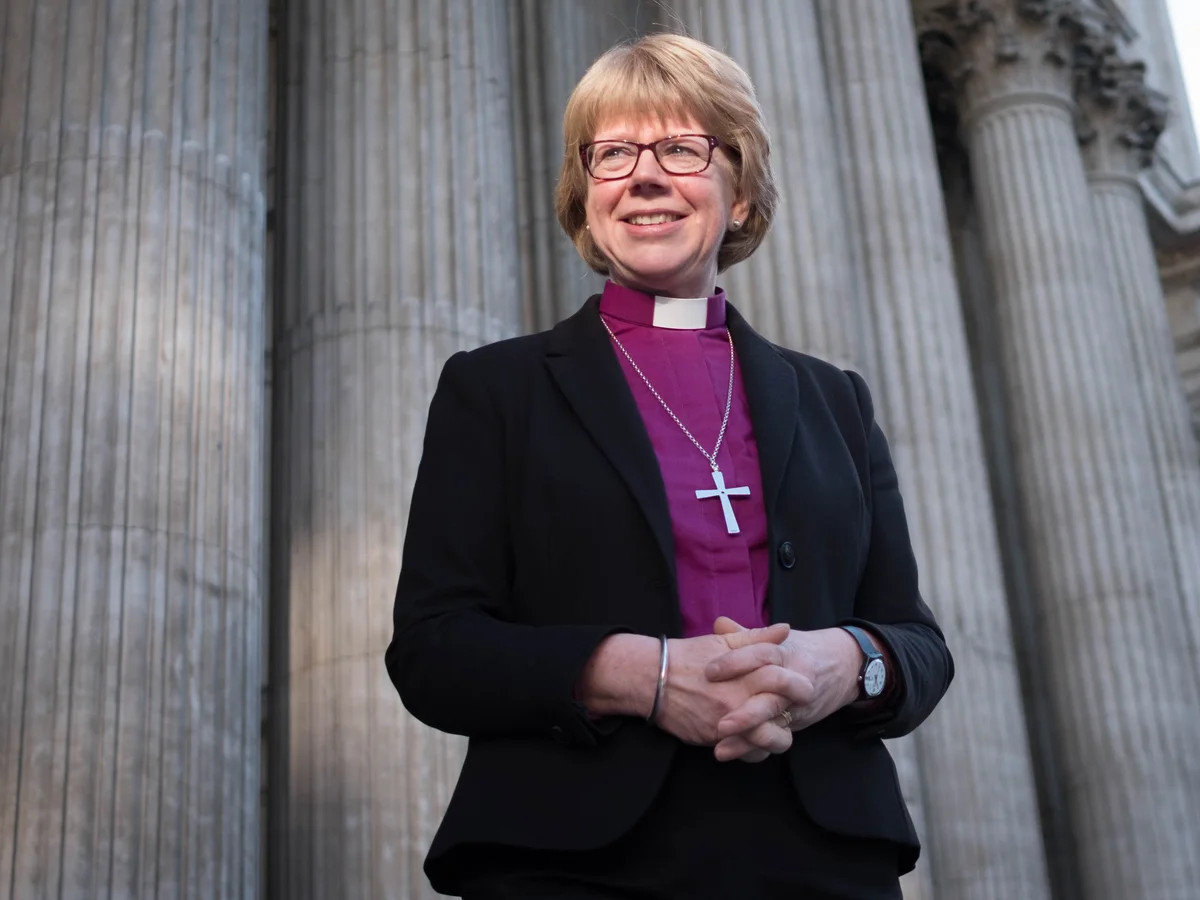
The Church of England has entered a new chapter in its centuries-long history with the appointment of Sarah Mullally as the Archbishop of Canterbury, marking the first time a woman has held the position.
Her appointment, announced on Friday, was approved by King Charles III following the recommendation of a selection committee tasked with finding a successor to Justin Welby, who stepped down earlier this year amid controversy.
At 63, Mullally becomes the church’s 106th Archbishop of Canterbury, succeeding a line of male leaders that stretches back to the late sixth century.
Her new role places her at the helm of the Church of England, often referred to as the “mother church” of global Anglicanism, with a reach extending to more than 165 countries and some 85 million followers.
The former nurse, who trained and worked in healthcare before her ordination in 2002, acknowledged the weight of the responsibility now placed on her shoulders. “This is a huge responsibility, but I feel peace and trust in God to carry me,” she said in a statement.
Her appointment drew swift praise from political leaders, including UK Prime Minister Keir Starmer. “The Church of England is of profound importance to this country.
Its churches, cathedrals, schools, and charities are part of the fabric of our communities,” he said, adding that Mullally’s leadership would be vital in guiding both the church and national life.
Mullally steps into her role at a delicate time for the Anglican Communion. Her predecessor, Justin Welby, resigned after an independent investigation revealed that the church had covered up abuse cases dating back to the 1970s.
The inquiry found that Welby himself failed to act when allegations about John Smyth, a lawyer accused of abusing as many as 130 boys and young men at evangelical camps, came to his attention in 2013.
Smyth died in 2018 in South Africa while under investigation, never facing criminal charges. The scandal shocked Britain and raised urgent questions about accountability within the church.
ALSO READ: Welby, Archbishop of Canterbury, resigns from church leadership
Beyond addressing institutional reform, Mullally’s appointment carries symbolic weight for the place of women in Anglican leadership. The Church of England only began allowing women bishops in 2014, following decades of internal division.
Mullally herself became the first female Bishop of London in 2018, a role that established her as a leading figure among female clergy. Today, more than 40 of England’s 108 bishops are women, with female clergy making up a similar proportion among priests.
While the Church of England counts around 20 million baptized members, fewer than one million attend services regularly, according to 2022 data.
Her journey to the top of Anglicanism reflects both persistence and history in motion. Since Henry VIII’s break from Rome in the 1530s, the Archbishop of Canterbury has stood as a central spiritual figure in British life, closely linked to the monarchy and national identity.
Mullally now steps into that legacy, tasked with guiding not only the Church of England but also the broader Anglican Communion.
Her appointment reflects a global Anglican shift that began years ago. The Episcopal Church in the United States appointed its first female bishop in 1989, and other provinces have since followed suit.
For many within the worldwide Anglican family, Mullally’s rise is both a long-awaited milestone and a statement about the church’s future direction.
As she takes up her new office, Mullally carries with her the hopes of millions who see her appointment not only as historic but as a symbol of renewal.
For the Church of England, after years of crisis and controversy, her leadership marks a turning point — one that blends tradition with the promise of change.
Punch