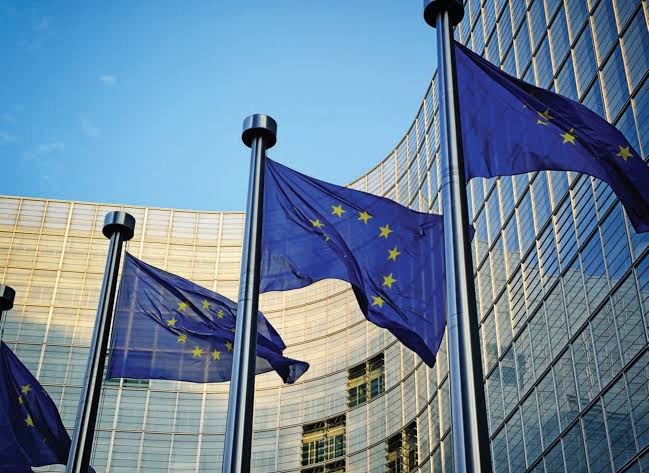
The European Union, EU, has announced plans to resume its long-suspended civilian monitoring mission at the Rafah border crossing between Gaza and Egypt, as part of renewed international efforts to reinforce a US-led ceasefire agreement between Israel and Hamas.
EU foreign policy chief Kaja Kallas confirmed the decision on Monday through a post on X, describing the move as a critical contribution to ensuring the success of the ceasefire and maintaining stability in the region.
“The EU stands ready to do its part,” Kallas said, following the release of the first group of Israeli hostages by Hamas. “This mission can play an important role in supporting the ceasefire and building trust among the parties.”
The decision marks a significant moment in the EU’s re-engagement with the Gaza conflict after years of limited involvement.
Originally established in 2005, the EU Border Assistance Mission (EUBAM Rafah) was tasked with monitoring the movement of people and goods through the Rafah crossing, a vital humanitarian and trade gateway between Gaza and Egypt.
However, the mission was suspended in 2007 when Hamas seized control of Gaza, leading to security and political instability that made operations impossible.
According to EU officials, the mission will resume on Wednesday, involving personnel from Italy, Spain, and France who will provide neutral oversight at the crossing.
The redeployment follows weeks of coordination with Egypt and the Palestinian Authority, with the aim of ensuring humanitarian aid flows smoothly into Gaza while preventing arms smuggling and violations of the ceasefire terms.
The EUBAM mission was briefly redeployed in January 2025, but operations were again suspended in March amid renewed fighting.
ALSO READ: EU probes U.S. tech giants over child protection gaps
The latest restart, officials say, reflects growing optimism following the Sharm el-Sheikh Gaza summit, which finalised terms of the US-mediated peace plan.
EU leaders praised the role of US President Donald Trump, who was directly involved in brokering the ceasefire deal alongside Qatar, Egypt, and Turkiye.
Kallas referred to the development as a “crucial milestone toward peace,” crediting Washington’s persistence for making the breakthrough possible.
In a separate statement, European Commission President Ursula von der Leyen called the summit a “historical milestone,” reaffirming the EU’s full support for the peace framework.
“We stand ready to contribute to its success with all tools at our disposal,” she said, adding that the bloc is also prepared to assist with governance reforms and rebuilding the Palestinian Authority’s institutions.
Beyond offering technical support, it represents Europe’s attempt to reclaim a meaningful diplomatic role in the Middle East peace process after years of playing second fiddle to Washington.
It also signals confidence that the ceasefire, which has held tenuously since late September, could evolve into a broader peace framework.
At the same time, challenges remain. While the release of hostages marks a tangible sign of progress, questions persist about the durability of the truce and the capacity of all parties to uphold its conditions.
Hamas still maintains control in parts of Gaza, while Israel has warned that any violation of the ceasefire would invite a swift military response.
For the EU, maintaining neutrality while ensuring security at Rafah will be critical. The bloc hopes that by establishing an international monitoring presence, it can build trust between Israel and the Palestinian Authority — both of whom will need to cooperate closely if lasting peace is to be achieved.
As of Monday, Antonio Costa, President of the European Council, is representing the EU at the Sharm el-Sheikh summit, where world leaders are expected to outline a roadmap for reconstruction, governance reform, and regional stability.
AFP