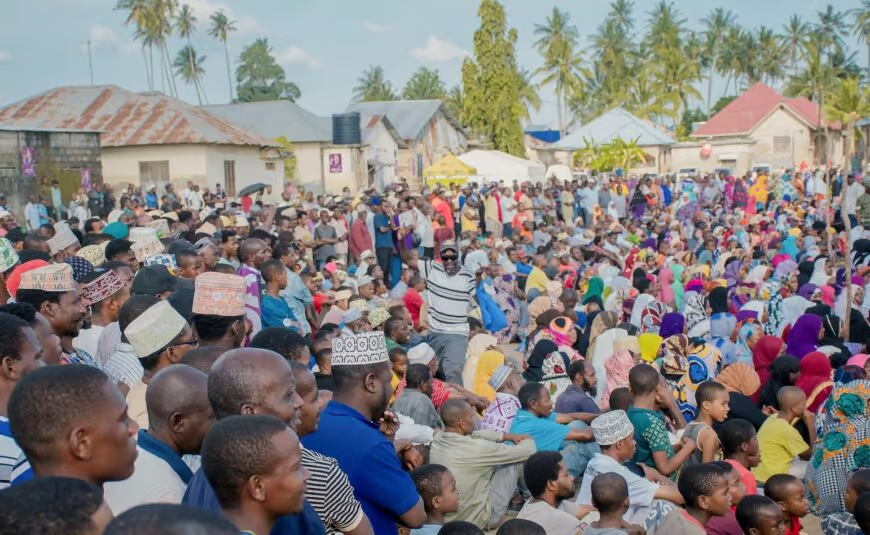
Police in Tanzania fired tear gas to disperse crowds of opposition supporters protesting the ongoing general election, which many believe is heavily tilted in favour of President Samia Suluhu Hassan and her ruling Chama Cha Mapinduzi party.
The demonstrations, which erupted across major highways, saw protesters demanding electoral reforms and the establishment of an independent electoral commission.
“We are tired. We want an independent electoral commission so that every Tanzanian can choose the leader they want,” one protester told the BBC.
The protests turned violent as some demonstrators set fires and vandalised public property, prompting the government to deploy more security forces. Regional Commissioner Alfred Chalamila warned that authorities would take “strong action” against those attempting to disrupt peace in the city.
The election is widely expected to hand President Samia a second term, as the main opposition figure, Luhaga Mpina of the ACT-Wazalendo party, was disqualified on legal grounds.
Other minor parties cleared to contest are considered too weak to mount a serious challenge. The opposition has long accused the government of undermining democracy through arrests, intimidation, and restrictions on political gatherings—claims the administration denies.
ALSO READ: Activists allege torture, assault by Tanzanian officials
Rights organisations, including Amnesty International, have condemned what they describe as a “wave of terror” involving enforced disappearances, torture, and extrajudicial killings of opposition members in the lead-up to the vote. The government dismissed these allegations, insisting that the elections are free and fair.
NetBlocks, an internet watchdog, reported nationwide connectivity disruptions during polling, raising further concerns about transparency.
Despite assurances from the police that voters’ safety was guaranteed, turnout was reportedly low in Dar es Salaam due to fears of violence.
President Samia, who became Tanzania’s first female head of state after the death of John Magufuli in 2021, initially earned praise for easing restrictions on media and opposition parties.
However, her government has since faced criticism for reversing those reforms and adopting a more hardline stance toward dissent.
CCM, Tanzania’s longest-ruling party since independence, has never lost an election. Analysts say that unless major electoral reforms are enacted, opposition parties will remain marginalised and public trust in democratic institutions will continue to erode.
Election results are expected to be announced three days after voting ends.