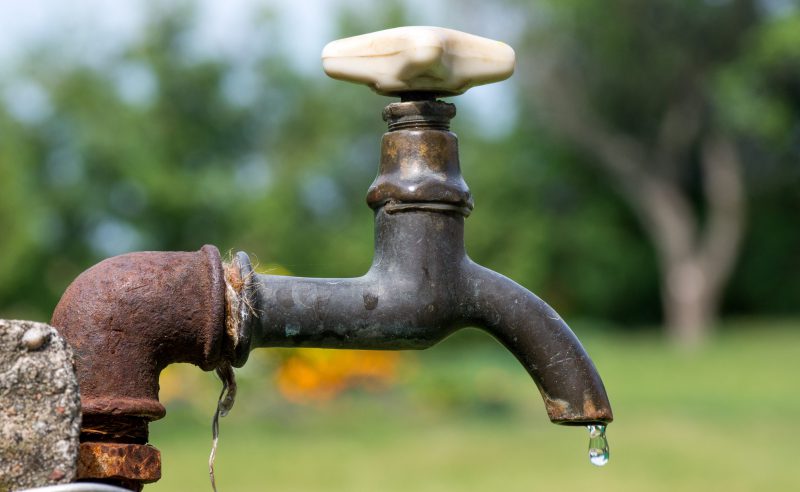
Residents of Ikorodu and Alapere in Lagos State are struggling with inconsistent water supply and worsening water quality, forcing many households to depend heavily on private and often costly alternatives for their daily needs.
Despite significant government investment aimed at boosting potable water delivery, findings by the News Agency of Nigeria show that many neighbourhoods in the state still lack reliable access.
Electricity irregularities, dry-season depletion of wells, and contamination concerns continue to shape the daily realities of residents.
In Ikorodu, several residents traced their reliance on water directly to the availability of electricity. For Mr John Taiwo, a cinematographer, water supply in his home is tied entirely to power.
“The only threat to my water supply is when the electricity distributing company doesn’t bring light and my tank finishes,” he said. Taiwo depends on an electric pumping system for all household use and treats the water before drinking it.
For market woman Iya Ibeji, water drives her daily trade activities such as grinding pepper and washing.
She pays to access water in the market but faces scarcity whenever there are power outages or when the local borehole dries up. She does not treat her water, opting instead to buy sachet water for drinking.
Some residents in the area have found personal solutions. A teacher, Mr Idris Ayeni, said installing a borehole in his home ended his long struggle with water.
Before then, he had relied on a well that dried up during the dry season. “Making a borehole has been the best decision I made for my water supply. The water is good for drinking and has saved me a lot of cost,” he said.
READ ALSO: Court dismisses Winhomes suit on Lagos-Calabar Highway
In Alapere, the challenge is not just scarcity but quality. Many residents described their water as unsafe for consumption.
A banker, Mrs Olaoti Omowunmi, said the water in her compound is “very bad,” restricting her to using it only for toilet purposes. She buys 10 gallons of 25-litre water for ₦2,500 every few days and treats the little she uses for bathing, depending on sachet water for drinking.
A businessman, Mr Femi Ogungbe, said he avoids using his compound’s water for household needs because it is often mixed with soil. Like others in his community, purchased water is the safer option.
But the situation is not entirely bleak. Some households have access to relatively clean borehole water.
Mrs Janet Adeola, a resident, said the water in her compound is reliable and tastes clean, though she has never conducted a quality test. Traders in the Alapere market also rely on purchased water, buying two 25-litre kegs daily at ₦250 each for business operations.
Overall findings show that water scarcity persists in both Ikorodu and Alapere, worsened by irregular power supply and seasonal shortages.
While households with boreholes enjoy some relief, many others must buy water for survival, with sachet water remaining the most trusted choice for drinking in both communities.
Residents are calling on the Lagos State Government to provide functional public water supply systems to ease their burden and improve living conditions.
NAN